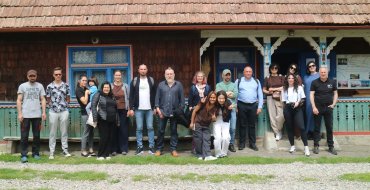
How Dranica Is Made: UzhNU Hosted an International Workshop for the DRANICA.24 Project
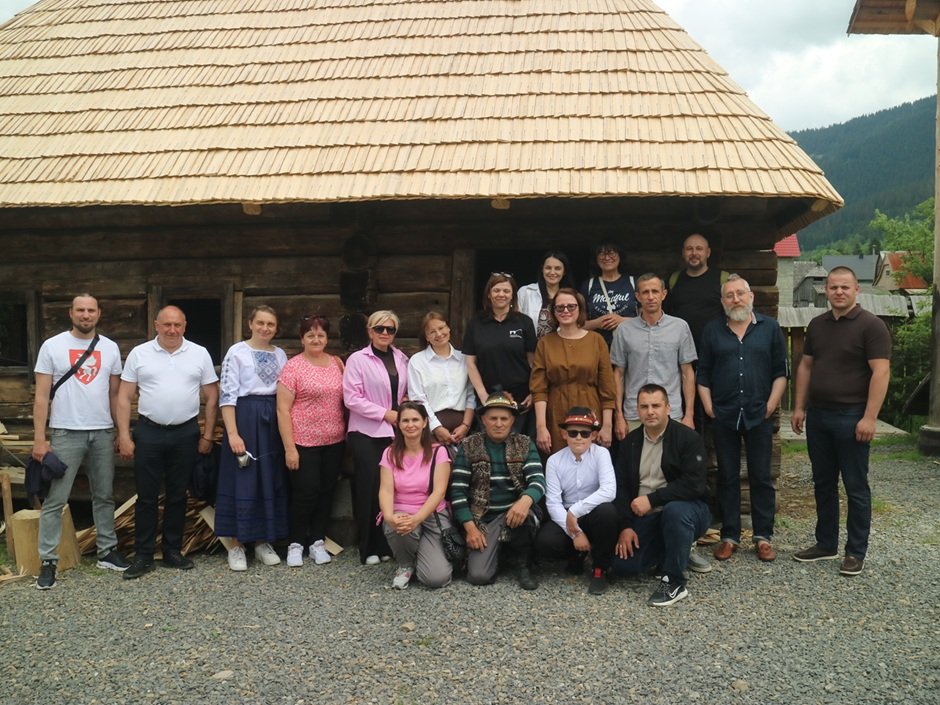
Preserving traditional crafts, which have shaped the cultural identity of border regions for centuries, has become the main goal of the international DRANICA.24 project: “Promotion of Wooden Artifacts as Elements of the Intangible Cultural Heritage of the Carpathian Euroregion. Technical Manual on Traditional Woodworking.” As part of this project, a team from Uzhhorod National University held its first open workshop. Participants had the opportunity to learn about ancient techniques for making dranitsa—a roofing material that has been used for centuries in the folk architecture of the Carpathians. The event took place in the village of Synevyrska Poliana in the Mizhhiria district.
As a reminder, the project involves studying traditional woodworking techniques and tools, documenting craft practices, organizing thematic events, and promoting the region’s cultural and tourism potential. At the same time, the initiative aims to strengthen cooperation between communities and foster partnerships between Ukraine and European Union countries.
The first phase of DRANICA.24, dedicated to researching woodworking traditions and documenting ancient techniques, tools, and craftsmanship, has now been completed. The project also hosted its first international workshop in Romania.
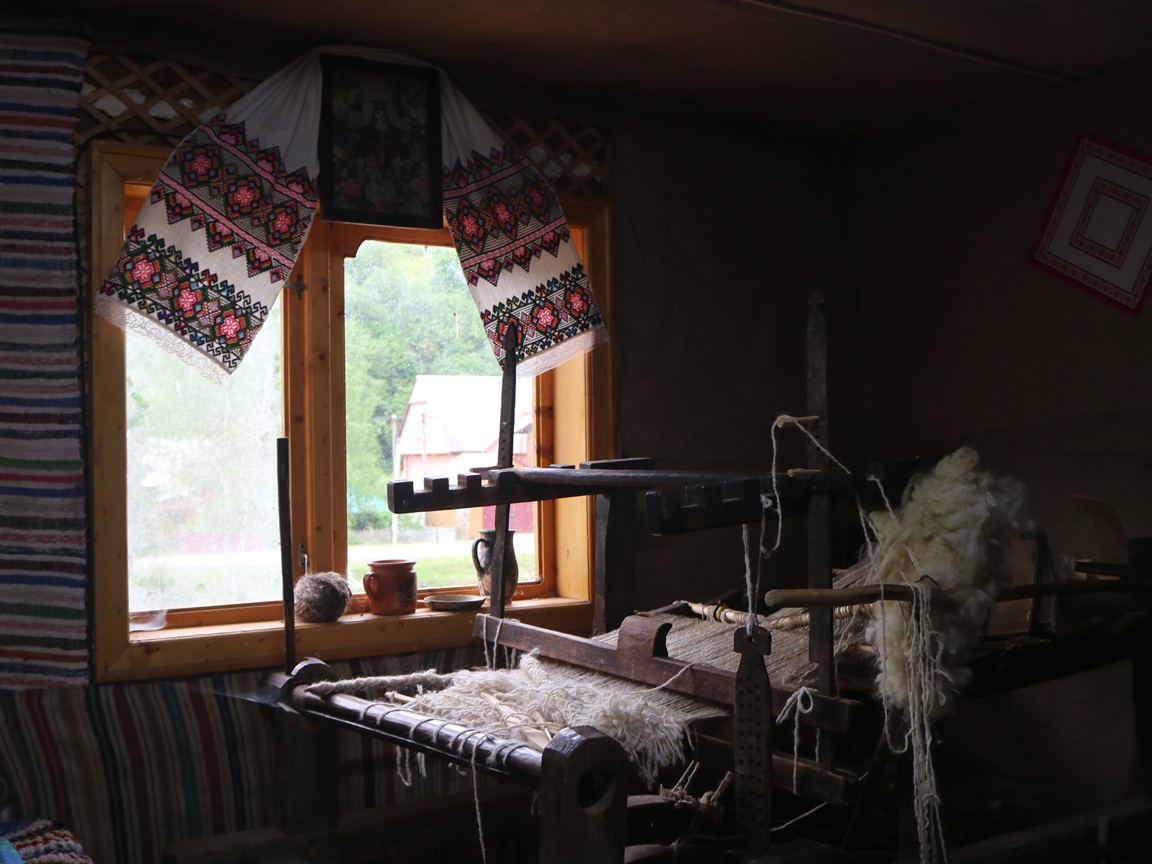
Most of the events took place at the “Vivcharskyi Khutir” site—a place where visitors can learn about Carpathian sheep farming, cheese-making traditions, the Nature Museum, and an historic shepherd’s house-museum. The workshop participants were welcomed by the farm’s owner—local entrepreneur and master woodworker Ivan Yatsko.
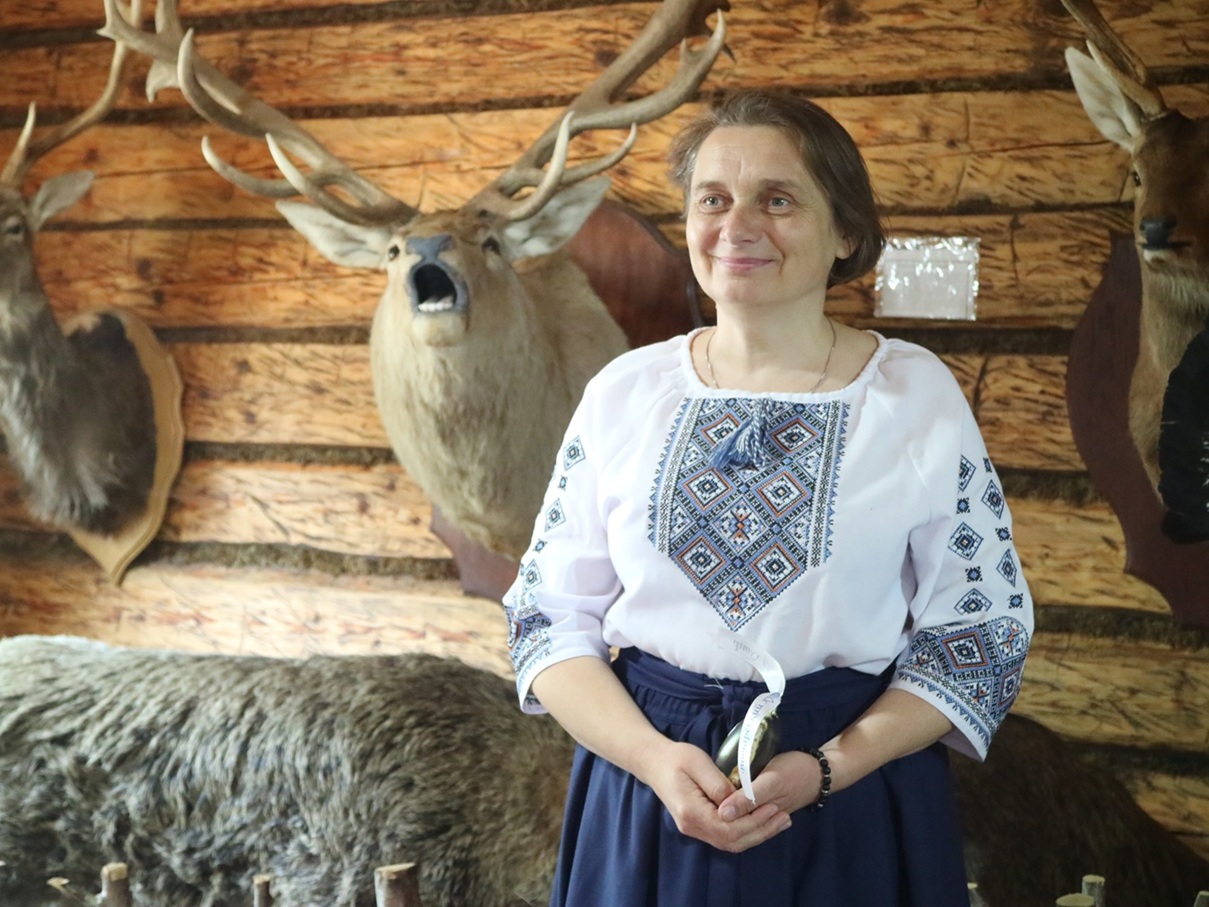
Mariana Misik led the tour for the participants. At the Nature Museum, guests learned about the diversity of the Carpathian region’s wildlife. The exhibition showcases the characteristic inhabitants of the local forests—bears, deer, wild boars, wildcats, lynxes, and many other species. Visitors learned more about the characteristics of their lives, behavior, and roles in natural ecosystems.
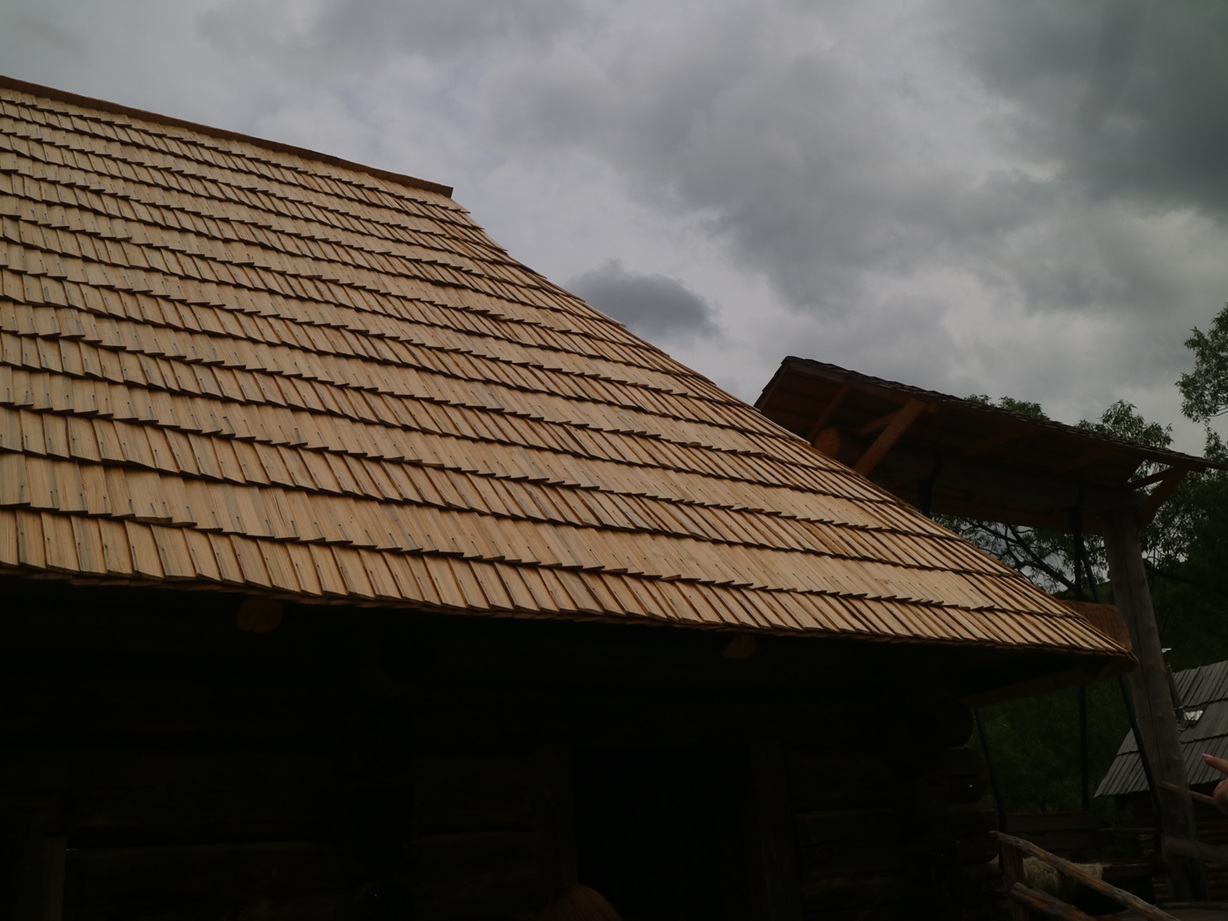
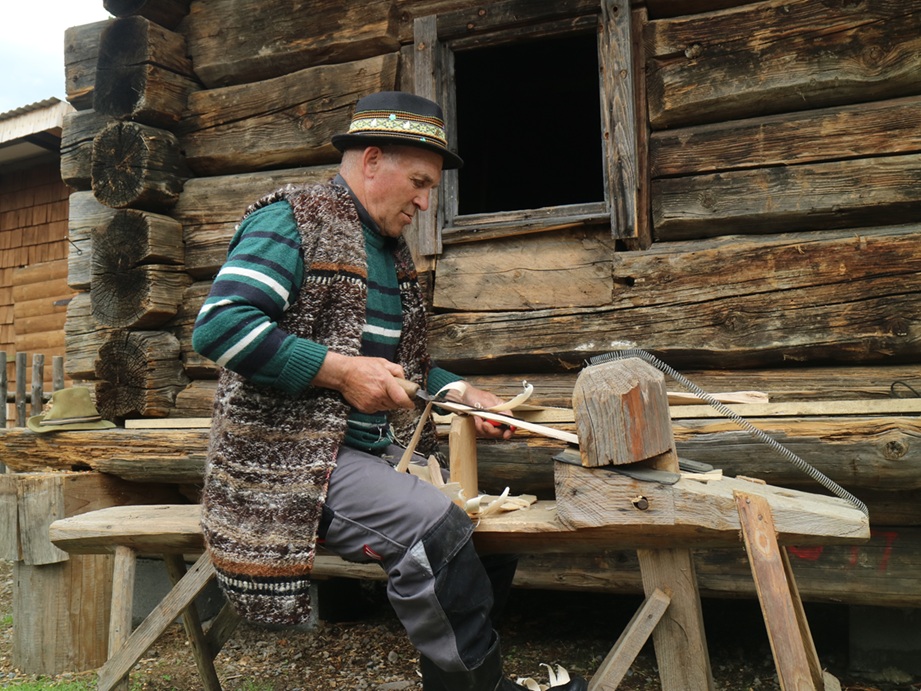
Next, the participants moved on to the hands-on part of the workshop—learning about traditional techniques for making shingle roofing. Master craftsman Ivan Roshynets showed them a shepherd’s hut that had recently been re-roofed with new shingles. According to him, the hut is about 150 years old and was moved to the “Shepherd’s Farmstead” from a high-mountain pasture.
“Up to ten people, or perhaps even more, used to live here. This is a 150-year-old house that once stood high in the mountains. We dismantled it to preserve it and create a museum—the shepherd’s house,” the master explained.
He also pointed out the distinctive features of housing from that era: small windows and the absence of a chimney, since taxes were once levied based on their size and presence. The house was built without a single nail. Inside the house was a stove, where the grandmother and grandfather usually slept, a bed for the parents, and benches along the walls where the children slept. During the cold season, newborn lambs were often brought into the house as well.

The participants paid special attention to the technique of making shingles. The master explained that not just any spruce tree was suitable for this. “It had to grow in the mountains, be straight, tall, and knot-free. It’s very important that the growth rings be more or less uniform on all sides; then the wood won’t twist or warp,” he noted.
The most valuable wood came from spruce trees that grew in harsh conditions on rocky slopes. Due to their slow growth, the wood was denser and stronger. Such trees were felled only in winter—in December, January, and February—when sap flow in the wood slowed down and the resin remained inside the trunk. This is precisely why the wood lasted longer.
The craftsman explained that after harvesting the spruce, the trees were debarked, cut into blanks, and only then was the roofing material produced. For shingles, blanks about 40 centimeters long were used; for roof boards, up to 75 centimeters.
“Even now, with modern machinery, shingles aren’t cut with a saw but split. That’s the whole secret: the wood splits along the grain, so it lasts much longer,” concluded Mr. Ivan.
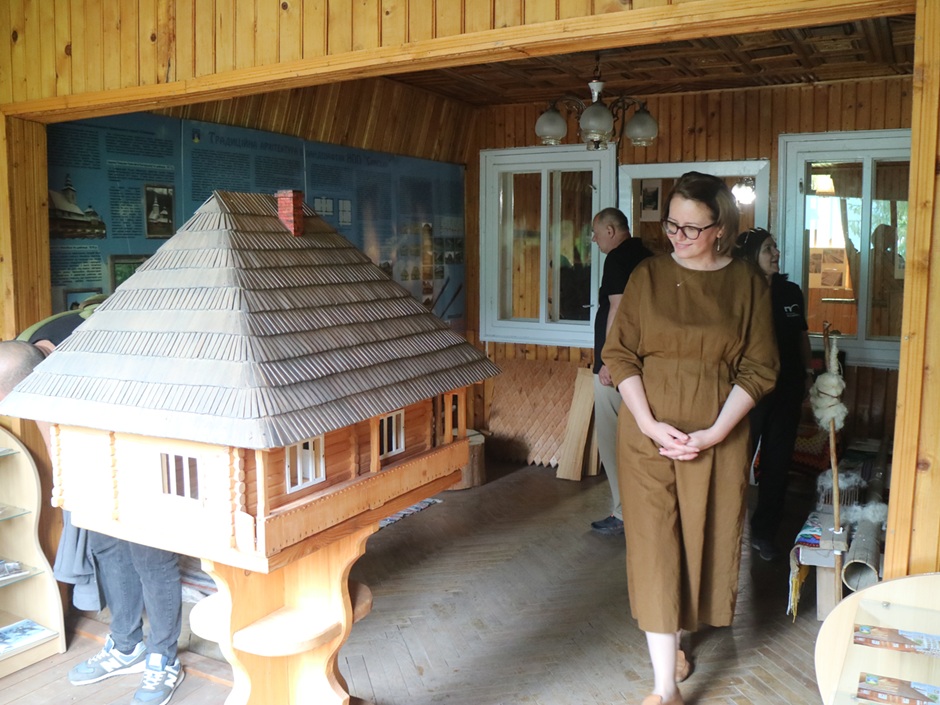
Finally, the participants visited the Forest and Log-Driving Museum. There are only two such museums in the world—one in Ukraine and one in Canada. There, they learned more about the work of Carpathian lumberjacks and log drivers—the masters who floated timber down mountain rivers. The museum’s exhibition combines authentic household items, work tools, and photographs that recreate the atmosphere of the lives and work of people whose activities have been an integral part of Carpathian history for centuries.
Holding such workshops is one of the key tools of the DRANICA.24 project, as it allows not only for the documentation of traditional crafts but also for their promotion to a wider audience. Through a combination of scientific research, hands-on demonstrations, and international collaboration, the project helps preserve the unique knowledge and skills that form an important part of the shared cultural heritage of the border region.
Ганна Фельцан,
Інформаційно-видавничий центр