Student conference at UzhNU: the future of education with artificial intelligence
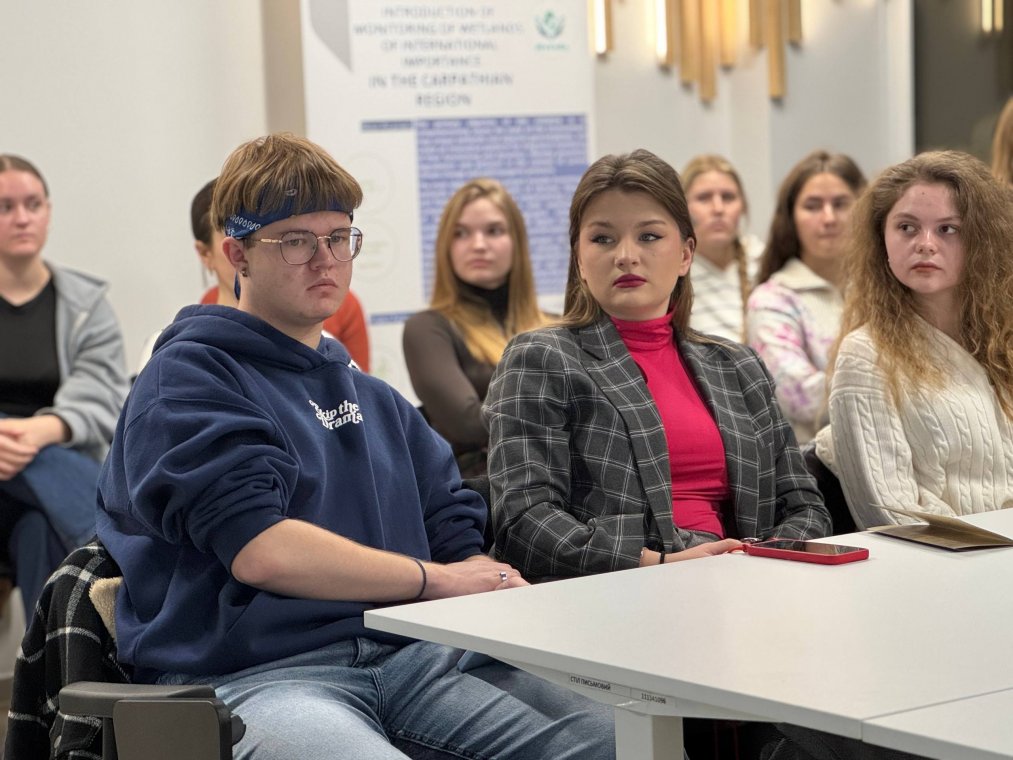
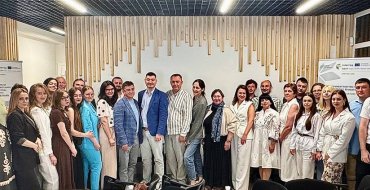
On Wednesday, November 19, an international student scientific conference dedicated to the topic “The use of artificial intelligence in education: opportunities, challenges, and prospects” was held at UzhNU. Participants included students from the Faculty of Foreign Languages of Lviv National University and the University of Pitești, as well as the Polytechnic University of Bucharest. The organizing committee of the event was formed by the Vice-Rector for Scientific and Pedagogical Work of Uzhhorod National University Myroslava Lendyel, Acting Dean of the Faculty of Foreign Philology Snizhana Holyk, Deputy Dean for Educational Work Oksana Datsio, Associate Professor of the Department of English Philology Halyna Onyshchak, Chair of the Faculty Student Council Olena Keretsman, and Chair of the Faculty Student Scientific Society Olga Gavrilyuk.
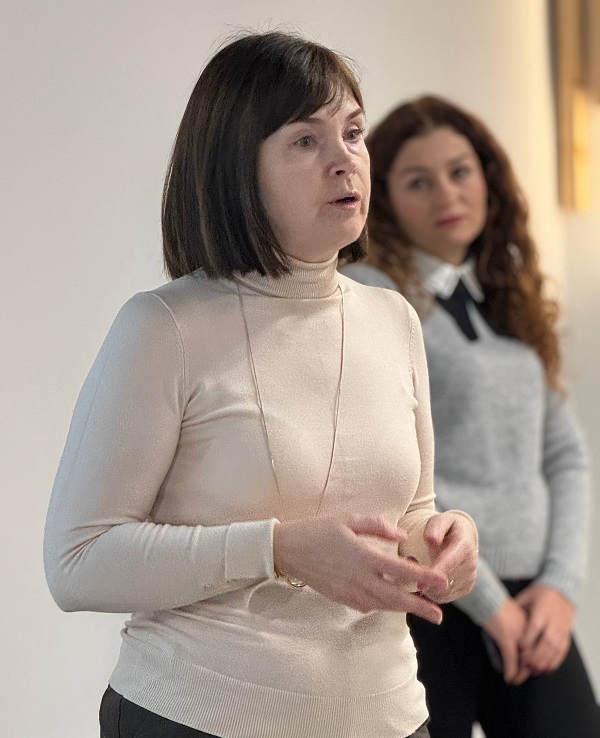 The introductory part began with a speech by Acting Dean of the Faculty of Foreign Philology Snizhana Holyk. In it, she outlined the topic and significance of the upcoming discussion: "Artificial intelligence has become a powerful tool that affects all aspects of our professional activities — from teaching to translation and intercultural communication. The changes that are taking place now are extremely dynamic and present us with new ethical and methodological challenges. That is why it is important for us to discuss these processes together and find effective ways to apply AI in the educational environment. I wish everyone a constructive conversation and fruitful work.“ Next, Halyna Onyshchak, associate professor of the Department of Foreign Philology, took the floor. In her speech, she addressed the participants: ”Today, you will have the opportunity to exchange new and creative ideas, because it is young researchers who are called upon to change the vision of AI application in education. Artificial intelligence has already significantly transformed the educational space, opening up adaptive programs and opportunities that seemed like science fiction just a few years ago. May this conference be your first step towards professional growth and joining the scientific community." After the introductory part, the participants moved on to presenting their scientific achievements.
The plenary session of the conference was structured into three content sections, each of which revealed a separate aspect of the interaction between artificial intelligence and the educational process. The first section focused on “Ethical aspects and academic integrity in the use of AI” and included reports on the cooperation between teachers and algorithms, issues of competition or complementarity between them, the role of critical thinking as a means of counteracting automation, the use of artificial intelligence as a teaching assistant, and innovative approaches to gamified learning in the methodology of teaching English as a second or foreign language.
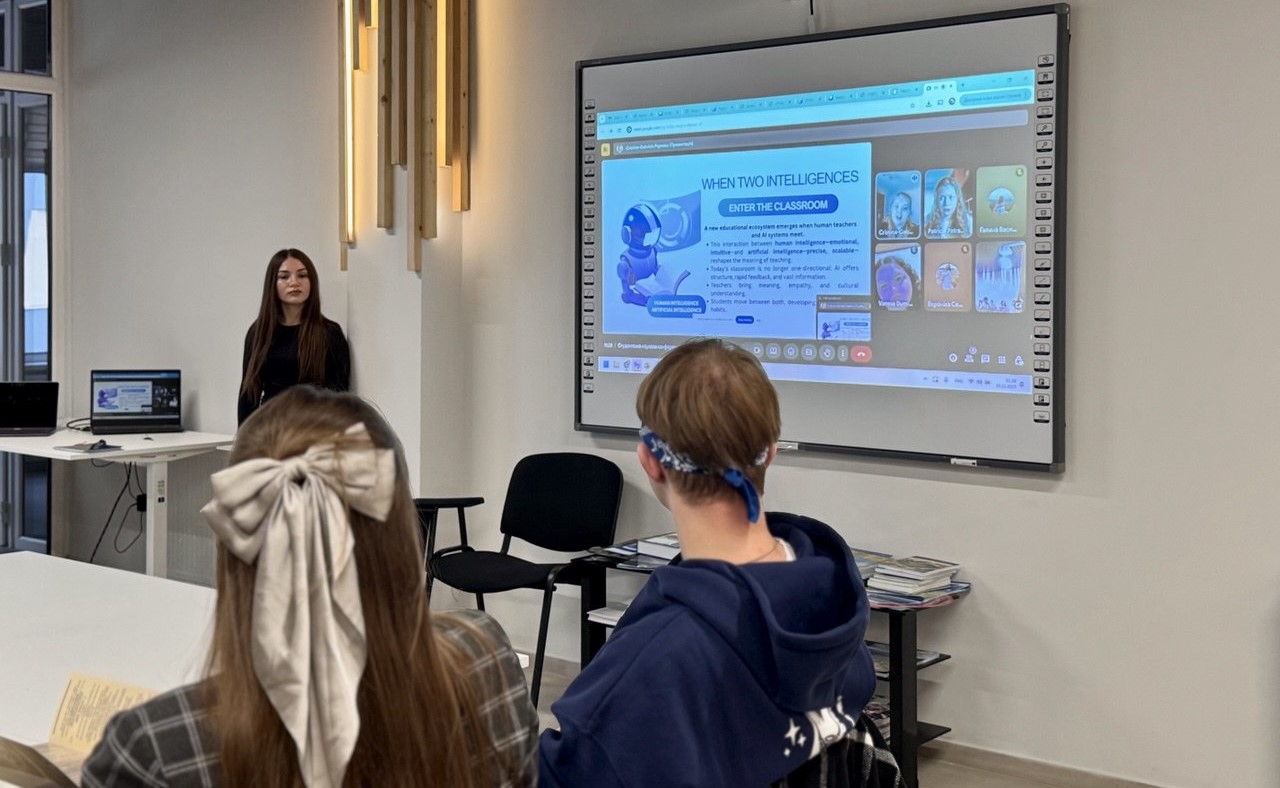
The second section, “AI in foreign language teaching and the development of students' language skills,” outlined a wide range of possibilities for the use of generative technologies in philology. Participants presented research on the creation of interactive teaching materials, the use of podcasts for listening comprehension differentiation, teaching grammar in a new digital context, personalizing material according to student level, using AI to improve educational processes in Ukrainian higher education institutions, and the effectiveness of adaptive language platforms and popular digital tools such as ChatGPT, Grammarly, DeepL, Duolingo Max, TalkPal AI, and others.
The third section was devoted to the topic “The Use of AI in Intercultural Communication and Translation” and focused on analyzing how artificial intelligence reproduces cultural contexts, linguistic nuances, and communicative features. The speakers touched on issues of academic integrity, authorship, and the risks of plagiarism, and defined the limits of acceptable use of generative tools in education. Special attention was paid to comparative studies of human and automated translation practices, as well as the analysis of cultural and linguistic features of translation performed by Google Translate and Microsoft Translator.
During the conference, participants considered both the advantages and challenges of using artificial intelligence, particularly in terms of ethics and academic integrity, and discussed the potential for personalizing the learning process with the help of digital technologies. The event became an important platform for exchanging experiences, forming scientific approaches, and promoting the professional growth of young researchers in the field of modern education.