Decade of sustainable development: how UzhNU educates conscious citizens for the future of the planet
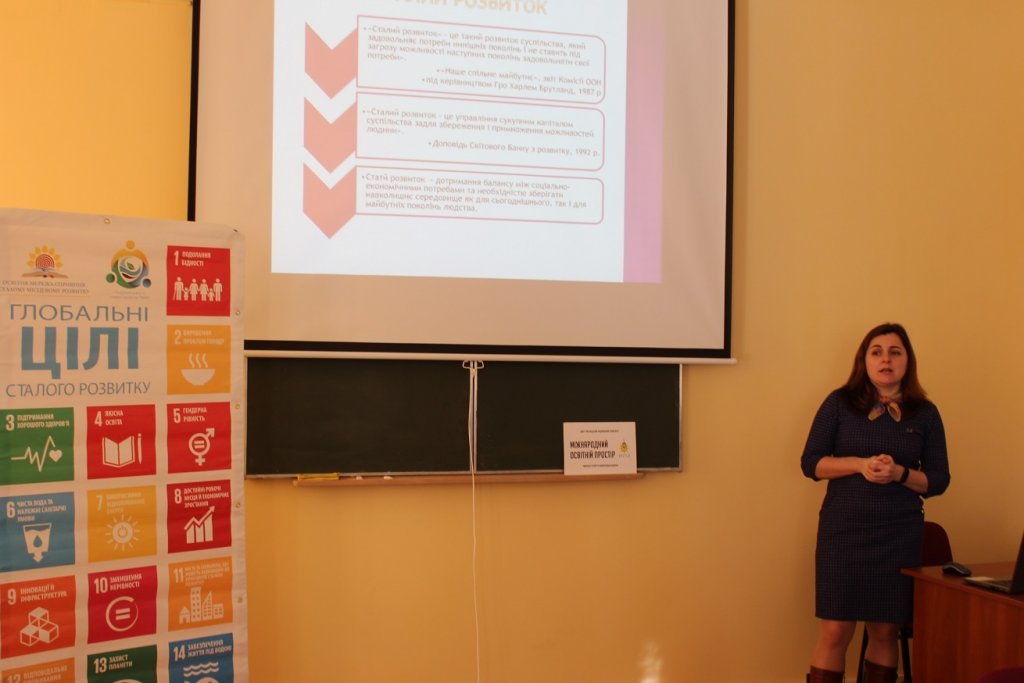
In March 2025, the Resource Centre for Sustainable Development of UzhNU will celebrate its 10th anniversary. During this time, it has organised more than 100 events to explain and promote the ideas of sustainable development, joined international conferences, forums, seminars, implemented grant programmes, and expanded its network of like-minded people at various levels. MediaCentre spoke to Hanna Melehanych, Director of the Centre for Sustainable Development at UzhNU, Associate Professor of the Faculty of International Relations, PhD in Political Science, about the 10-year journey and future plans.
Ms Melehanych, let's start with a little primer. If you had to explain to a child what sustainable development is and what it is for, how would you do it?
- I always tell my children: ask your grandparents if they ever swam in a river or a lake. Nowadays, we hardly ever bathe in open water because they are polluted. People mostly reduce sustainable development to the environmental component, so this is the simplest example. But there are also social and economic components. It is important to understand that there are environmental problems, problems of war and peace, resource exhaustion, hunger, demographic and energy problems - all these are global issues that humanity can no longer answer separately, but must act together and implement comprehensive solutions. And the topic of sustainable development is where they are being implemented, as it is about balancing the needs of humanity today with the interests of future generations, including the need for a safe and healthy environment.
Why is there a significant emphasis on the environment? Because nature does not exist in isolation from human activity, from the needs and desires of people. And attempts to protect it must be made by people, otherwise we will not have a place to live, or at least we will not have clean water, clean air and safe food. The environment is the place of our life, so we have to take care of its protection to improve our well-being in it, and therefore we have to organise the life of society in such a way that it can exist in the long term.
Please tell us how the Centre for Sustainable Development of UzhNU began.
- It all started in 2010, when the university received an invitation from the UNDP and EU project ‘Community Based Approach to Local Development’ to attend a seminar for representatives of Ukrainian universities. At the time, we didn't really understand what would happen. But thanks to this first meeting, a network of universities was formed, which became the academic component of the project to show that the issue of sustainable development is supported by theory and science in practice. In 2011, we signed a memorandum of understanding between UzhNU and the Project. This was the beginning of inter-university interdisciplinary communication. At its best, it was a network of 40 universities called the Educational Network for Sustainable Local Development. It existed with the support of the project until 2016, but communication and cooperation between universities still exists.
One of the recommendations to universities at the time was to create resource centres for sustainable development - at departments, faculties, or university-wide. I consulted with the university management and received support for the creation of a university-wide resource centre, because the need is for everyone, not just for individual departments. Thus, on 24 March 2015, the Academic Council of UzhNU established the Resource Centre for Sustainable Development, and I was appointed its head on a voluntary basis.
What are the activities of the Centre?
- The Centre was created in view of the need to implement the concept of sustainable development and based on the understanding of its three main points of view: economic, social and environmental, which should be implemented at the level of the state, region and individual locality or even institution, as well as to spread this approach among students. The purpose of the Resource Centre is to facilitate the implementation of international programmes and sustainable regional development, as well as to intensify the university's research activities in this area. The main tasks are to disseminate the principles of sustainable development and the best methods of regional and local development; discuss new conceptual theories of sustainable development of society, its main characteristics and structural elements; promote independent research activities of the university in the field of sustainable development; discuss new theories and methods of analysing the main indicators of sustainable development; obtain new knowledge, formulate, solve and implement urgent problems of sustainable development of the region and those areas that are developing in the field of sustainable development.
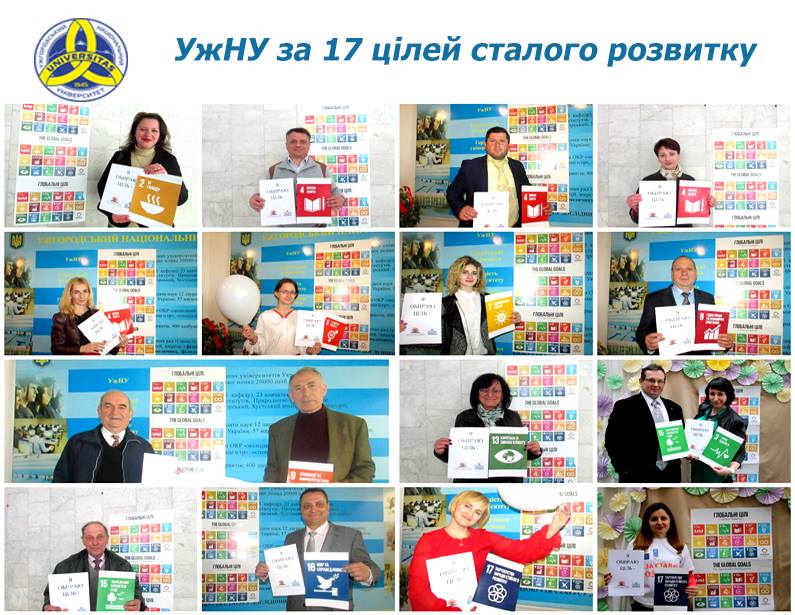
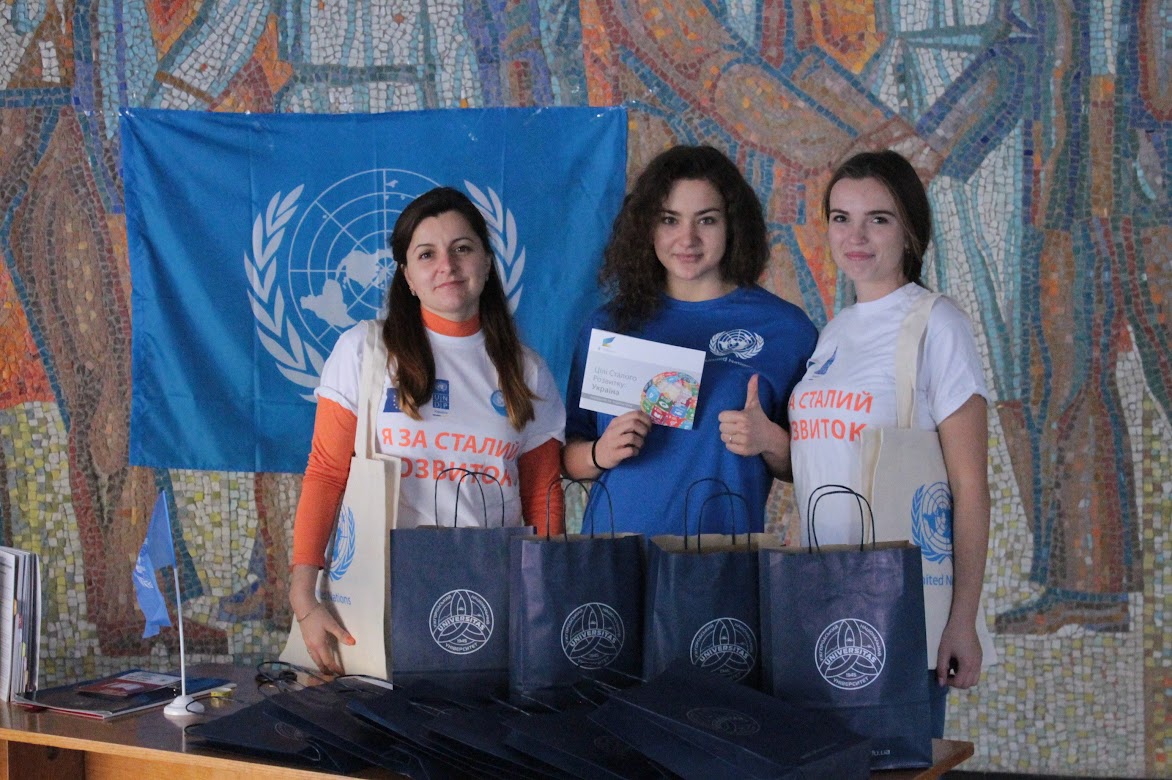
In March 2015, we established the Centre, and in September 2015, the UN defined the Global Sustainable Development Goals. So, almost immediately, we began to promote and advance them. These include quality education, overcoming poverty and hunger, decent work and economic growth, protecting and restoring ecosystems, peace, justice and strong institutions - there are 17 goals in total.
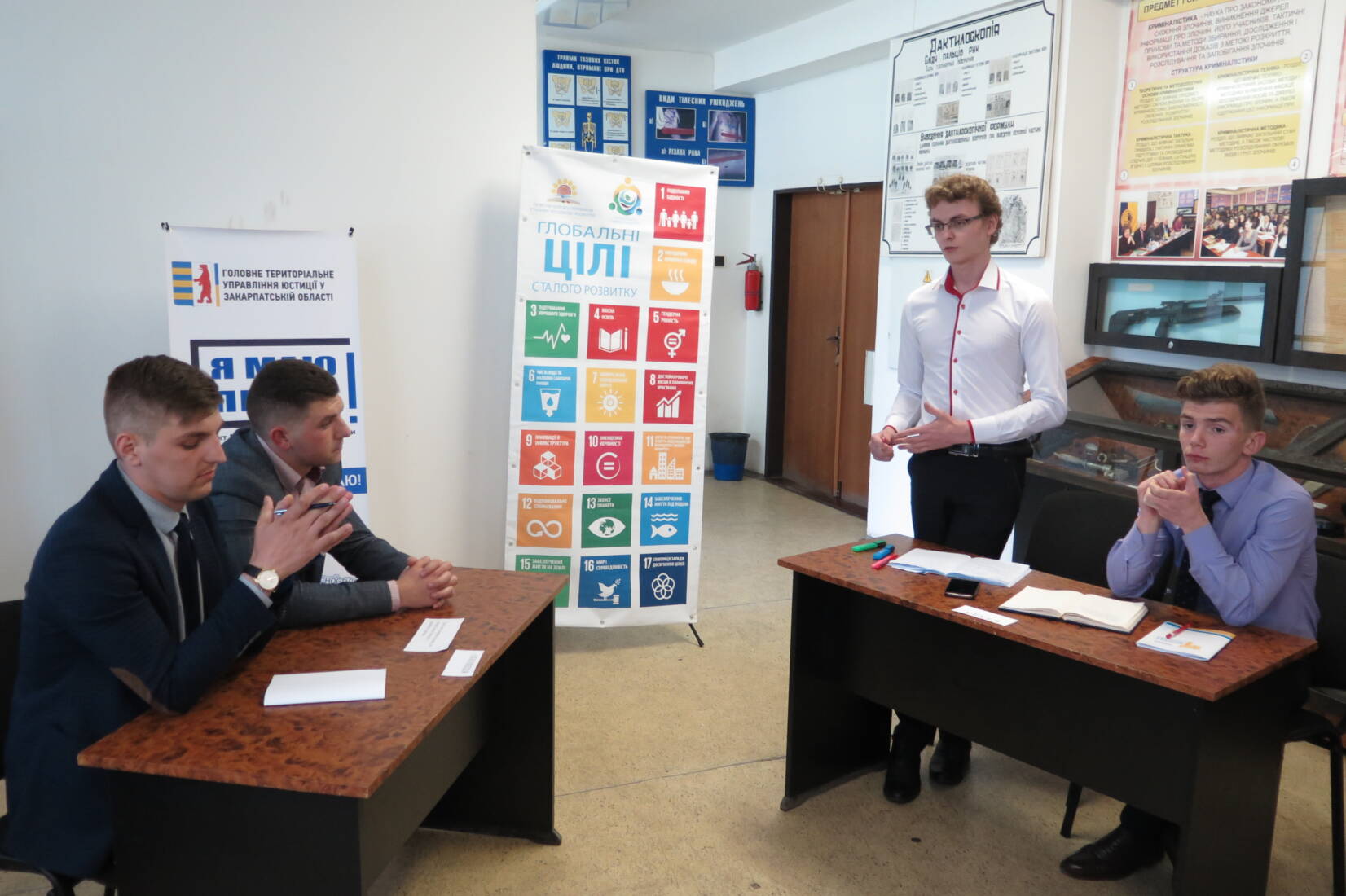
The Centre has identified several key areas of activity. First of all, it is educational, scientific and organisational work. We have conducted quests, roundtables, trainings, research competitions, published collective monographs, made community visits, participated in the development of regulatory and planning documents at the national and regional levels, and organised various environmental events. The most memorable and recurring events include debates on sustainable development between students or for students, sustainability weeks, clean-ups and tree planting campaigns. In other words, our main goal is to show that the Global Goals can be achieved through the implementation of local initiatives around the world.
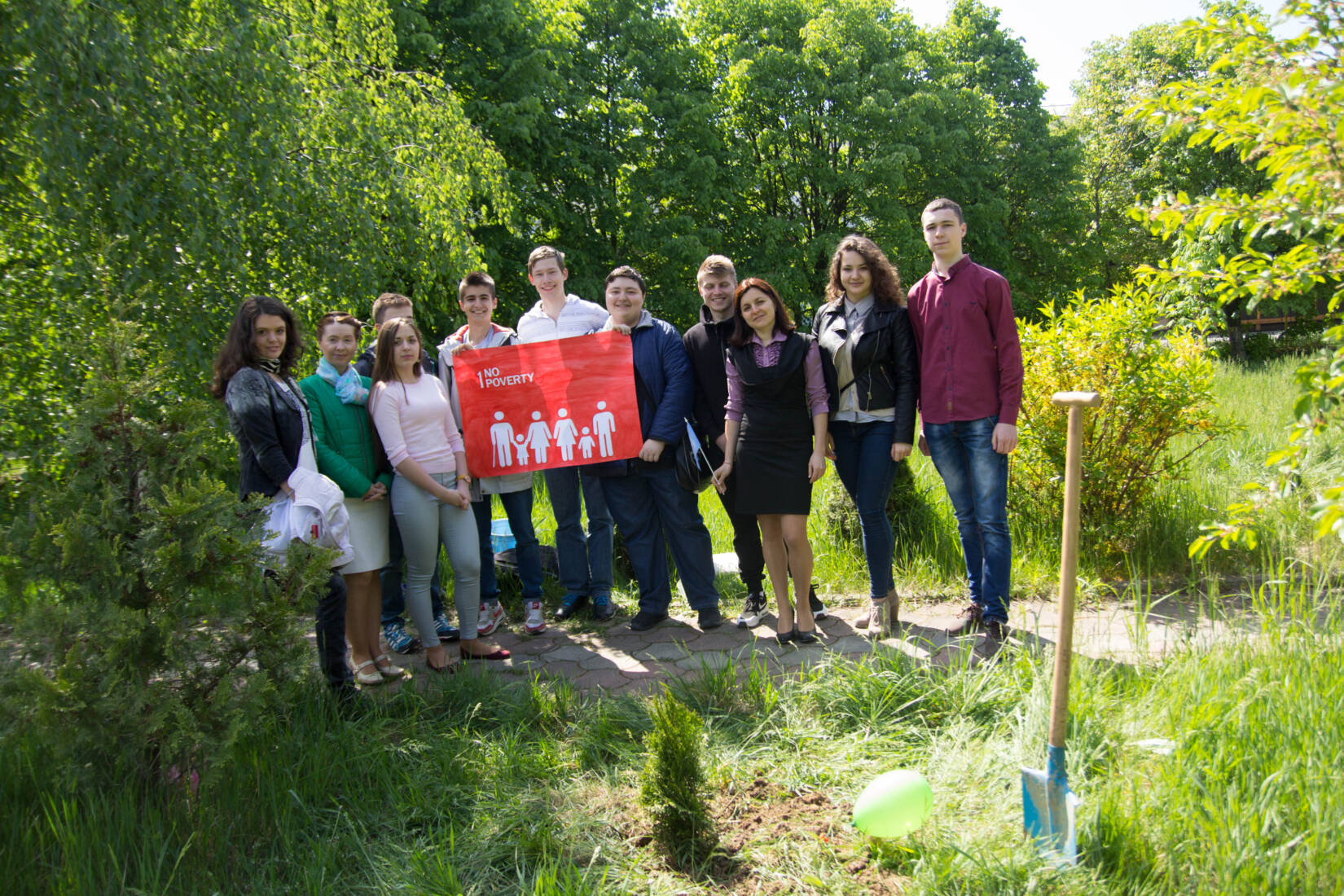
Let me give you an example in the environmental area. Every year in spring and autumn, even in Covid and during a full-scale war, our students and teachers plant trees as part of the Greening the Planet and Greening Ukraine campaigns both in the city and outside it. In total, we have already planted about 3-4 thousand trees and bushes, of which about 250-300 are on the territory of UzhNU - near the dormitories, the central building, and the College of Natural Sciences and Humanities. We also take an active part in environmental education campaigns - we joined the Let's Do It Ukraine initiative, World Cleaning Day, Let's Clean the Coast Together, Zero Waste Day and initiated cleaning of various sites ourselves. In 2020, we introduced waste sorting in some buildings of UzhNU, and, probably, if quarantine measures and distance learning had not been introduced, we would have had more support for the initiative across all buildings.
We should also mention the UzhNU Volunteer Centre, which is also one of the Centre's initiatives. It was created in 2018 and until 2022 was an informal association at the Centre, which involved more than a hundred students and teachers. At that time, there were many useful initiatives: support for hospitals during the pandemic, visits to orphanages and nursing homes, assistance to animal volunteers, and so on. And in the spring of 2022, the NGO Volunteerat UzhNU was created, which is still active today.
The goals are set. But how do we know if the country is moving towards achieving them?
- When the Sustainable Development Goals were adopted, the internationally responsible parties for achieving the goals were identified - first of all, governments. Next, local governments, and then the scientific and educational community. We, as educators, must be aware of the relevance of achieving these goals, tell others and teach students, who will then be guided by this in their professional implementation.
For each country, and for Ukraine in particular, there are defined tasks, each of which has indicators - that is, quantitative indicators, based on which we can track progress or regression. Of course, with the full-scale war, a lot has changed and faded into the background, so in 2024, these indicators for Ukraine had to be updated and brought up to date.
For example, Goal 4 is the closest to us - quality education. In Ukraine, it has 7 tasks, each of which has its own indicators. One of the indicators for the quality of education in relation to science is the increase in spending on research. Accordingly, it is possible to find data on the dynamics of spending on education. That is, each indicator can be monitored to understand whether we are moving in the right direction and to make decisions to improve the lives of each of us.
These 17 goals cover all areas, so you can choose which topic you see an opportunity for yourself and where you can be useful. Our events are attended by representatives of almost all faculties, and this is very good. It is important that students perceive this in terms of their future profession and understand their role in achieving the goals and that global goal.
Nowadays, the world is trying to follow the win-win concept. Universities are a great platform for achieving sustainable development goals. But how do universities benefit from this?
- In the twenty-first century, higher education institutions around the world perform many more functions than they have since the beginning of university education. And today, universities around the world are struggling with how best to integrate sustainability into their curricula and activities, as it is a leading concept in human development.
Most global and international rankings of higher education institutions include sustainability indicators. Therefore, it directly affects the university's position in international rankings. In fact, the work of the Centre has also influenced the fact that our university rises in various rankings every year and is one of the best in Ukraine. This is also the reason why our students and teachers can participate in international exchanges, programmes, conferences and other events. In particular, we have joined the programme for Baltic universities. So, for example, I travelled to Finland and Poland to study teaching education for sustainable development. Soon, our student of the Faculty of International Relations will be going to a student event in one of the Baltic countries as part of this project and will represent our university. In other words, in addition to the rankings, these are opportunities for teachers, graduate students, and students. In general, it means changes for the better for the university in strategic, programmatic, and operational terms. By the way, since 2023, UzhNU has adopted the Policy of Sustainability and Sustainable Development.
Recently, during a training on sustainable development, you said an interesting phrase. Like, 10 years ago, no one understood what sustainable development was and who needed it, and the first meeting on sustainable development at UzhNU was attended by only 5 people, including you. Today, the training and other initiatives on this topic bring together dozens of people who care about the future of our country and the world. What changes do you notice for yourself in this regard?
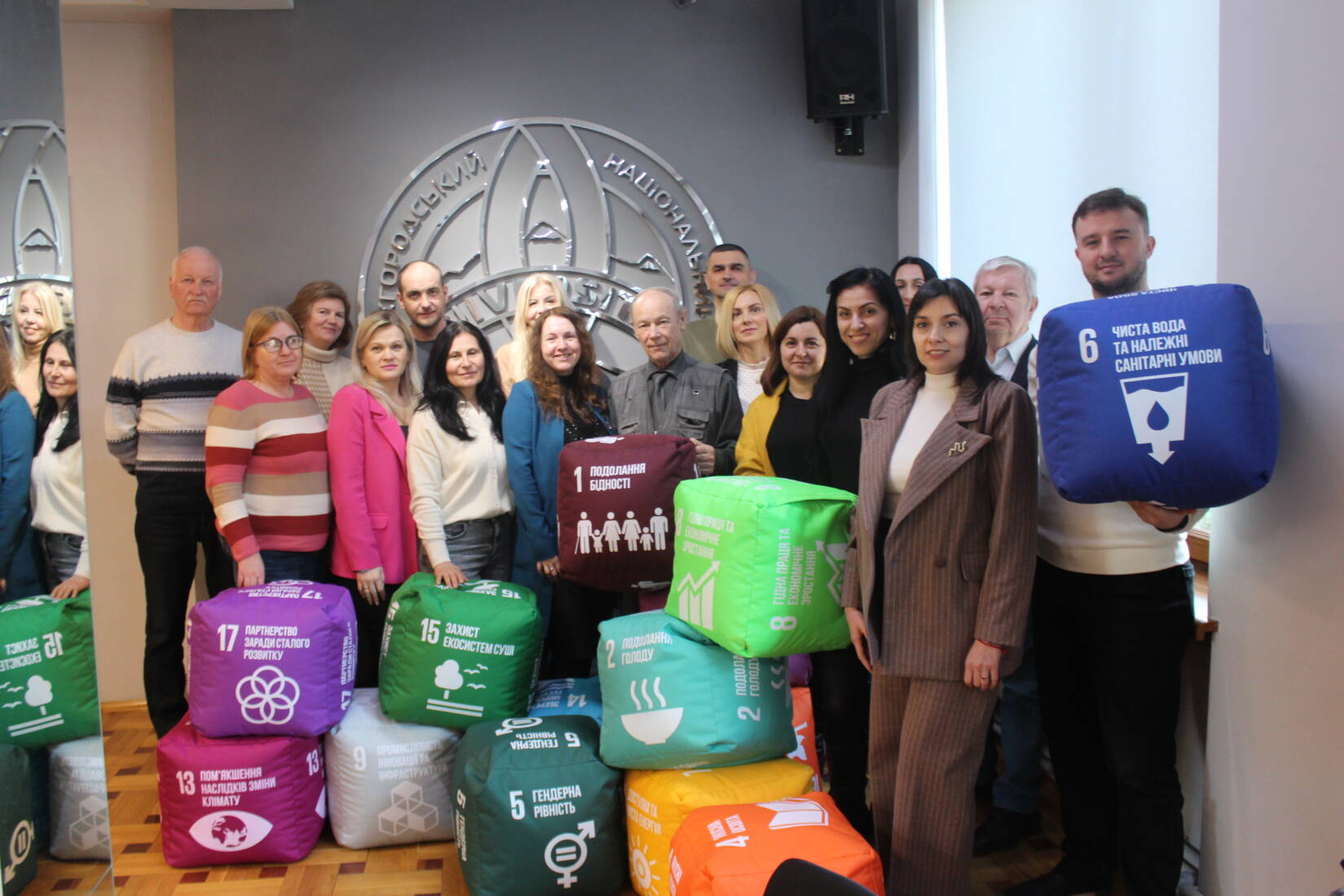
- There are definitely positive changes, and they are inspiring and encouraging. 10 years ago, 8 out of 10 respondents did not understand what sustainable development was. Now, colleagues and students are better informed and understand what it is and why. And when I announced the training course at the end of January, I received 75 applications in 2 days. Some were already well versed in the topic, while for others it was just an introduction to it. It's nice that there were those who wanted to join in the process. So I'm thinking of doing additional training. Colleagues understand, know and want to know more. This is supported and even required at the state level, as the Sustainable Development Goals are being implemented in educational programmes.
One of the conclusions of this training was interesting: many colleagues were doing this, but did not understand that this is the work to achieve the Sustainable Development Goals. Therefore, one of the tasks I set for myself is to show this interconnectedness of processes and their mutual influence - you cannot develop politics without developing the environment, economy and society.
Actually, speaking of politics. The changes in US politics with the presidency of Donald Trump are felt not only in Ukraine, but, without exaggeration, the whole world. We're talking about withdrawal from the WHO, the UN Human Rights Council, the termination of USAID funding, and even talk of the US withdrawing from NATO. Do you, as a political scientist and a public figure, see this choice of the Americans as a threat to the achievement of the Sustainable Development Goals?
- We all feel and will continue to feel this impact. But in my opinion, Trump's policy is not a death sentence for everyone. There is a European Green Deal, which aims to become a climate-neutral continent by 2050. We have the status of an EU candidate. So I would focus on Europe, where these topics and concepts remain important. Nowadays, Europe is also starting to think about armaments, and development issues are fading into the background. However, I am convinced that the topic and ideas of sustainable development cannot be levelled or crossed out by one figure.
Regarding the Sustainable Development Goals, according to the 2024 report, only 17% of the 17 Sustainable Development Goals are on track to be achieved by 2030. However, it is still worthwhile for each of us to do what we can and to be guided by the principle of thinking globally, acting locally.
We understand that the EU is likely to reconsider the allocation of funds for projects and activities. Perhaps there will be a certain decline in funding for this topic, but I think it will not be catastrophic. There are already many developments, studies, and solutions that just need to be implemented and disseminated.
What are the Centre's plans for the near future?
- We plan to continue what we are doing, because it has results and works. I myself continue to constantly improve my knowledge, study abroad and in Ukraine. Throughout the year, I will continue to maintain practical knowledge on the introduction of green professions in higher education.
There is a growing discussion about whether sustainability managers are needed as a separate profession. There are already two master's programmes in Ukraine, and there are more in the world. Perhaps, in the future, we will be able to introduce a specialisation within some educational programme with a focus on sustainable development at our university.
If sustainable development can be seen as a profession, is there money in it - will it be financially interesting for young people?
- Nowadays, many industries and businesses require a specialist responsible for sustainable development. Most often, these are people who have acquired these competencies through courses or abroad. I am a member of the International Association of Sustainability Experts, and we are periodically sent vacancies on the Ukrainian market related to this topic. Banks, retail chains, large companies, and international organisations are looking for sustainability specialists - ESG analysts who report on a company's environmental, social, and governance data to attract investment. This reporting is in demand and there is a shortage of specialists. Therefore, sustainable development is beneficial to everyone, and for some, it can also become a successful career path.