A large-scale scientific conference dedicated to open science was held in UzhNU for the second time

The Council of Young Scientists of UzhNU together with partners held the II International Interdisciplinary Scientific and Practical Conference "Open Science of Ukraine: Visionary Discourse in the Context of Martial Law". From 27 to 29 September, a plenary session was held in a hybrid format, 11 sections worked, and a roundtable discussion was held on the problems and prospects of open science. In total, nearly 400 speakers and attendees from Ukraine, as well as Poland, Slovakia, and Germany, took part in the conference.
The conference was supported and co-organised by the following organisations: Polish Association of Postgraduate Students, Centre for European Policy Studies, SFULT of the Ukrainian Association of Family Medicine, Association of Family Physicians of Zakarpattia Region, Carpathian Horizons, Institute of Family Medicine of UzhNU, Odesa National Economic University, RME of the Shupyk National University of Health of Ukraine, CYS of the Kharkiv State Academy of Design and Arts, CYS of the I. I. Mechnikov National University of Odesa. Mechnikov Odesa National University, the Institute of Physics and Mathematics of the Admiral Makarov National University of Shipbuilding, the Institute of Physics and Mathematics of the Zhytomyr Ivan Franko State University, the Institute of Physics and Mathematics of the Kremenets Regional Humanitarian and Pedagogical Academy named after T. Shevchenko, the Scientific Society of Students, Postgraduates, Doctoral Students and Young Scientists "Science of the Future" of Mukachevo State University.

The conference was opened by Vice-Rector for Research Ivan Myroniuk. He emphasised that UzhNU was one of the first universities in Ukraine to support the idea of open science and is implementing it in all university policies: "I see that the programme includes a large number of relevant reports, in particular on the issues of open science and obtaining a PhD. There are many issues that need to be addressed. We all need to prepare for life in the new environment. By creating such discussion platforms where we can share experiences, learn from each other, etc., you are helping to implement open science and bring these changes closer. I wish you success!".
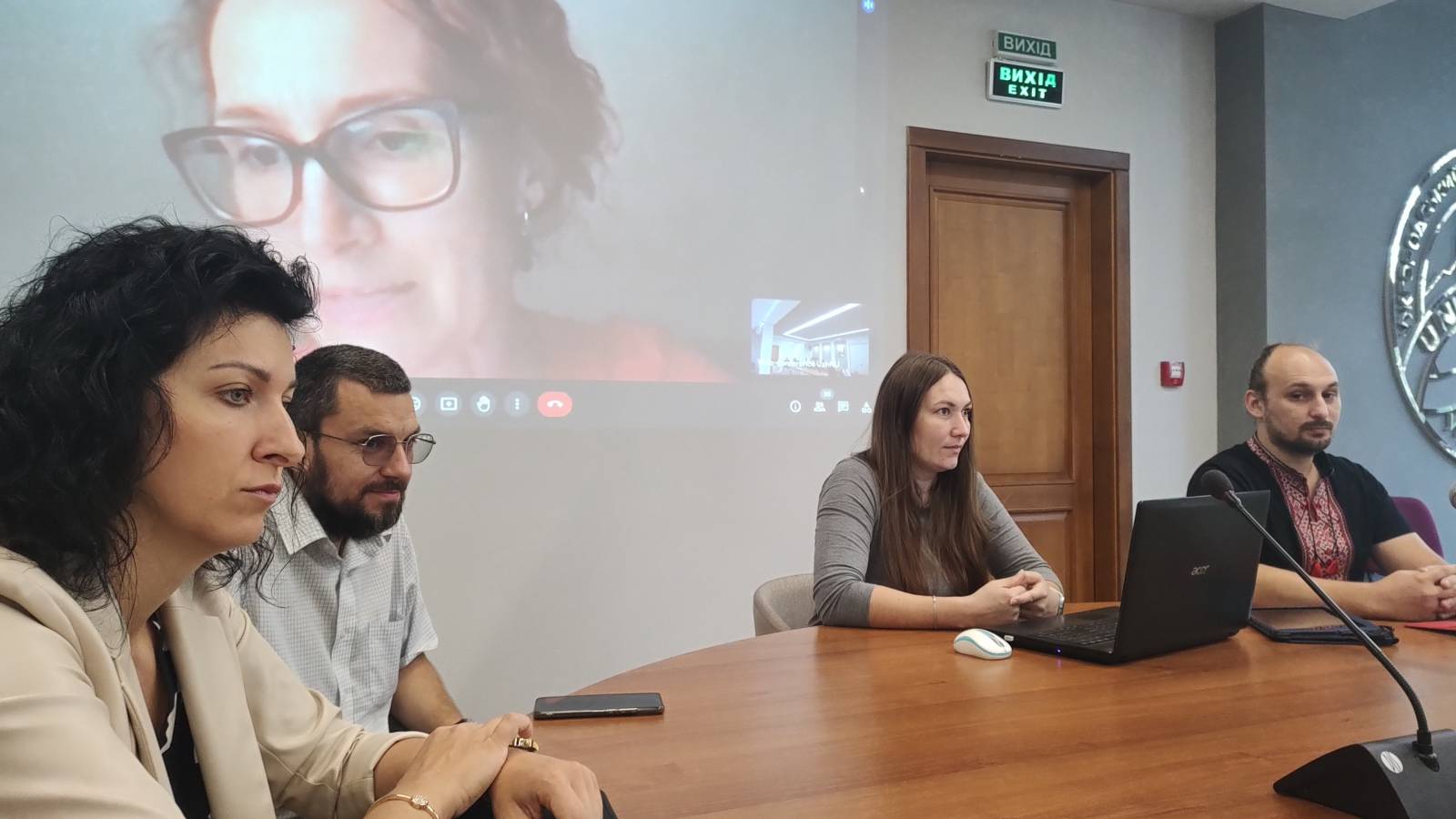
The conference was opened by Vice-Rector for Research Ivan Myroniuk. He emphasised that UzhNU was one of the first universities in Ukraine to support the idea of open science and is implementing it in all university policies: "I see that the programme includes a large number of relevant reports, in particular on the issues of open science and obtaining a PhD. There are many issues that need to be addressed. We all need to prepare for life in the new environment. By creating such discussion platforms where we can share experiences, learn from each other, etc., you are helping to implement open science and bring these changes closer. I wish you success!"
The conference participants were also greeted by Olesia Vashchuk, Professor, Head of the Council of Young Scientists at the Ministry of Education and Science of Ukraine. In her speech, she drew attention to the problematic issues related to scientific conferences, the results of which, in her opinion, are not sufficiently implemented. She noted that the CYS is considering changing the format of such events and involving the general public in them. Science should not be for the sake of science, its task is to improve life. Therefore, participants of scientific conferences and not only should think about solving problems in the country," added Ms Olesia.
Taras Hryadil, Chairman of the UzhNU CYS, noted that the conference brings together hundreds of young scientists from Ukraine and abroad for the second time in a year to present research, share experiences, publicise important issues and find solutions. Compared to the April conference, there is an increased interest in such events. This means that despite the difficult circumstances, researchers are ready to present their results at conferences.
T. Hryadil's speech at the plenary session focused on the issue of open science. He noted that along with the term "open science", other terms are used. The question of whether AI can be considered a tool or an asset of open science is debatable. Algorithms have already been created that detect text created on the basis of AI. Although it is important for scientific research, we should not forget that it is only a tool that cannot be used blindly and with "trust", especially for writing scientific texts," summed up the head of the UzhNU CYS.
Sabine Augunas, a participant of the conference from Germany, representing the National University of Health of Ukraine and the Leibniz Information Centre for Science and Technology, informed about the development of open science and scientific information systems. In particular, she introduced the projects that not only support the open access initiative but also contribute to its development. She also announced conferences on open science. Iryna Tykhonkova, expert on information and analytical resources and training at Clarivate Analytics, researcher at the Department of Cell Signalling Systems at the Institute of Molecular Biology and Genetics of the National Academy of Sciences of Ukraine, spoke about the dangers of publishing in low-quality journals, academic integrity, and demonstrated the features of data search on the Web of Science platform. She also highlighted the opportunities to find partners for research and projects using the platform.
Iryna Tykhonkova, expert on information and analytical resources and training at Clarivate Analytics, researcher at the Department of Cell Signalling Systems at the Institute of Molecular Biology and Genetics of the National Academy of Sciences of Ukraine, spoke about the dangers of publishing in low-quality journals, academic integrity, and demonstrated the features of data search on the Web of Science platform. She also highlighted the opportunities to find partners for research and projects using the platform.
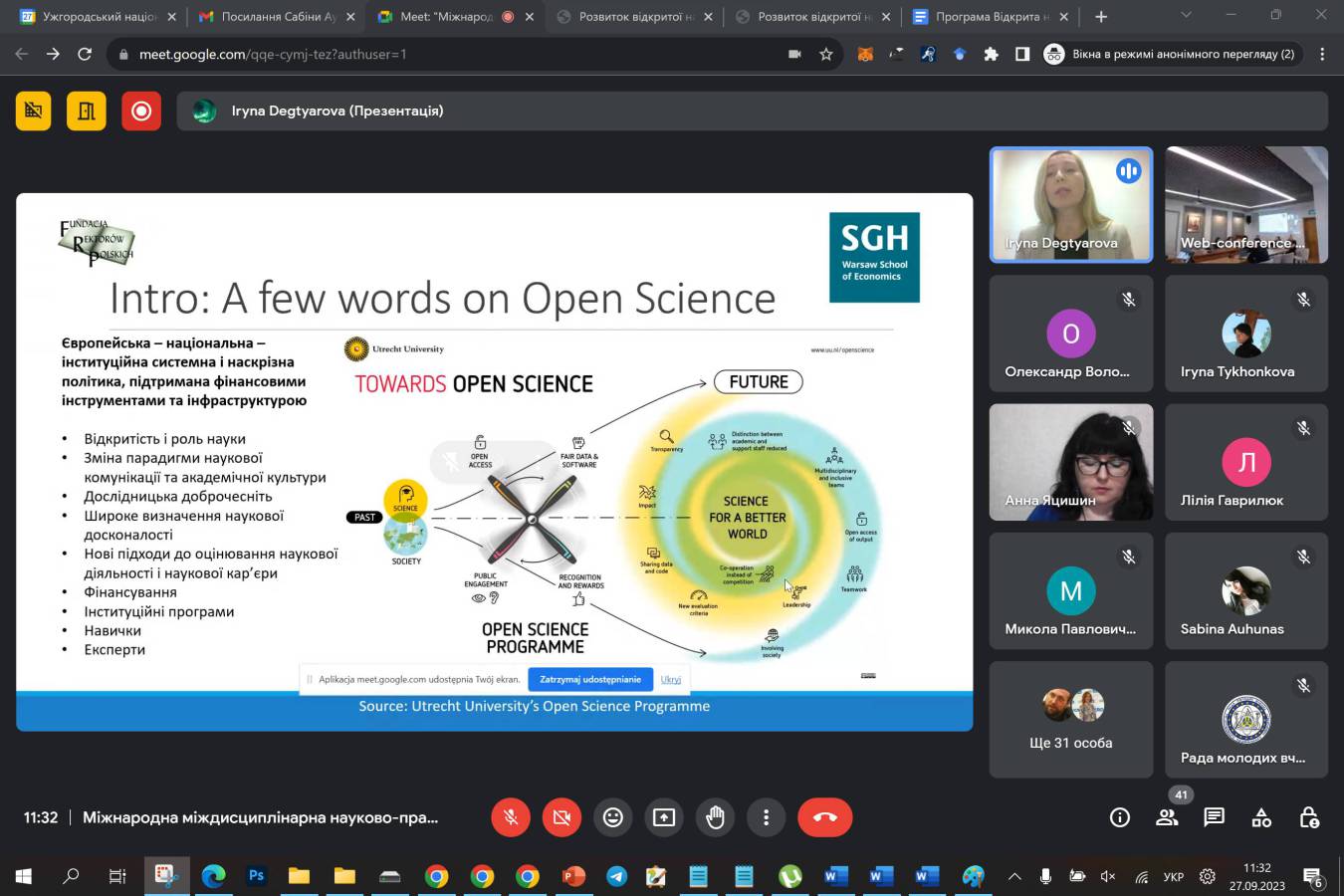
Iryna Degtiareva, Research Fellow at the Polish Rectors' Foundation, SGH Warsaw School of Economics Rector's Commissioner for Cooperation with Ukrainian Universities, shared the results of a survey of university managers in Ukraine and Poland. She emphasises the importance of academic diplomacy and notes that, surprisingly, the war has seriously stimulated cooperation in the field of education. The Polish and Ukrainian sides that took part in the survey point out the benefits of cooperation and its drawbacks. Among the negative factors are insufficient funding, language and communication barriers, and asymmetry of mobility. Instead, academic exchanges and joint publications are promising. The joint report by Oleksii Sukhyi, Deputy Director of the Ukrainian Institute of Scientific and Technical Expertise and Information, and Anna Yatsyshyn, Head of the Sector of the Ukrainian Institute of Scientific and Technical Expertise and Information, focused on the experience of the Ukrainian Scientific and Technical Expertise and Information in developing national information and analytical systems. The researchers demonstrated Ukrainian platforms for searching for scientific information, presentations of achievements, repositories, and other resources that promote open science.
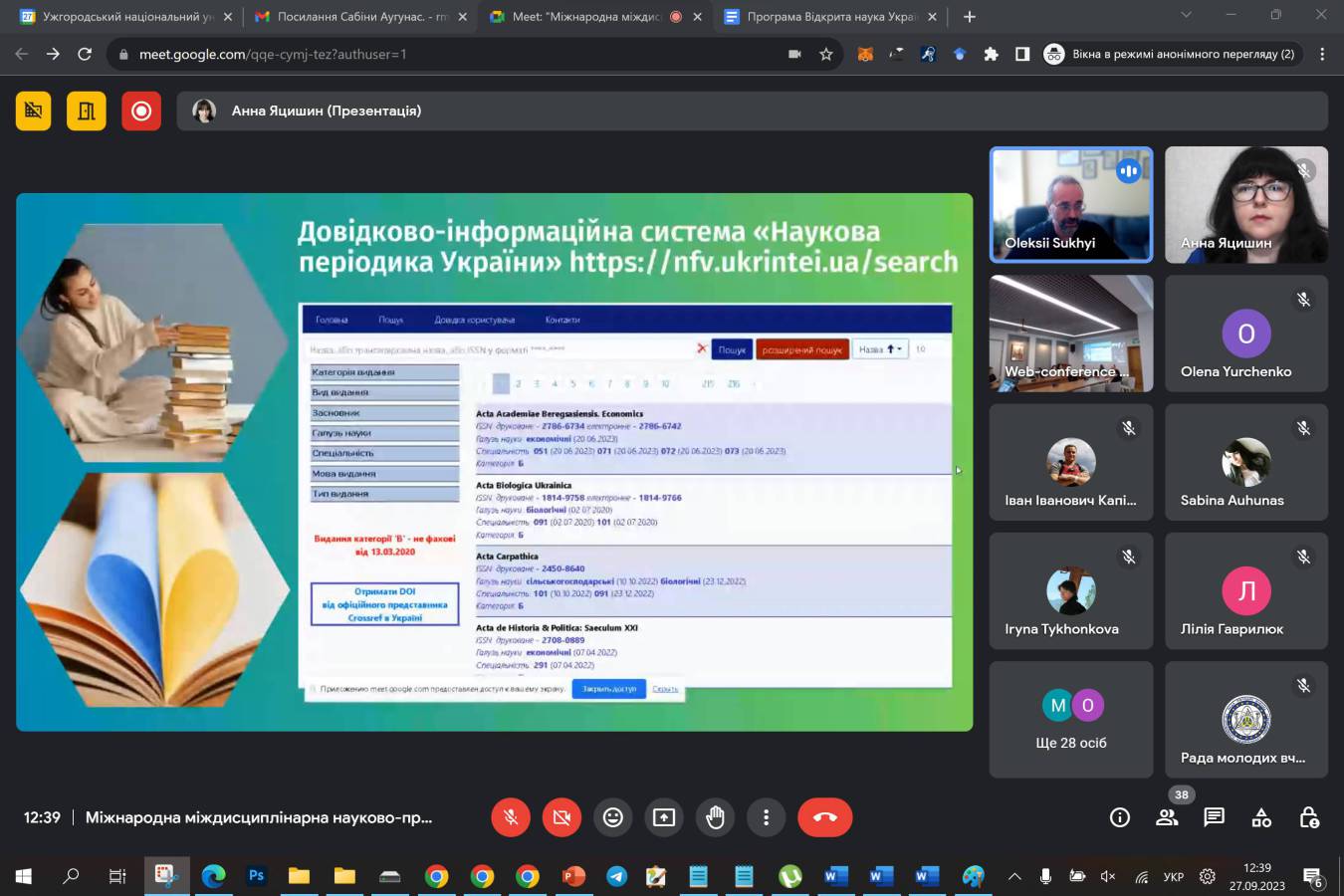
The joint report by Oleksii Sukhyi, Deputy Director of the Ukrainian Institute of Scientific and Technical Expertise and Information, and Anna Yatsyshyn, Head of the Sector of the Ukrainian Institute of Scientific and Technical Expertise and Information, focused on the experience of the Ukrainian Scientific and Technical Expertise and Information in developing national information and analytical systems. The researchers demonstrated Ukrainian platforms for searching for scientific information, presentations of achievements, repositories, and other resources that promote open science.
Andrii Khorolskyi, Head of the Laboratory of Deposit Development Problems, Department of Physics of Mining Processes, Polyakov Institute of Geotechnical Mechanics, National Academy of Sciences of Ukraine, spoke about the project approach to research and its benefits for young scientists.
The report "Digital Adaptation of the Financial Architecture of Business in the Context of Post-War Recovery" was presented by Oleksandra Mandych, Professor at the State Biotechnology University, Chairman of the Council of Young Scientists at the Kharkiv Regional State Administration, Associate Member - Regional Coordinator of the Council of Young Scientists at the Ministry of Education and Science. She stressed the importance of cooperation between science and business, noting that research should be presented in such a way that entrepreneurs, potential sponsors and clients understand the essence of the development and want to finance and implement it. According to Oleksandra, we need to move away from basic research and pay more attention to applied research. Society should use scientific achievements, and researchers should do everything possible to be useful to their country, especially during the war. It is important to create projects and innovative research that will help Ukraine now and after the victory.
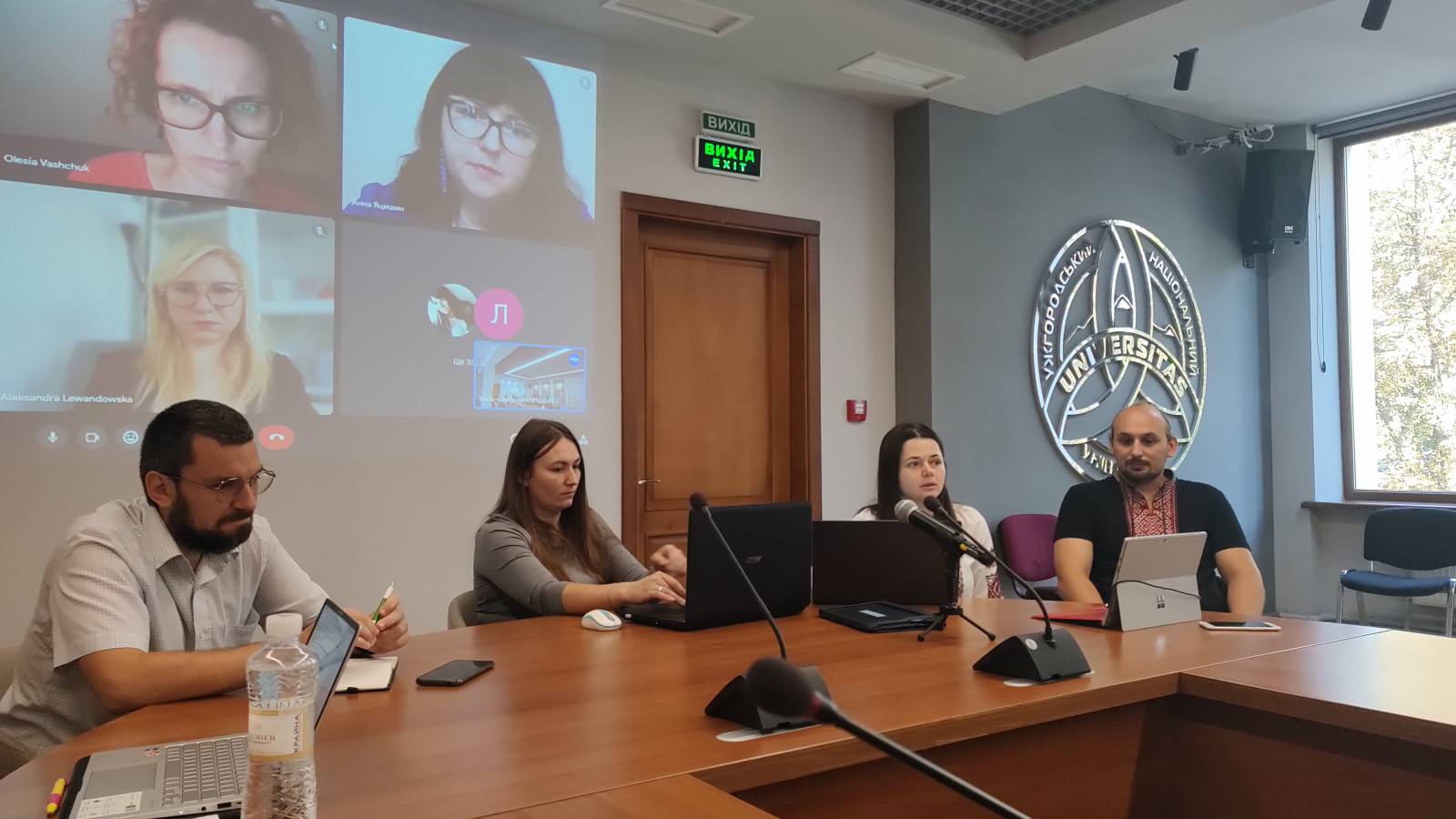
Representatives of the Law Faculty of UzhNU, Professor Maria Mendzhul and Doctor of Philosophy Vadym Pishta, also covered topical issues in their reports. Ms Maria spoke about the problems of protecting children's rights in times of war. She noted that officially, almost 20,000 young Ukrainians are currently in Russia. They are forcibly adopted there, so there are many difficulties with their return. In addition, many children in Ukraine are left without parental care. Therefore, the state is obliged to do everything possible to simplify the procedure of care, guardianship, and adoption, including taking into account the child's opinion in the settlement of legal issues.
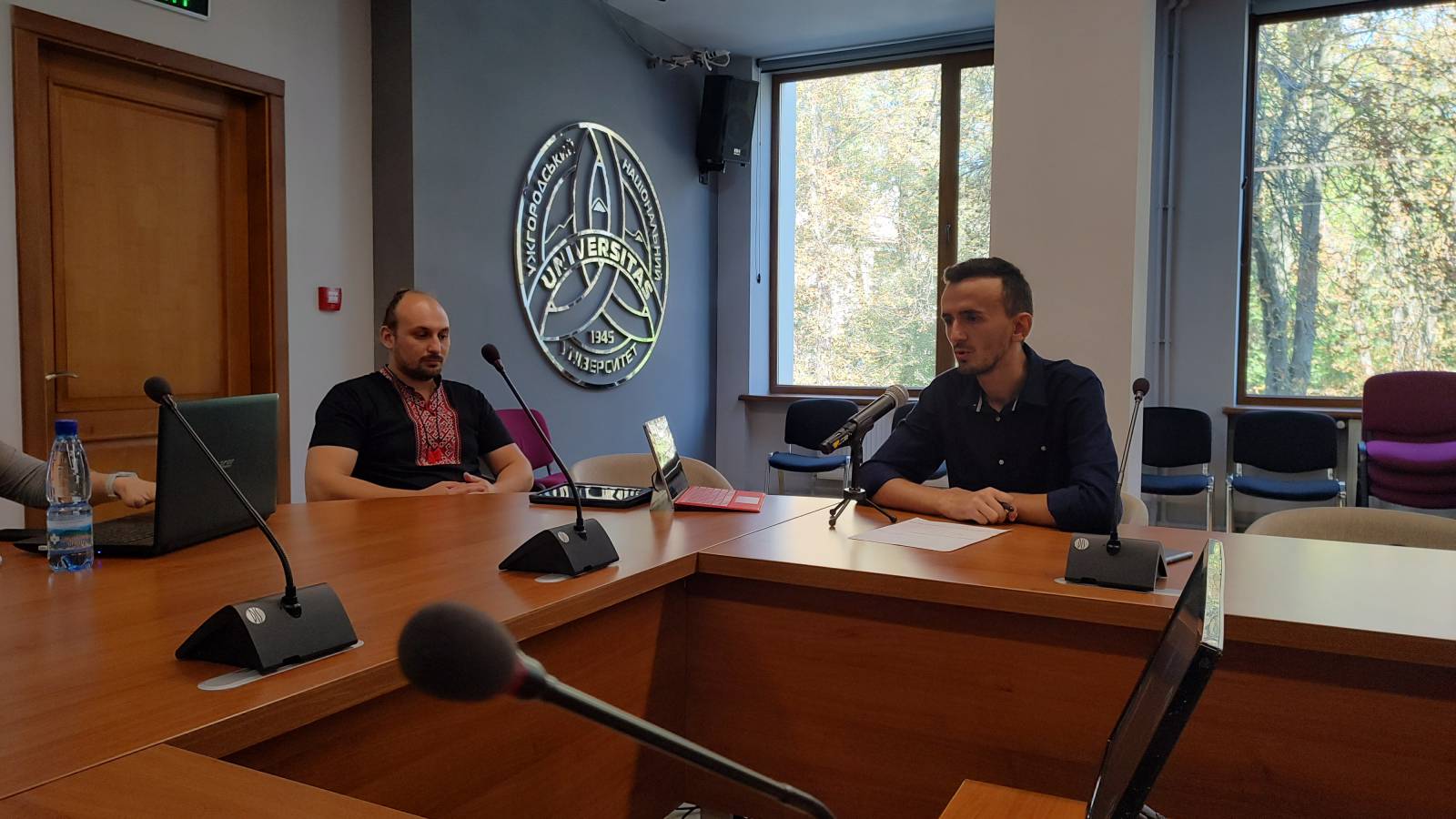
Vadym Pishta voiced the problems associated with obtaining a doctorate in philosophy in Ukraine. According to the Procedure for Awarding the Doctor of Philosophy Degree, the dissertation defence procedure must begin no later than 9 months before graduation, which narrows the rights of applicants, as some research and testing require more time. In addition, the approaches to the formation of members of the one-time council have changed. The issue of sabbatical leave and re-entry into postgraduate studies if a researcher fails to start the defence procedure within the specified timeframe is also not properly regulated. Therefore, Vadym Pishta concluded that in some cases, applicants should be given the opportunity to start the defence procedure after completing their postgraduate studies.
The plenary presentation was concluded by Yuriy Khodanych, Associate Professor of Philosophy at UzhNU, with his report "Science and Commerce: Points of Connection and Separation". The researcher insists that in a competitive environment and in a situation where a scientific institution is only interested in the results of a scientist's work, humanity and respect for the individual are lost. "Scientific indicators, indices, and citations require a huge amount of effort, time, and energy. Many people perceive science as a commodity, which means that it is being primitivised. Although the commercial approach is explained by modern development, it negates the role of science. Under such conditions, a scientist can become a commodity. Any human activity is significant, but only for its internal content, not for its external success," Yuriy is convinced. A possible way out, in his opinion, is to evaluate the contribution of a scientist at the internal level, the perception of their work. This does not mean not striving for progress, because scientific results belong to society. The point is not to reduce work to scientific achievements alone.
During the second day of the conference, a roundtable discussion was held on the problems and prospects of open science. Oleksandra Lewandowska, a master's student in criminology and representative of international cooperation at the Board of the Polish Association of Doctoral Students, spoke about opportunities for young researchers and the specifics of obtaining a PhD in Poland. She noted that the state organises special studies for doctoral students in Poland and offers various projects. The procedure for defending a thesis depends on the field of study.

Hryhorii Mozolevych, Head of the Expert Group on Integration into the European Research Area at the Directorate of Science and Innovation of the Ministry of Education and Science of Ukraine, made a separate presentation at the roundtable. For years, he has been working on the development of open science, has been a member of various working groups to develop special documents, and participated in the process of Ukraine's accession to the Horizon Europe framework programme. Mr Hryhorii demonstrated the Open Science Implementation Plan to the audience and called for analysis and suggestions for improvement. He also informed about the development of the national information and electronic scientific system, which already contains a register of research infrastructures and other developments related to international cooperation. In parallel, a national text repository is being developed. In Ukraine, they are trying to create everything to ensure that the ORCID profile shows the scientific activity of a person.
One of the questions during the event concerned the funding of young scientists' councils. H. Mozolevych replied that he was aware of the problems, but that it was up to the universities to address such issues. Representatives of the Young Scientists' Councils can lobby for funding, in particular for events initiated by the CYS. 11 breakout sessions in various fields of knowledge were held online during the second day. The scientists had a lively discussion about topical issues in various fields and shared their own experiences. The participants' abstracts will be published in a collection at the end of November. Certificates will be sent a week after the conference.
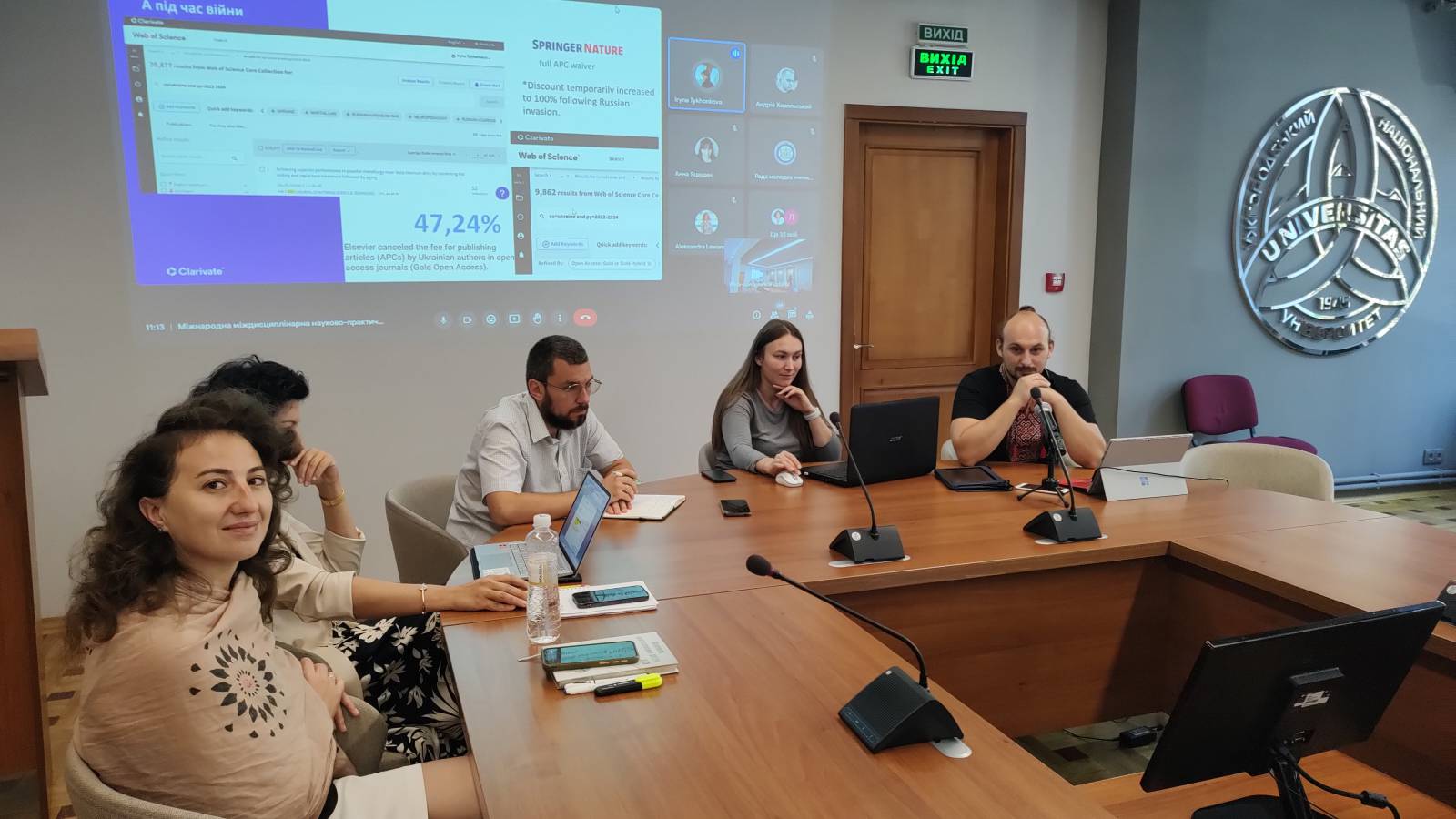
A large-scale scientific conference dedicated to open science was held at UzhNU for the second time.On the third day of the forum, the roundtable resolution was made public and the participants shared their impressions of the conference and discussed opportunities for further cooperation.
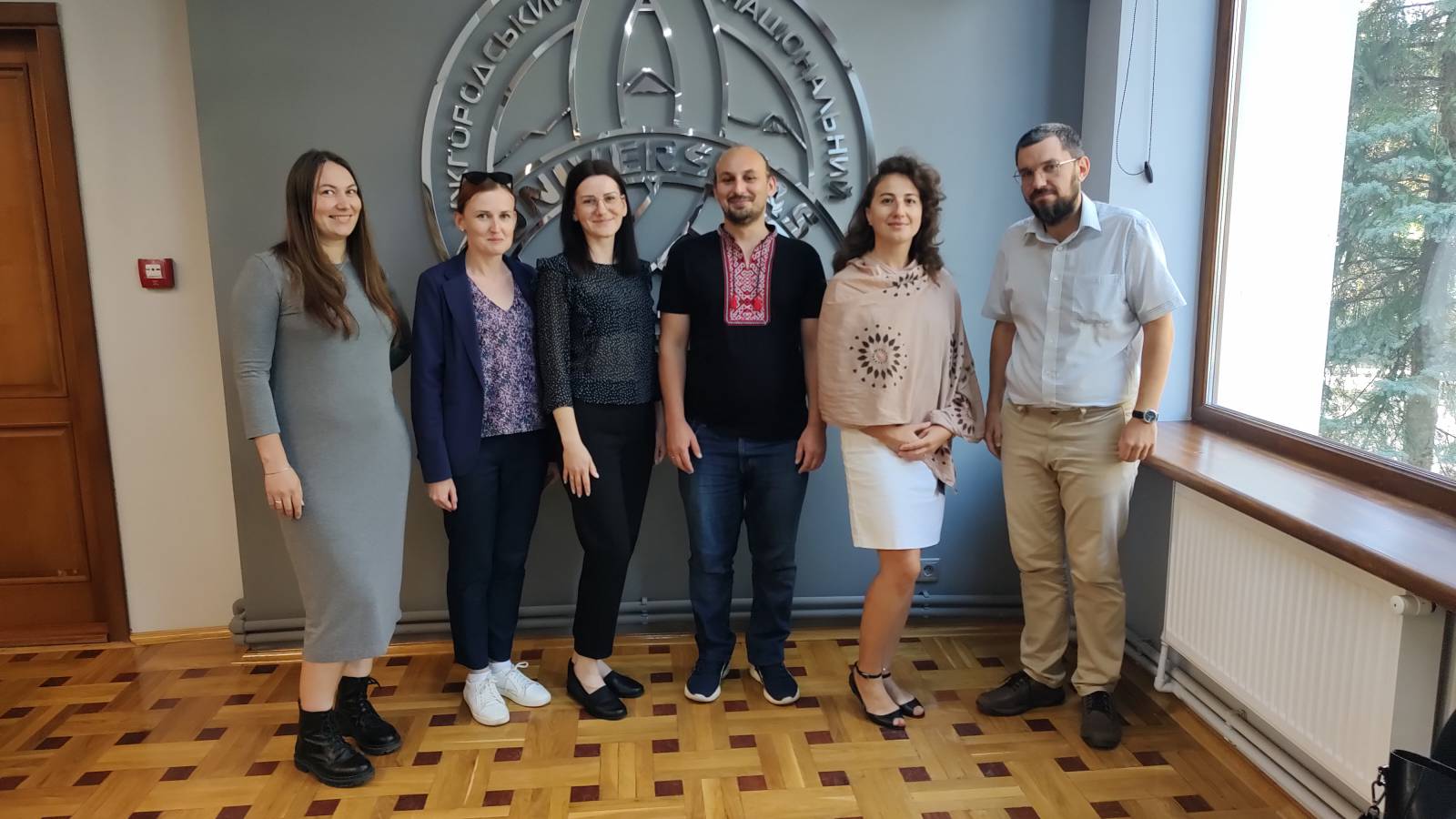
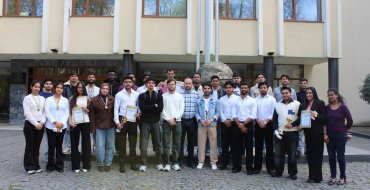
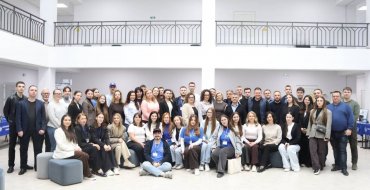
Part of the organising committee - representatives of the Faculty Councils of Young Scientists and the chairman of the CYS Taras HriadilPart of the organising committee - representatives of the Faculty Councils of Young Scientists and the chairman of the CYS Taras Hriadil
In the text of the resolution, the organisers and participants emphasise the importance of the safety of scientists and scientific institutions, the protection of their rights and free access to scientific information; the settlement of the issue of a single scientific degree - Doctor of Philosophy - following the model of Western European countries; joint efforts by the Ukrainian government, international organisations and the scientific community to create conditions that will promote the development of open science and ensure its stable functioning even in difficult conditions of martial law and other equally important issues.The final version of the resolution is planned to be sent to the Council of Young Scientists at the Ministry of Education and Science of Ukraine.


_thumb_wide.jpg)