UzhNU students took part in an international project on global migration
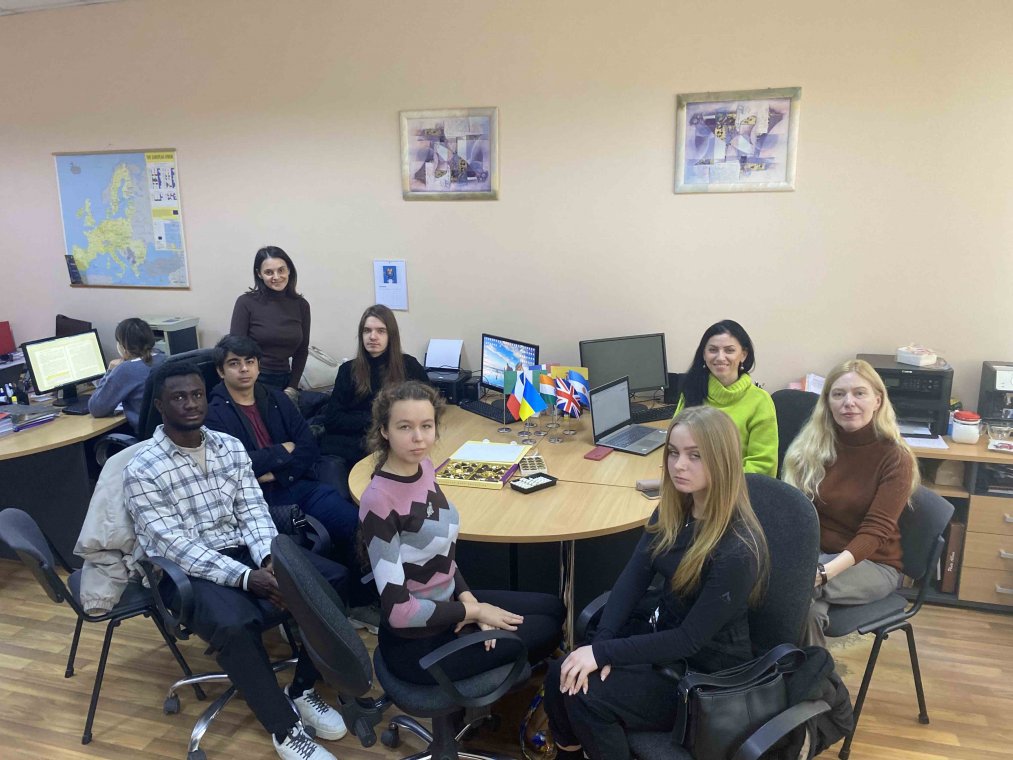
How much do you know about global migration? Recently, students of Uzhhorod National University managed to dive into this topic, share their knowledge and experience, and learn a lot from their peers from other regions and countries.
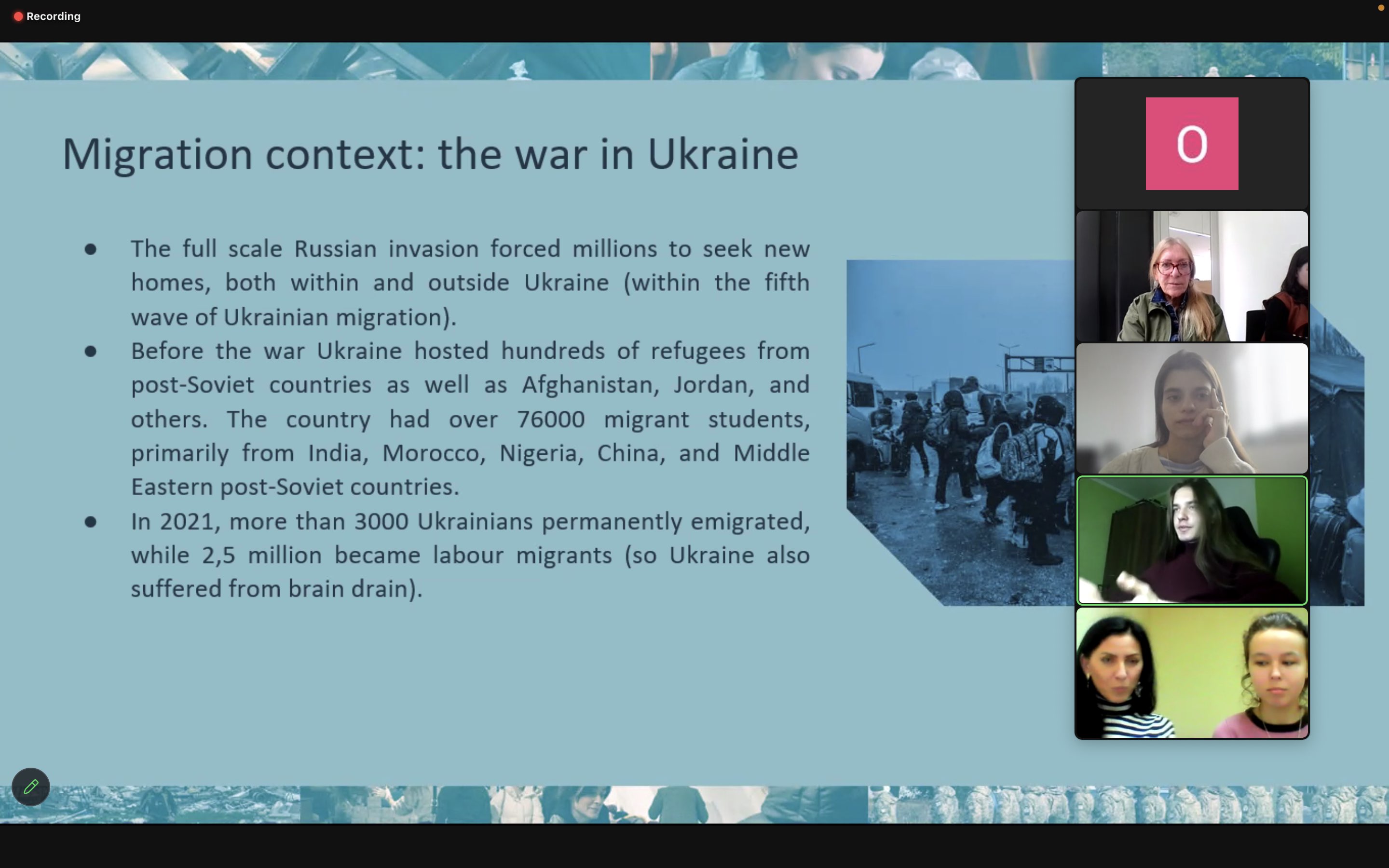
Within the framework of the international virtual project Epistemologies of Inclusion through Continents and Cultures, eight meetings were held over several months with the participation of students from universities in Argentina, Ecuador, the Dominican Republic, the United Kingdom, the Czech Republic, and Ukraine. Universidad del Azuay (Ecuador), Masaryk University (Czech Republic), Pontificia Universidad Católica Madre y Maestra (Dominican Republic), Catholic University of Salta (Argentina), University College London (UK) took an active part in the migration project, while Ukraine was represented by the team from Uzhhorod National University and students from the Horlivka Institute of Foreign Languages of Donbas State Pedagogical University. Students expressed their views on the problems faced by migrants and refugees and had the opportunity to tell their own stories. They analysed various causes of forced migration, including war, the search for security, poverty, economic and climatic factors, gender, ethnic and religious intolerance. The aim of the project was to present a scheme for establishing intercultural global communication, building tolerance, and deepening the sense of responsibility for creating social justice in the present.
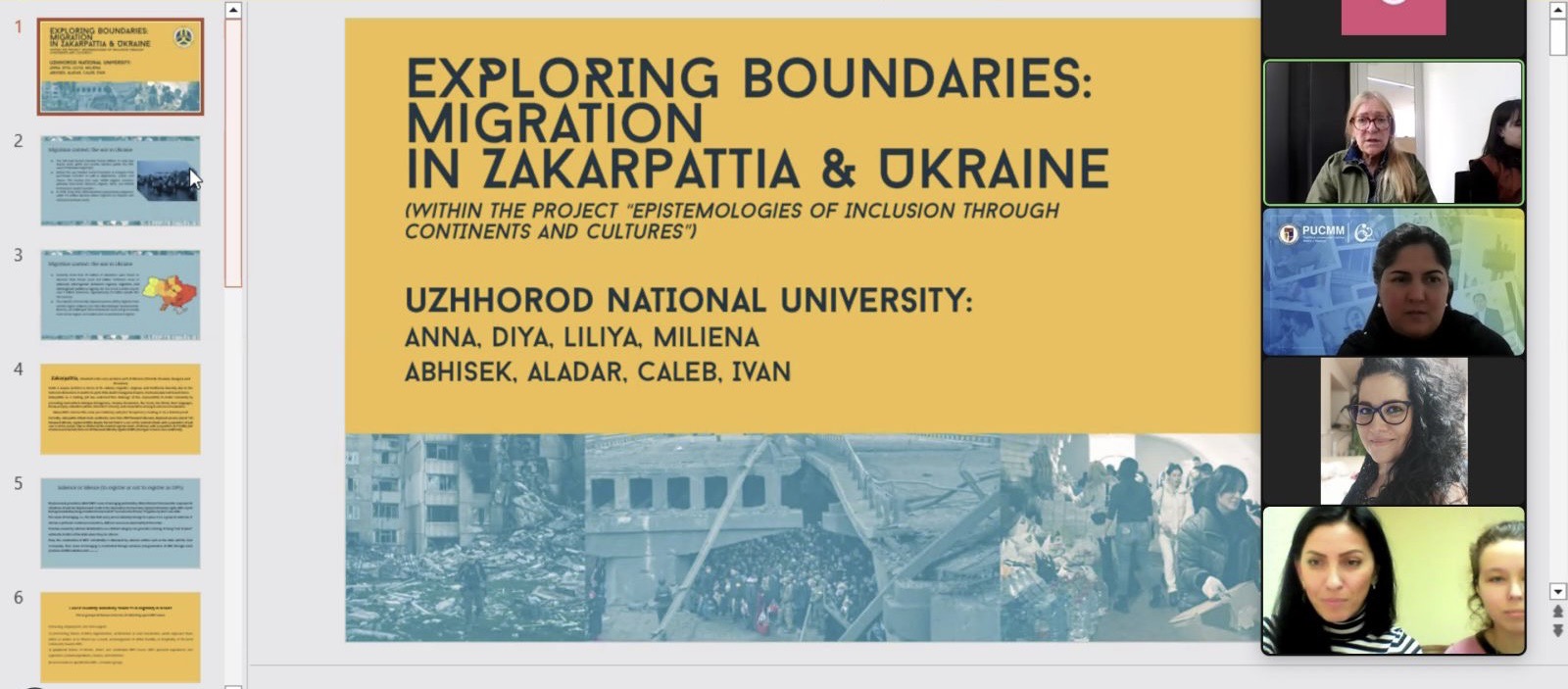
"It was helpful," says Antonina Bulyna, Senior Lecturer at the Department of English Philology, project coordinator from UzhNU, "that before and during the project, the participating students were supported in the form of on-site consultative conversations, provided by Vice-Rector for Academic Affairs Myroslava Lendel, Head of the International Relations Department Oksana Svezhentseva, and myself. This helped to better navigate, in particular, when interacting as part of international student groups that worked separately in the session halls when the above-mentioned zoom meetings were held."
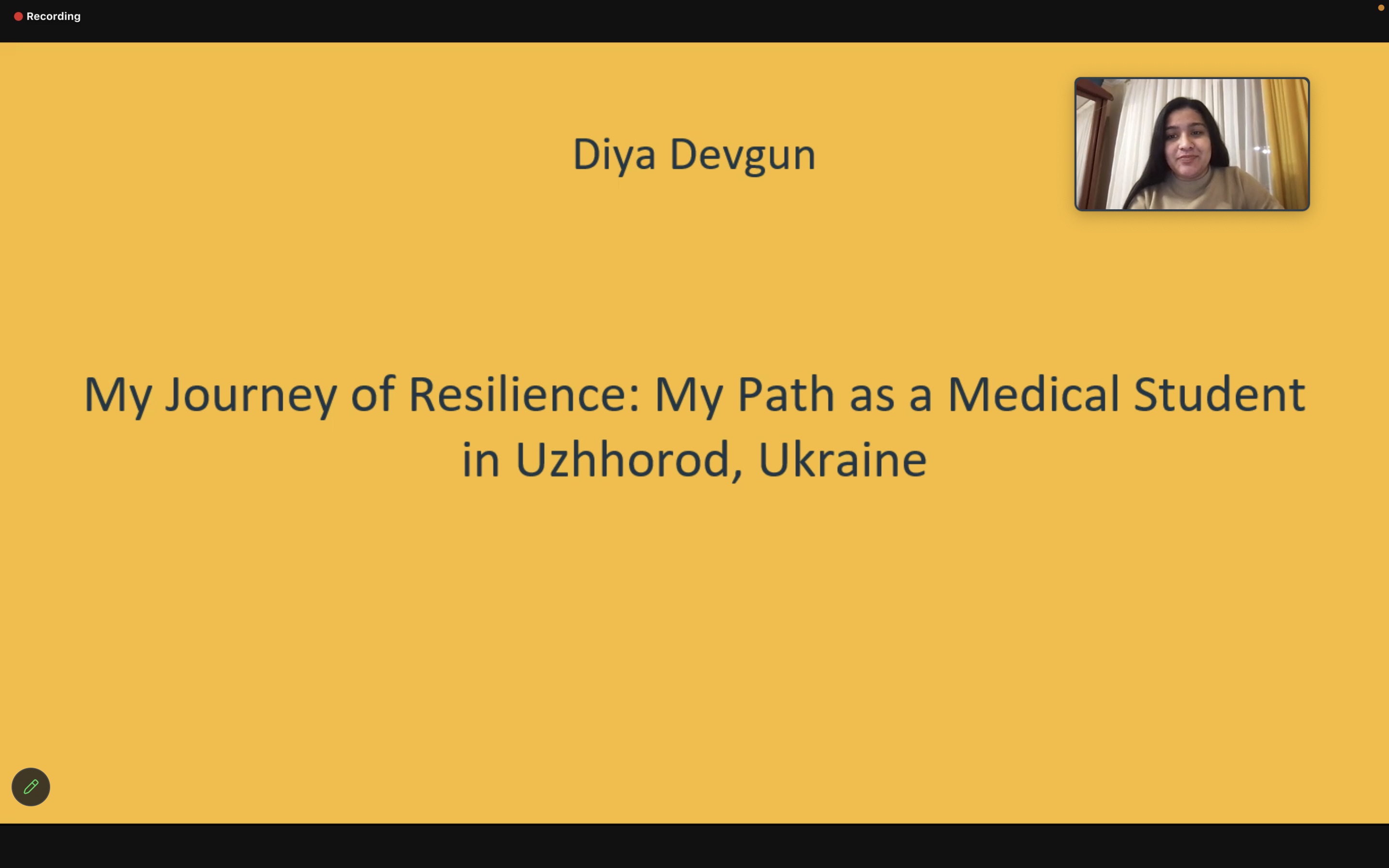
"Participation in the project has had a positive impact on me, strengthening my determination to contribute to change and peace in the world. This experience emphasises the importance of open communication and mutual support between migrants, which has made me more resilient and sensitive to these issues," says Diya Devgun, a 3rd year medical student from India, who was inspired by the project.
Ivan Shumskyi, a 2nd year student of the Faculty of Social Sciences, majoring in Political Science, also shares his impressions of the project. He is a native of Uzhhorod, but due to the specifics of the region, he often met representatives of different ethnic groups: Hungarians, Romanians, Russians, Jews, and Armenians.... He was interested in the perception of Latin Americans of their neighbours and Europeans/Ukrainians. Thanks to the project, Ivan says: "I have a greater sense of connection and closeness to the issues covered." Milena Pysmenna, a 1st year student of the Faculty of History and International Relations at UzhNU, originally from Mykolaiv, notes that thanks to the project, she learned about the different problems people face in connection with migration. "I really enjoyed communicating with the other students, everyone has different accents and different levels of English, but despite this, we understood each other and had a great time." The international virtual project "Epistemologies of Inclusion across Continents and Cultures" contributed to the development of our students' resilience and interaction, and provided an opportunity to better understand current and future challenges related to migration. Young men and women gained new knowledge and skills by strengthening such competencies as communication, cooperation, critical thinking, and creativity.
"And, as an additional bonus, Uzhhorod residents had the opportunity to practice their English, expand their vocabulary, broaden their horizons, and generally feel and increase their awareness of intercultural responsibility," says Antonina Bulyna.
Oleksandra Svezhentseva, first-year student majoring in Journalism
Information and Publishing Centre.