Uzhhorod National University is an active participant in the Israeli-European Summit on Public Cooperation in Prague

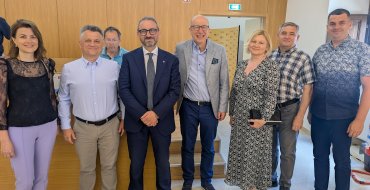
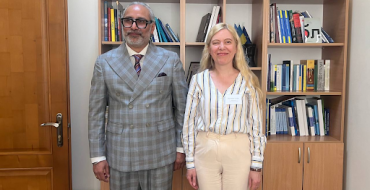
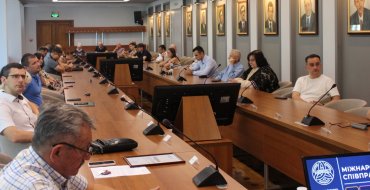
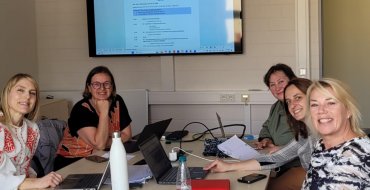
On 21–23 May 2025, the capital of the Czech Republic, Prague, hosted the international conference ‘Israel-European Summit on Public Cooperation,’ which brought together leading scientists, analysts, public figures and representatives of the academic community from various countries around the world (Ukraine, Israel, Poland), as well as representatives of international organisations, diplomatic missions and veterans' associations. Uzhhorod National University was not only a participant but also a co-organiserof the event. The delegation was headed by Ihor Korol, Doctor of Physical and Mathematical Sciences, Professor, Vice-Rector for Scientific and Pedagogical Work at UzhNU.The delegation also included: Maryna Korol, Doctor of Economics, Professor of the Department of International Economic Relations; Ivan Zymomria, Doctor of Philology, Professor, Head of the Department of Theory and Practice of Translation; Olena Zymomria, Candidate of Philology, Associate Professor of the Department of International Communications.

The conference, which aimed to discuss new challenges in the field of public diplomacy, intergovernmental dialogue, academic exchange and the development of partnership between Ukraine and Israel, was organised by Vasyl Moskov, Candidate of Pedagogical Sciences, Director of the Academy of Economics and Pedagogy (Akademie ekonomiky a pedagogiky, Prague). The organiser of the event emphasised that the Israeli-European Public Cooperation Summit will become a regular event that will continue to serve as a platform for exchanging experiences, forming partnerships and implementing joint initiatives at the international level.
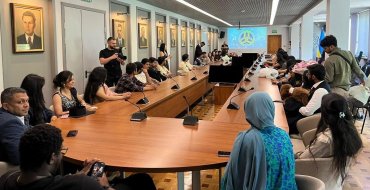
The plenary session of the Summit provided a platform for in-depth analysis of key aspects of contemporary security, medicine, technology and social policy in the context of war. Participants listened to a speech by renowned Israeli military analyst, blogger, journalist and writer Grigory Tamar (Israel), who drew parallels between the Israeli and Ukrainian experiences of countering aggression and outlined the long history of Israel's strategic partnership with the Czech Republic. Practical initiatives in the field of medicine attracted particular attention. Doctor of Medical Sciences Mykola Veropotvelian(Ukraine) conducted an interactive training session on military field and tactical medicine and outlined the challenges associated with the demographic situation in Ukraine, focusing on the importance of introducing expanded neonatal screening in wartime conditions. Neuropsychologist Roman Rosengurt(Israel) shared the latest developments in the treatment of post-traumatic stress disorder and traumatic brain injury using modern Israeli technologies, and outlined the prospects for technological cooperation between Israel and Ukraine in the field of medical and defence innovations. The focus of the speech by Serhiy Knyaziev, head of the All-Ukrainian Trade Union Organisation, was on the role of law enforcement agencies during a full-scale invasion, particularly in regions close to the front line and the border. At the same time, TetianaAndriychuk, deputy chair of the trade union organisation of the Ministry of Internal Affairs, emphasised the importance of creating veteran hubs in Ukraine based on the Israeli model, which combines rehabilitation, support and social integration of veterans.
The Summit featured a wide range of presentations covering key social, legal, economic and humanitarian challenges in the context of war and post-crisis recovery in Ukraine. Among the leading lawyers, Iryna Zharovska (Doctor of Law, Professor of the Department of Theory of Law and Constitutionalism, Lviv Polytechnic National University) gave a presentation on the social and legal status of persons with disabilities. Viktoria Mykolaiets (Doctor of Law, Head of the Department of Legal Linguistics, State Tax University, Irpin) outlined the legal guarantees for the families of deceased military personnel. Oksana Kuzmenko (Doctor of Law, Honoured Worker of Science and Technology, Head of the Department of Public and International Law, KNEU, Kyiv) focused on the problems of rehabilitation of persons with disabilities as a result of hostilities. The role of veterans in the national security and reconstruction system was revealed by Artem Honcharenko(Head of the Institute of Architecture of Sustainability, KNUBA, Kyiv), while the issue of hybrid sustainability of political institutions in the post-crisis period was highlighted by Oleksandr Lysenko (PhD in Political Science, Associate Professor at Cherkasy State Technological University). Practical aspects of community recovery, socialisation of military personnel and international partnership were presented in speeches by Oksana KolIadenko (Head of the LabourDepartment, Borodianka Town Council), Serhiy Klevchuk(Deputy Head of the Town Council, Borodianka) and Yulia Rozpachenuk (head of the Department of Infrastructure Development and Housing and Communal Services, Borodianka). The role of universities in the reintegration of veterans was highlighted by Antonina Savchenko (KNUBA), and the issue of raising humanistic-oriented personalities was addressed by Oksana Lysenko (PhD in Education, Kids Club, Kyiv). Lesya Honcharik (Lviv Vocational School of Information and Communication Technologies) addressed the issue of protecting the rights of internally displaced persons. The legal and social aspects of inclusive urban planning and barrier-free space were covered in reports by Nataliia Serdiuk (KNUBA) and Nataliia Lahovska (DPU, Irpin). Irpin), while issues of inheritance in wartime were addressed in a presentation by Nataliia Lahovska (DPU, Irpin). The European dimension of assistance to Ukraine was analysed by Anna Hurzhiy (DTEU, Kyiv), who looked at EU migration policy, and Adam Jakusiewicz (Casimir the Great University, Poland), who spoke about the Polish experience of receiving Ukrainian refugees. Labour law in wartime and its comparative legal analysis were discussed by Oksana Rudanetska, PhD in Law (Lviv National University of Veterinary Medicine and Biotechnology named after S.Z. Gzhytsky), and Natalia Tsyhanchuk, PhD in Law (Academy of Labour, Social Relations and Tourism, Kyiv). At the intersection of economics, ecology and public administration, Nataliia Zakharkevych, PhD in Economics, and Daria Arzintseva, PhD in Economics, (Khmelnytskyi University of Management and Law named after Leonid Yuzkov) spoke on the topic of food security and environmental neutrality in business. Problems of criminal law in times of war and crisis were examined by Valeria Ryadinska, Doctor of Law, and Iryna Kozakova, Candidate of Law (National Academy of Management, Kyiv), who analysed the regulation of arms circulation and the protection of electoral rights. The prospects for the development of legal science in times of crisis were revealed in a report by Doctor of Law, Professor NataliiaNovytska (State Tax University, Irpin).

During the sectional meetings, representatives of UzhNU made a significant contribution to the discussion on the transformation of higher education, the financial system and information technologies in wartime, presenting relevant research and practical approaches to overcoming contemporary challenges. Prof. Ihor Korol presented an analytical overview of the transformation of IT education in Ukraine in response to the challenges of war, in particular digitalisation, student mobility and improving the quality of the educational process. The report emphasised the role of universities as centres of stability and technological development in regions close to the border. An important addition was the introduction of the audience to the activities of UzhNU in wartime: the vice-rector presented the institution's experience in the development of education, support for internally displaced students and international academic cooperation. Prof. Maryna Korol devoted her speech to analysing the role of the banking system during the war. Attention was focused on how Ukrainian banks are undergoing a ‘test of authenticity’ while maintaining financial stability, ensuring settlements, lending and business support in conditions of systemic risks. Particular emphasis was placed on the functioning of banks in border regions and the transformation of regulatory policy. Prof. Ivan Zimomria and Assoc. Prof. Olena Zimomria analysed the reform of higher education in Israel as a source of ideas for Ukrainian academic transformation. Ivan Zymomria revealed the strategic foundations of the modernisation of Israeli higher education, including aspects such as flexible educational trajectories, the integration of research into the educational process and adaptive university management in the context of national security. In turn, Olena Zymomria focused on the possibilities of adapting Israeli experience to the Ukrainian context, analysing tools for increasing academic mobility, digitising the educational process, and developing new models of partnership between state and non-state educational structures.
Representatives of UzhNU emphasised the importance of deepening intergovernmental cooperation in the fields of science, security and education as tools for social stability and post-crisis recovery in Ukraine. The summit served as a platform for establishing new academic and expert ties, as well as for developing joint projects.