
Ambassador Extraordinary and Plenipotentiary of India visited Uzhhorod: prospects for Indian students in Ukraine
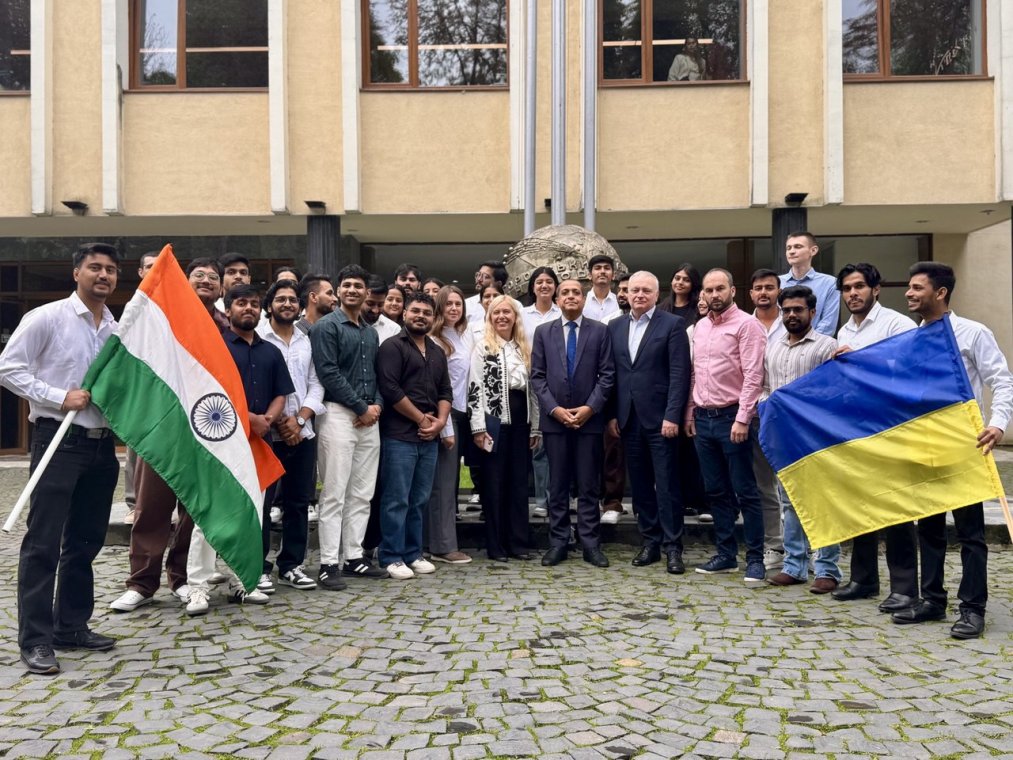
On September 19, a meeting was held at Uzhhorod National University with Ambassador Extraordinary and Plenipotentiary of India to Ukraine Ravi Shankar, who has held this position since 2024. The purpose of the visit was not only to establish direct contact with Indian students, but also to discuss current issues of academic cooperation, the development of international educational ties, and the prospects of this community in the educational process.

UzhNU Rector Volodymyr Smolanka opened the event with the words: “Today we have a unique opportunity to meet the Ambassador Extraordinary and Plenipotentiary of India and talk to him personally.” For his part, Ravi Shankar thanked everyone for the warm welcome and emphasized the special significance of Uzhhorod for the Indian community in Ukraine: “I am convinced that Ukraine is an attractive destination for obtaining high-quality and affordable higher education. Uzhhorod remains one of the centers with the highest concentration of our youth.” The ambassador also stressed that communicating with students is a priority for him. Therefore, future specialists of Medical Faculty No. 2 were especially happy to meet with Mr. Shankar. Each of them introduced themselves and named their hometown, including New Delhi, Haryana, Punjab, Ghaziabad, and others.
After that, they moved on to a discussion, and the main topic of the meeting was the decline in the popularity of Ukrainian universities among Indian students due to the war, difficulties with obtaining visas, and new requirements of the National Medical Commission of India (NMC). As Ambassador Ravi Shankar noted, “The Indian government does not issue bans or restrictions on travel to Ukraine, but it does not encourage it either. The final decision always rests with the students.”

Vice-Rector for Scientific and Pedagogical Work Myroslava Lendiel emphasized the importance of the city on the Uzh as an educational center for foreign students: "We have the largest Indian student community in Ukraine. Before the COVID-19 pandemic, their number reached 1,253. Ukrainian media even called Uzhhorod the “Indian capital of Ukraine.” We highly value such students, so we provide all the conditions for a comfortable educational process, including conducting it in English." Today, the number of students has decreased slightly, and, as Ms. Myroslava noted, one of the main problems is logistics — due to the martial law, it has become more difficult to enter Ukraine. The university, in turn, is actively cooperating with the consulates of Hungary and Romania to facilitate the arrival process. Volodymyr Smolanka echoed these words, confirming the university community's intention to assist with visa issues together with the embassies of neighboring countries: “We understand the risks of war, but Uzhhorod is the safest city in Ukraine, and we are ready to accept students,” the professor said.
 At the same time, the agenda included the issue of official recognition of medical training in Ukraine and India. It should be noted that UzhNU has introduced a 12-month general practice internship, which, together with six years of study, provides comprehensive clinical training and meets international standards. In response, the Ambassador noted: “The NMC is an independent regulator, and we do not have the right to respond on its behalf. We can only forward your request and wait for an official clarification. I understand that this creates uncertainty for students, but the embassy is ready to assist in communicating with the NMC.”
This was followed by an open discussion, where students, representatives of the university, and the Indian Embassy discussed pressing issues and prospects for the further growth of the Indian student community at UzhNU.
Immediately after the meeting, the guest was offered a tour of the medical faculty of UzhNU. Dean Oleg Devinyak demonstrated modern simulation laboratories, equipped with the support of Swiss partners, where students practice clinical skills and practical procedures in a safe environment. The delegation also visited key infrastructure facilities of the faculty, which reflect the organization of the educational process and the introduction of modern technologies in the training of medical specialists.


