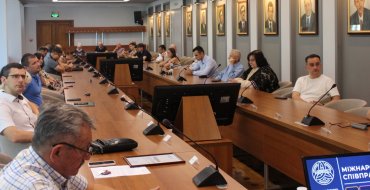
Synergy of education and labour market: discussion panel held in Uzhhorod as part of Job Fair ‘2025

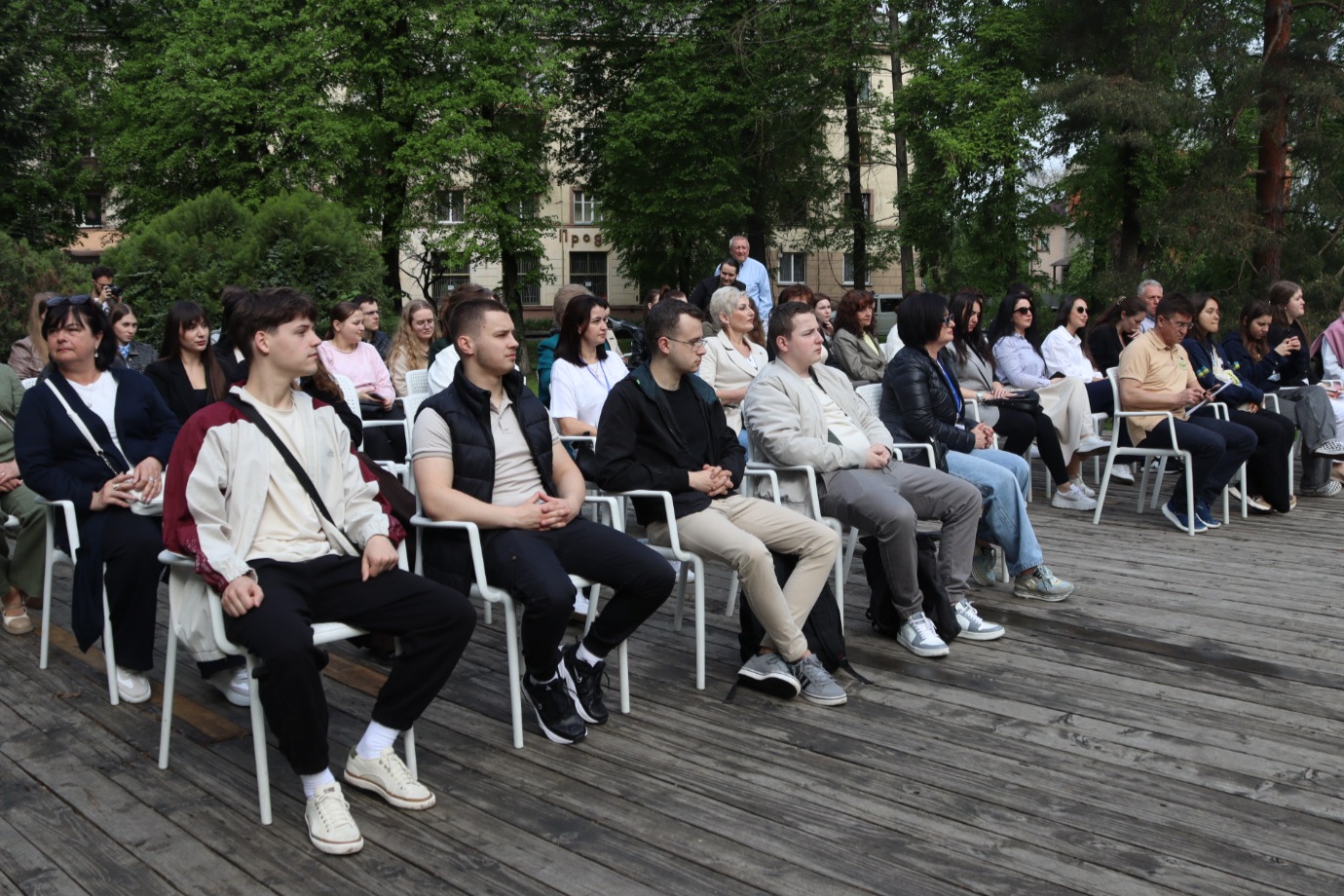
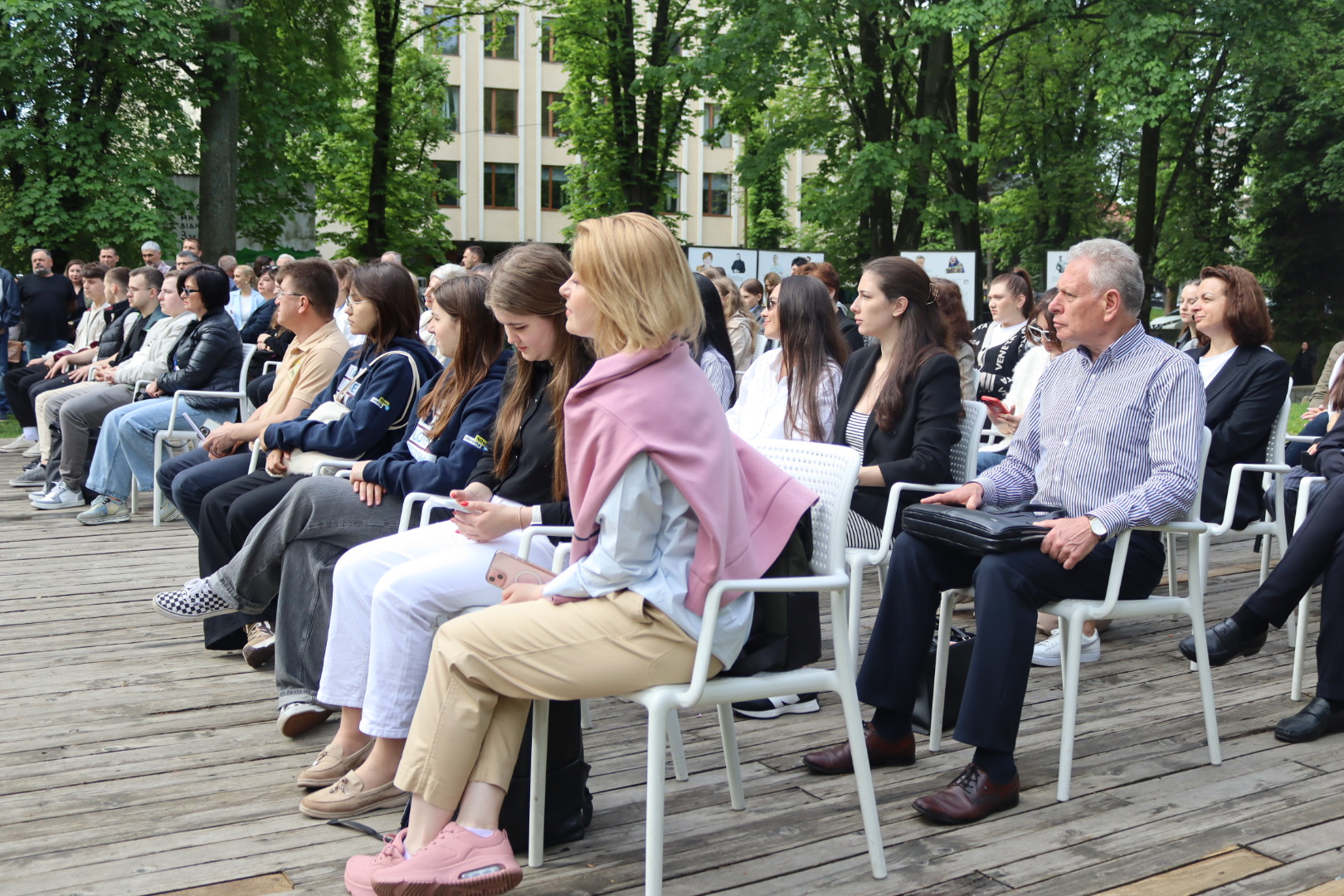
The Career Opportunity Territory Job Fair was held in Uzhhorod. This is the third year in a row that the event has brought together employers and job seekers from across the region. The main goal of the event is to promote employment, support the development of vocational education and establish partnerships between businesses and educational institutions.
The event was organised by the Transcarpathian Regional Military Administration, Uzhhorod City Council, the State Employment Service, Uzhhorod National University, the Ukrainian Academy of Leadership and the NGO Nehemiah.
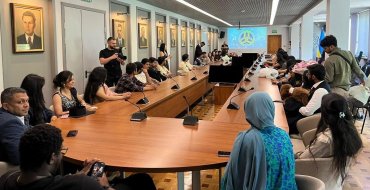
The event began with a discussion panel on the topic ‘Synergy of Education and Labour Market: Partnership for Labour Potential Formation, Economic Development and Investment Attraction in the Region’.

Vasyl Ivancho, First Deputy Head of the Transcarpathian Regional State Administration, welcomed the audience: ‘Today's panel is a pre-start of the Job Fair. We clearly understood the problem of this issue 2 years ago. Those vacancies that are being formed and will be formed in the near future in the region need to be adjusted, which we have been actively doing over the past year. We communicate with employers and representatives of higher and vocational education institutions to synchronise their actions and form the specialists that the region's enterprises need today.’
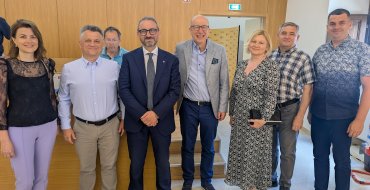
The panel discussion was attended by Oksana Dovhanych, Deputy Head of the Department, Head of the Division of Higher, Vocational Education, Science, Physical Culture and Sports of the Department of Education, Youth and Sports of the Zakarpattia Regional State Administration, Ihor Korol, Vice-Rector of UzhNU for Scientific and Pedagogical Work, Maksym Ryss, Deputy General Director of the management company of the industrial park, Friendly Windtechnology, and Olga Savchuk, representative of Biopharma Plasma, Olena Kukharevska, expert in modern education, head of the author's school at the Liko-school Technological Lyceum, Liubomyr Shymkiv, Head of Development, Partnerships and Infrastructure at the Ukrainian Leadership Academy, Rostyslav Yarema, founder of Kraina, member of the Board business community, Ksenia Tymeniuk, labour market entry expert at EdUP, and Iryna Shumik, Director General of the Directorate of Vocational Education at the Ministry of Education and Science of Ukraine. The panel was moderated by Elvira Lysyshyn, Head of the Regional Development Division of the Department of Economic and Regional Development of the Zakarpattia Oblast State Administration.
‘Rebuilding Ukraine is not only about infrastructure, it is primarily about people. It is about how we invest and will continue to invest in human capital and how we will prepare our youth for economic growth. Today we are going to talk about applicants, their future, and what we need to do to ensure that young people stay in Ukraine, have good jobs in the future, and strive to develop our country,’ said Elvira Lysyshyn.
Iryna Shumik presented a brief overview of the study on the employment of vocational education graduates and shared a number of useful resources for career counselling for young people. ‘At the Ministry of Education and Science, we understand that it is very difficult to succeed without promoting the vocational education system and work processes. That is why we have launched several large-scale annual communication campaigns since 2022. This year, we are also preparing to launch a campaign to attract even more applicants to vocational education and training institutions and to bring good specialists to the companies that need them in the near future,’ Iryna Shumik summed up her story.
Oksana Dovhanych spoke about changes in approaches to demonstrating the priority of vocational education not only to students but also to their parents and debunking stereotypes about vocational schools, which are being replaced by vocational colleges. ‘We understand that today the labour market has changed due to the full-scale invasion and emergence of relocated enterprises in the region that need specialists. Today we can help them because we have the appropriate material and technical base, masters of industrial training, and we also involve their specialists to train personnel for the economy of the region and Ukraine as a whole. By the end of the year, our region will have 22 modern training and practical centres that will enable us to train business professionals at the appropriate level. These centres are open to both students and company specialists, employees who want to upgrade their skills and unemployed people who want to change their profession.’
Kseniia Tymeniuk presented the EdUP project, which is being implemented in Zakarpattia Oblast. The project includes organising excursions to enterprises, introducing a mentoring institute, conducting open trainings for both business and educational institutions, developing teaching materials together with business representatives, promoting construction professions, advanced training for heads of educational institutions, creating and promoting career development centres, etc.
Olena Kukharevska spoke about career guidance at a private school: ‘I don't like the word ‘career guidance’. What we do at our school is build a career trajectory. And we do this from the first grade, developing soft skills in children that can be applied in any profession. In the middle school, children create projects, the best of which we present to their parents, who, in turn, can invest in those developments that seem promising to them. Many of our students have helped not only businesses but also government officials. At the high school, we have a course called Me and My Career, where we not only test children on the industry in which they can work, but also help them make a choice, even sending them on an internship.
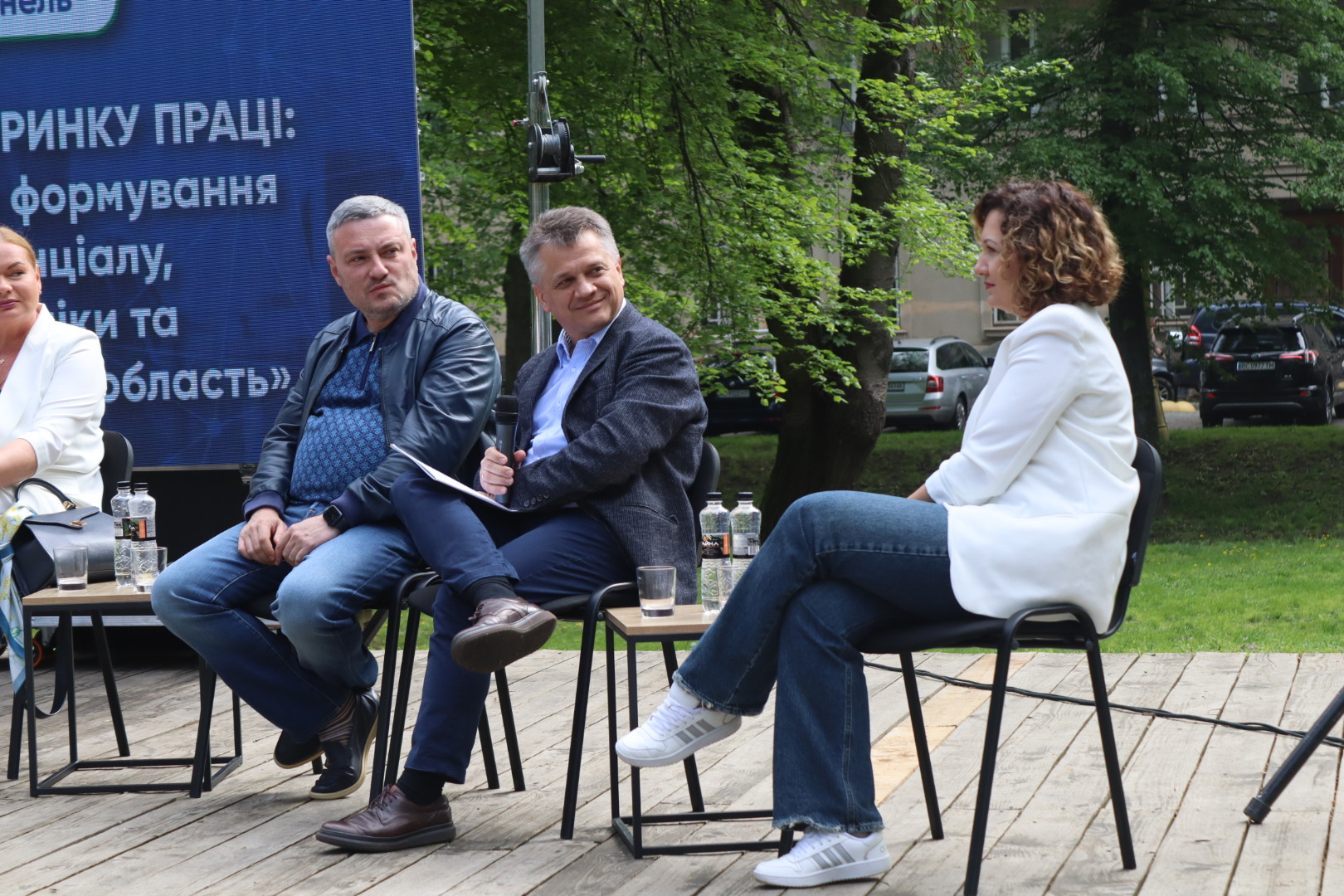
Ihor Korol spoke about the cooperation between Uzhhorod National University and business. ‘Today we are changing the educational process. We are introducing more internships and encouraging students to monetise the knowledge they acquire at university. Today, the university should be a runway for career growth. We have to work in the triangle of university - students - business. Students want knowledge, competences and skills from the university, and businesses want a good job and a decent salary. Business wants the university to train good specialists who will master the job in a very short time, and expects competences from students. The university wants to receive innovative ideas from employers that will enthuse students and allow the institution to be more attractive and interesting for schoolchildren, and from students - the desire to acquire knowledge and skills.’
Maksym Ryss spoke about the competencies that businesses expect from job seekers. ‘Unfortunately, today the average age of workers in blue-collar occupations is 55+ years old, as the prestige of blue-collar jobs has been damaged. We cooperate with Perechyn Vocational Lyceum, which last year opened a new speciality that trains specialists who can immediately work at our company. Children have the opportunity to do paid internships with us. The most important thing for us is to provide our employees with decent pay and opportunities for a quality life.’
Uzhhorod National University cooperates with Biopharma Plasma, which is building its plant in Uzhhorod. Students of the Faculty of Biology have already visited the company's plant in Bila Tserkva. Olga Savchuk said: ‘Our field is very knowledge-intensive. Without knowledge and practical skills, it is impossible to work for us. That is why we will do everything to ensure that graduates come to the industry with deep knowledge, where they can develop, have decent working conditions and be successful. We are ready for any type of cooperation: internships at our company, online and offline lectures, etc. To work for us, students must have a deep awareness that they want to develop in this direction and invest in the profession.’
Liubomyr Shymkiv spoke about the Ukrainian Leadership Academy, which provides applicants with a so-called gap year after graduation to determine their future path. The Academy actively cooperates with businesses. Over the past year, the students have talked to more than 20 founders and top managers of regional companies, and at the end of the academic year they will have an internship. ‘It is very important to make them understand that the choice a young person makes is not final, it is just the beginning. Given how fast the world is changing, our task is to teach flexibility, the ability to take responsibility and move on. Because this will be the first career step, and then the second, third, fifth, seventh, and not necessarily in the same field, they can all be completely different,’ says Liubomyr Shymkiv.
Rostyslav Yarema spoke about the work of the Board business community, cooperation with the ULA, and his experience of living a 3-day life as a student of the Leadership Academy. According to the founder of Kraina, it was an incredible experience that brought rich results - both personal and business.
Summing up, Elvira Lysyshyn highlighted 3 main messages:
1) it is good when business invests in education;
2) learning is a lifelong process;
3) education is a strategic investment in the future of our country.
Анастасія Лабик