International cooperation in action. Students of UzhNU took part in the project “Transcultural Vinculation”

For the fourth time, the Universidad del Azuay (Ecuador) is launching a wave of international projects that allow young people to share experiences, gain new knowledge, and acquire useful skills. This year's theme is dedicated to the development and establishment of relationships between cultures (Transcultural Vinculation Project). The number of participating countries has increased slightly compared to previous years, including Ecuador, the Dominican Republic, the Czech Republic, Argentina, the United Kingdom, Turkey, Germany, and Ukraine. A total of 9 higher education institutions participated: Universidad del Azuay (Ecuador), Masaryk University (Czech Republic), Pontificia Universidad Católica Madre y Maestra (Dominican Republic), Catholic University of Salta (Argentina), University College London (UK), Erzincan Binali Yıldırım University (Turkey), University of Potsdam (Germany). Ukraine was represented by the Horlivka Institute of Foreign Languages of the Donbas State Pedagogical University and Uzhhorod National University, which is an honorary participant in the program for the third time. This year, it was implemented from October to December 2024.
The goal of the project can be traced in the title and is to develop the skills of intercultural epistemic communication, which involves the exchange of knowledge, ideas, and points of view between people from different cultures. This helps to form a correct understanding of the values, traditions, and ways of thinking of other countries, which in the future allows not only to cooperate effectively but also to solve global problems with different perspectives.
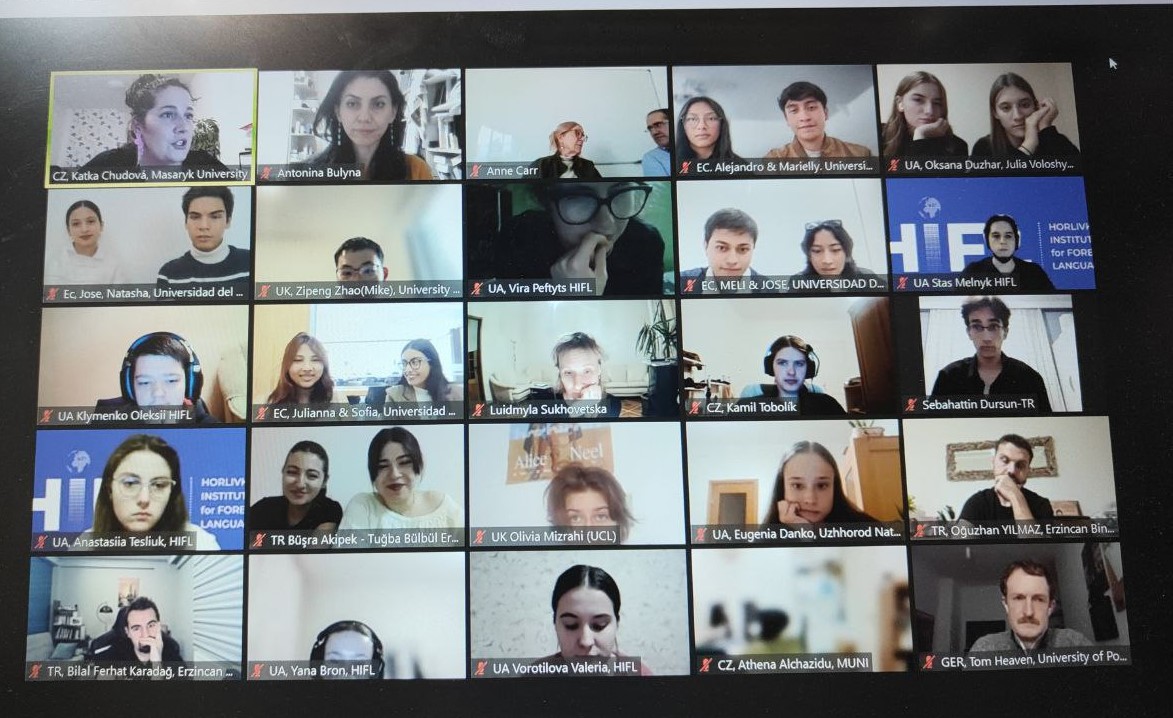
The project involved about 60 participants. Before and after the program, everyone took the COMMUNICATION SKILLS assessment and INTERDISCIPLINARY THINKING surveys to analyze how their skills had changed as a result. The coordinator Antonina Bulyna notes that this year many people from UzhNU joined the project and described the process. The meetings were held online and exclusively in English, but in case of difficulties, participants could always contact their coordinators, who, for their part, provided comprehensive support, such as explaining terminology or using professional vocabulary. In the course of their work, students had the opportunity to test their skills and knowledge in real-life conditions. It is especially important that all this took place in a circle of like-minded people and young people, so the activists could freely communicate and find common topics.
“The atmosphere was relaxed and friendly. We shared our thoughts and experiences, helped to find the right words and complemented each other. One of the most vivid memories was the presentation of the project from our university. It was a way out of my comfort zone, and I am very glad that I got this opportunity. The most valuable thing for me is that I managed to meet incredible people. After completing the program, I am still in contact with some of them, I have friends from the Czech Republic and Ecuador. I am very grateful for the experience I gained and plan to participate in similar programs if I get the chance,” says Yevheniia Danko, a 2nd year student of the Faculty of Foreign Philology. She also notes that she did not have any difficulties during her participation, and, on the contrary, everything was easier than she had imagined. She notes that every time she looked forward to Wednesday evening to communicate with like-minded people.
Now, more about the process: there were eight Zoom sessions in total, for each of which a team from one university had to prepare a 10-15 minute presentation about the cultural characteristics and diversity of their country. After the presentation to the general audience, students were divided into 5 intercultural groups, which in separate Zoom rooms reflected on and discussed the list of 7-8 questions based on the presentation, which took about 35 minutes, but usually this time was enough to talk about other things. One of the participants from each discussion room, chosen by the activists among themselves or, if necessary, by the teacher, leads the discussion and acts as a moderator, thus gaining experience in organizing and leading discussions. At the end of the session, the moderator reports on the conclusions they have reached based on the questions that were asked.
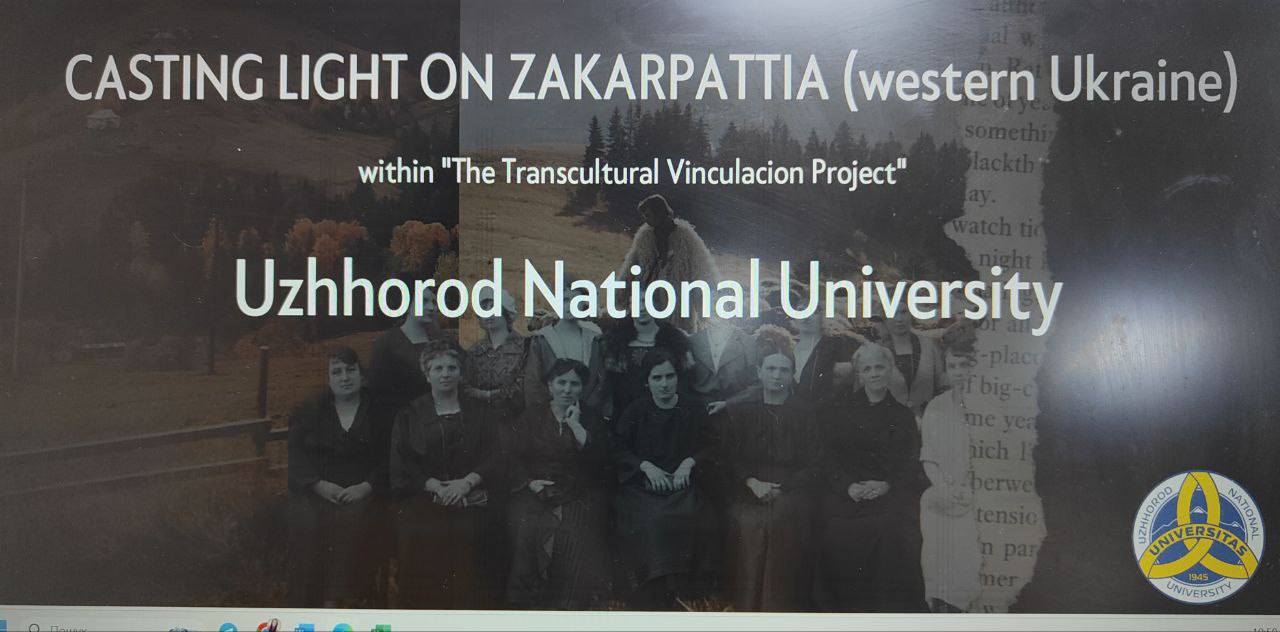
Representatives of the Uzhhorod National University prepared a presentation about their native land called “Casting Light on Zakarpattia (Western Ukraine)”. Antonina Bulyna, the project coordinator at UzhNU, spoke about the components of the work, noting that, as in previous waves, there were two components of the activity - synchronous and asynchronous. There were 2 components of the work: one was Zoom sessions, where participants communicated with each other in real time and presented their countries and their cultural characteristics, and the second was that a week before the demonstration, each university uploaded preparatory materials to a common Google folder.
Such initiatives are of great importance for today's students and young people who want to improve the social environment. Participants from UzhNU expressed positive feedback and noted that this opportunity was extremely interesting and useful for them. Svitlana Chastuyeva, 4th year student majoring in Ukrainian Language and Literature. English Language and Literature Svitlana Chastukhina says: “This project was a great opportunity to overcome the language barrier that often arises during communication. Even in a short discussion, all participants were able to express their opinions. Each university had the opportunity to share information about their country and culture, which made the exchange even more meaningful and informative. I am sincerely grateful for the opportunity to work with such inspiring peers and mentors from around the world. The knowledge, skills, and cultural awareness gained during this project will undoubtedly be useful to me both in my studies and in my professional life.”
In addition, at the end of the project, students received a “Certificate of Participation and Achievement” confirming their participation in the Transcultural Vinculation project. Through the joint study of cultural and global issues, participants demonstrated the acquisition of research skills, analysis and synthesis skills, intercultural communication, presentation and public speaking, teamwork, facilitation and chairmanship, reporting, and the ability to engage different perspectives


