
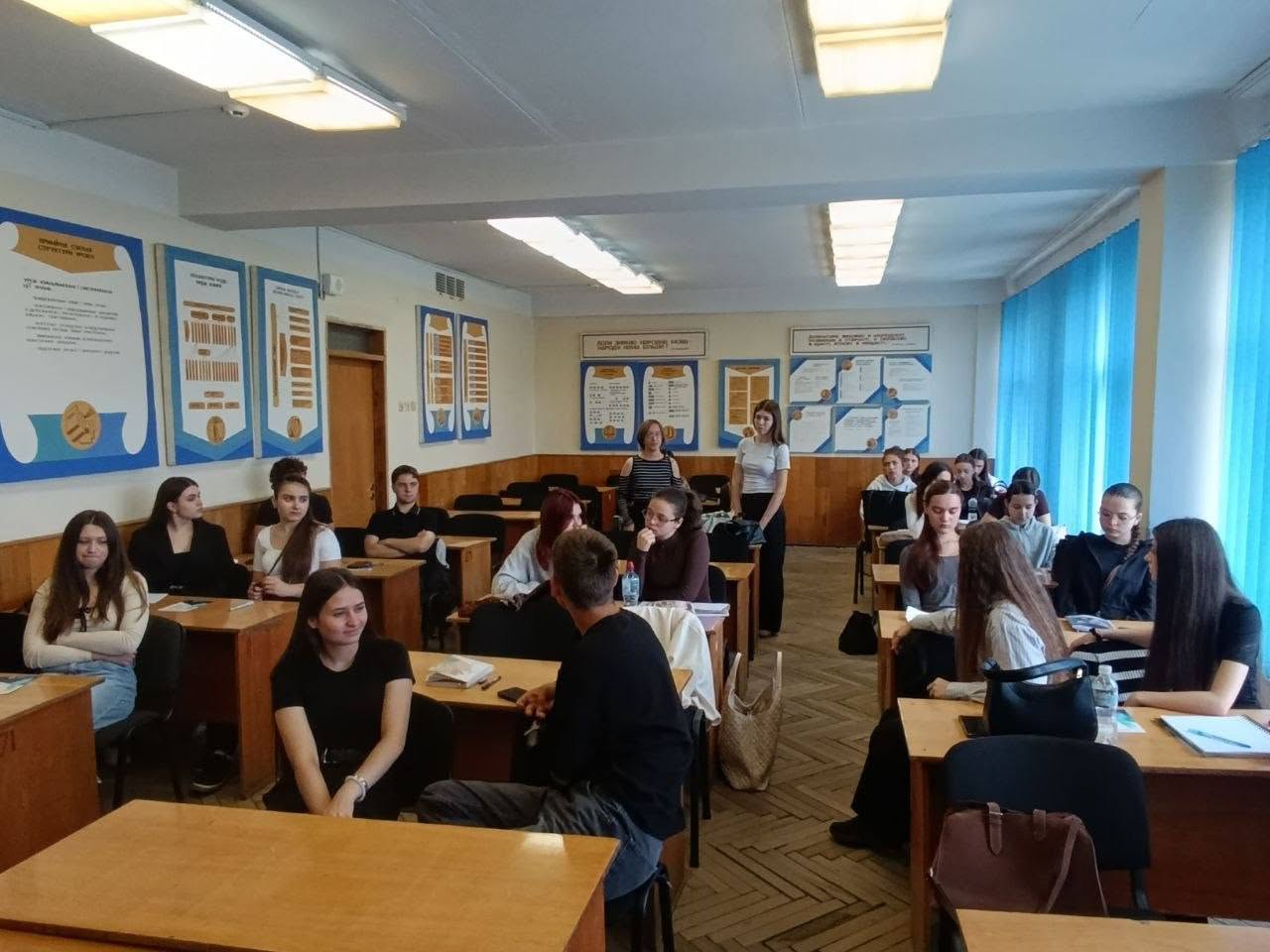
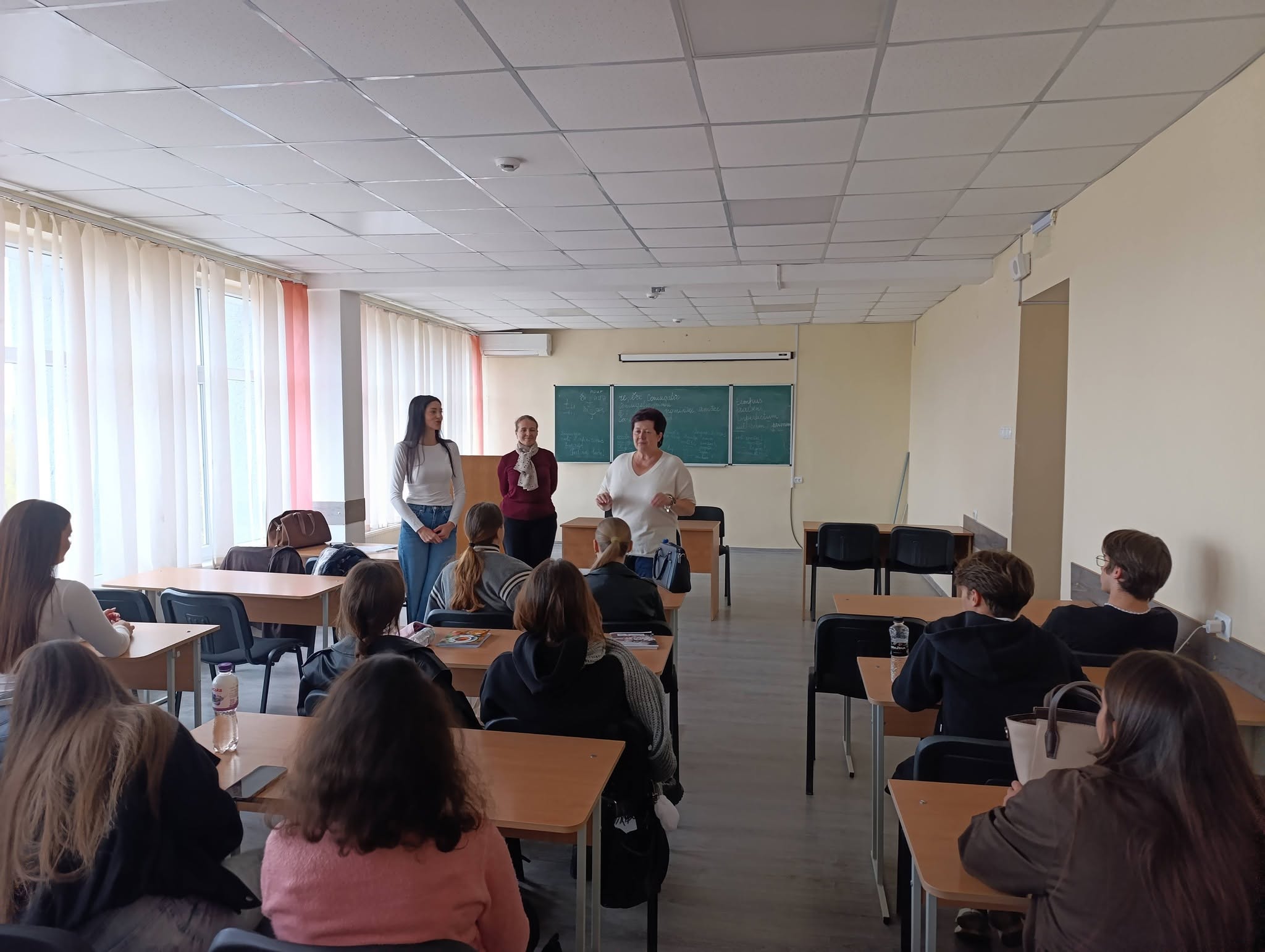
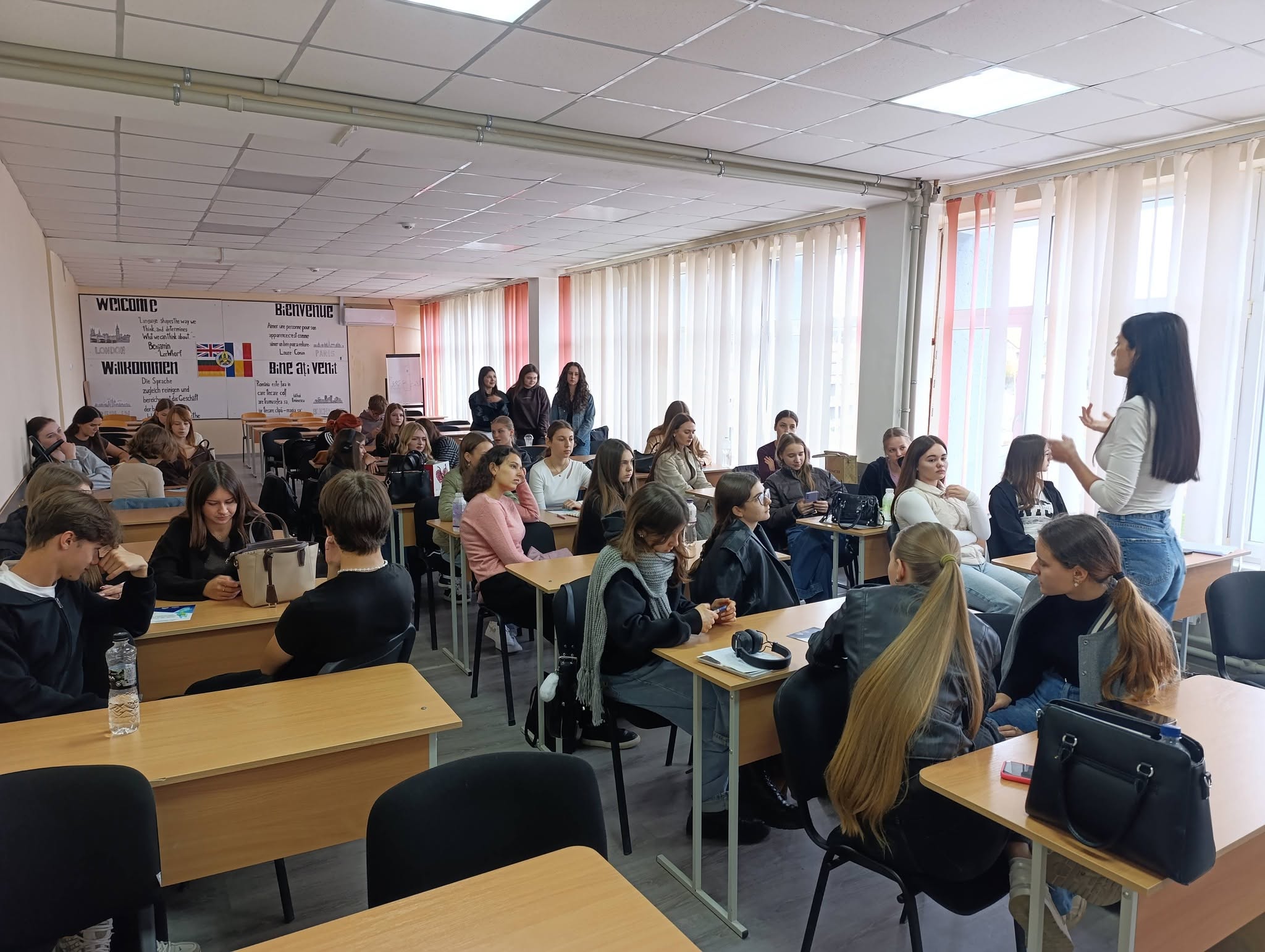
In September, the Centre for Innovation and Development of Uzhhorod University continued working with student youth on the topics of diversity, non-discrimination, inclusion and barrier-free interaction. During the month, the simulation games "Unity in Diversity" and the practical workshops "Hear! Feel! See!" took place, which gave students the opportunity not only to learn more about the experience of other people, but also to try new ways of interaction, ask questions and rethink habitual ideas. Unity in diversity: learning to understand one another.
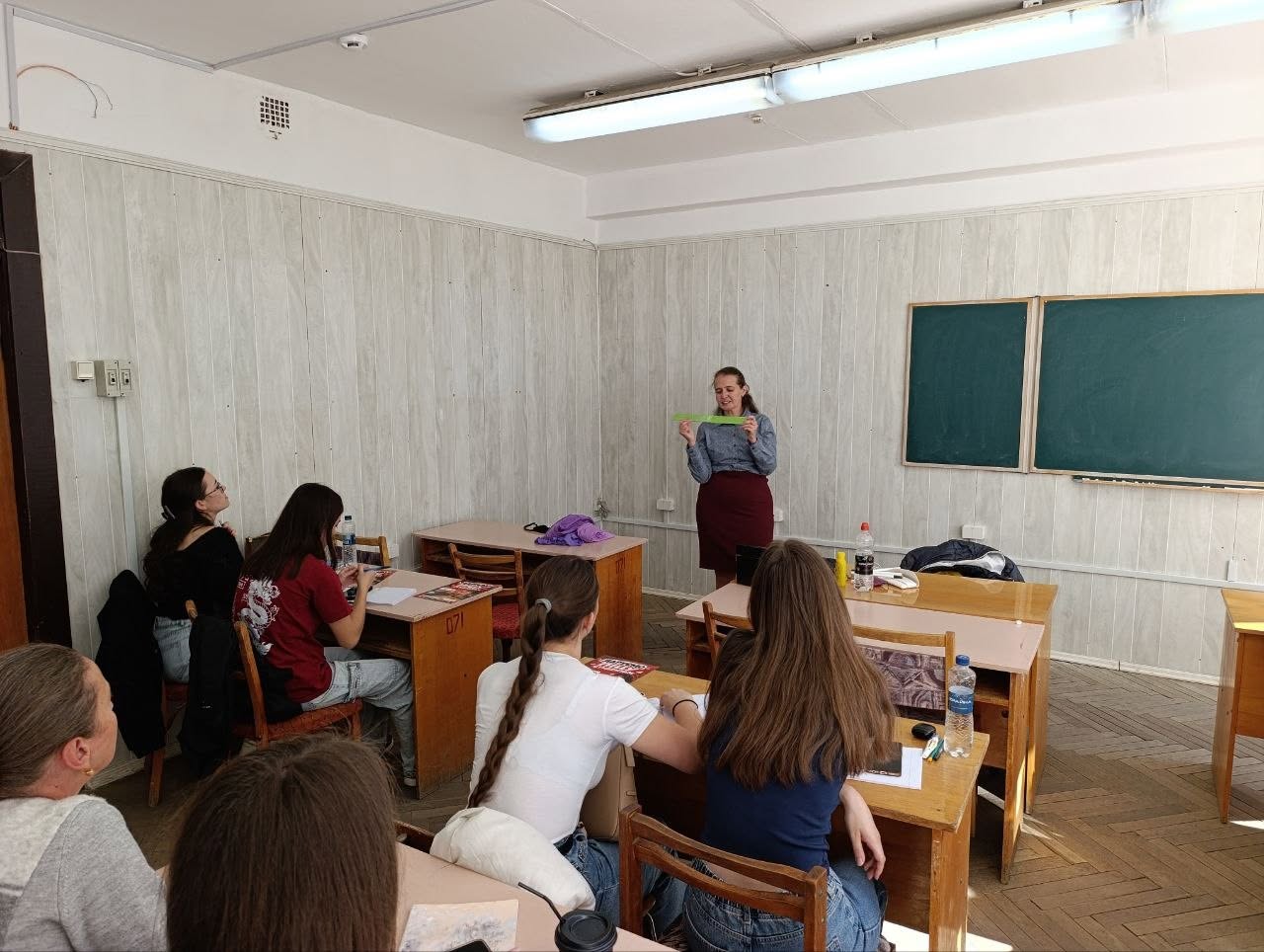
It was held for students of the Faculty of Philology, the Faculty of Foreign Philology and the first year of the educational programme "Clinical Psychology" of the Department of Health Sciences of UzhNU.
During the game, the participants analysed life situations, discussed differences between people and looked for what unites them. An important part of the work was reflecting on how first impressions are formed, why we sometimes draw conclusions about others on the basis of only a few facts and how stereotypes can influence communication and further interaction.
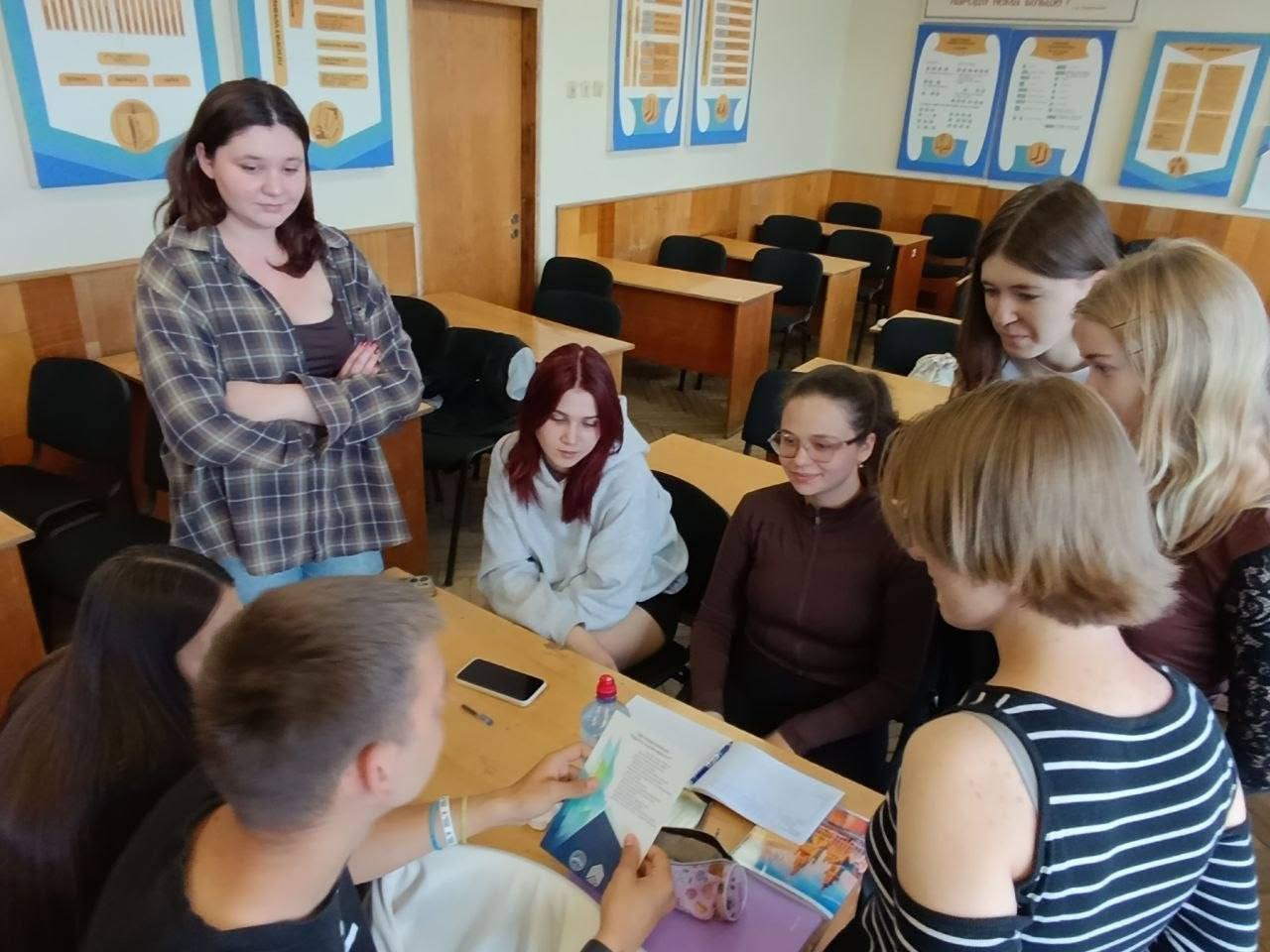
The search for common traits aroused particular interest. At first, the students mostly named obvious things. For example, age or country of residence. Gradually they began to find less obvious points of contact, which became a reason for new discoveries and discussions.
In addition to discussion, the participants looked for practical solutions: how to hear another person's position, take different needs into account, reach agreement and cooperate even when views or experience differ.
The ability to listen, ask questions, not rush to conclusions and respect another position is needed regardless of the chosen profession.
The game became a space for open dialogue in which one could look at familiar situations from different perspectives and independently find answers to difficult questions. "Hear! Feel! See!": getting acquainted with different ways of perceiving the world.
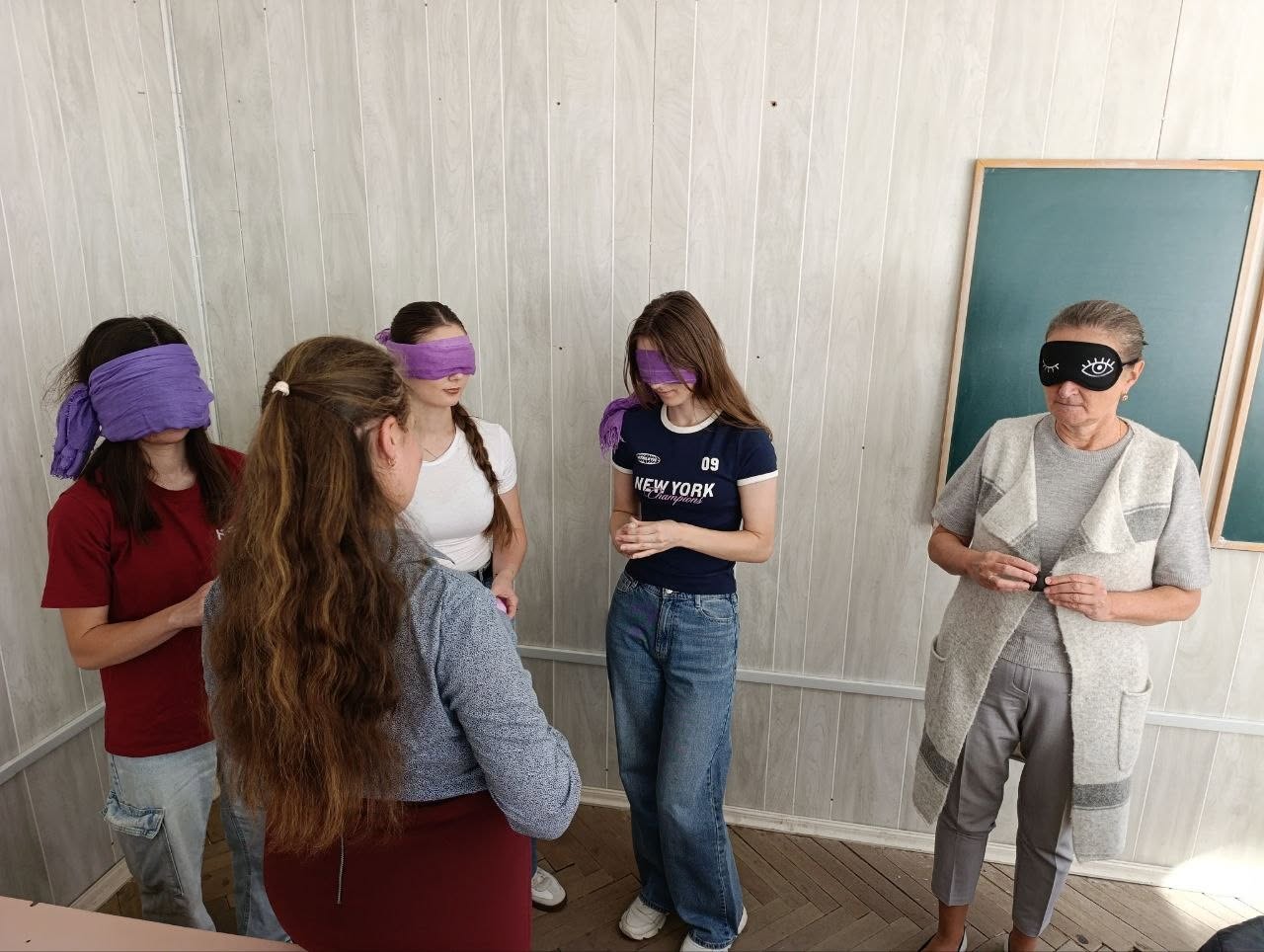
Another area of work was the practical workshops "Hear! Feel! See!", which Maryna Stashyna-Neimet conducted for first-year students of the Faculty of Philology and third-year students of the Faculty of Social Sciences.
During the classes, the students tried to recognise objects with their eyes blindfolded: by touch, by smell or by sound. The task turned out to be not as simple as it might have seemed at first: when only part of the information is available, even familiar things can be difficult to identify.
This experience became a reason to talk about how we receive and process information, how accustomed we are to relying on sight and why the accessibility of information and communication matters for people with different perceptual abilities.
Particular attention was paid to the tools used by blind people and people with visual impairments. The students became acquainted with the white cane as a means of orientation and mobility. Maryna Stashyna-Neimet demonstrated the basic techniques of its use, and those who wished were able to try walking with the cane in the classroom.
The practical exercises made it possible not only to obtain new information, but also to ask questions, discuss one's own impressions and better understand the significance of different ways of perceiving information.
At the same time, it is important to remember that briefly performing tasks with one's eyes closed does not reproduce the everyday experience of a blind person. The purpose of such exercises is not to imitate disability, but to draw attention to the diversity of human experience, the importance of accessible information and the necessity of creating an environment in which people can act independently and safely.
Such work helps to develop the skills needed for interaction in a diverse environment: attentive listening, critical reflection on one's own assumptions, respect for differences, readiness to take other people's needs into account and the ability to reach agreement.
Accessibility begins not only with arranging physical space or implementing technical solutions. It also presupposes accessible communication, the absence of discrimination and a readiness to see in every person an individual, rather than a set of stereotypical ideas about them.
Unity does not mean sameness, and inclusion does not require people to be alike. It is important to create conditions in which every person can be heard, their experience and needs are taken into account, and differences do not become an obstacle to joint activity.


