
Students of the Department of English Philology of Uzhhorod University have been translating films for the Carpathian Mountain International Film Festival (CMIFF) for four years now. They work with documentary, feature and animated films, create subtitles, set time codes and check the finished translation. This year, among them were films that were also shown at the Cannes and Venice Film Festivals. . Associate Professor of the Department of English Philology of UzhNU, Candidate of Philological Sciences Diana Haidanka spoke about how students work on films, what linguistic and technical challenges they face, and why film translation is much more than just translating words.
— What did this cooperation begin with first of all?
— It began about four years ago. The guarantor of our educational programme “English Language and Literature. Translation” is Nataliia Vasylivna Chendey. In her conversation with Dmytro Hreshko, co-organiser of the festival, the idea arose to involve our students in translating the films. I was the one entrusted with coordinating the process on the part of Uzhhorod University.
At that time we really needed a placement base. So we truly seized this opportunity. At first Dmytro simply suggested that we cooperate in the sense that we would create subtitles for the films included in the competition programme. These are films in various languages — the languages of the Visegrad Four countries, English and other languages. He asked us to create only Ukrainian subtitles for them.
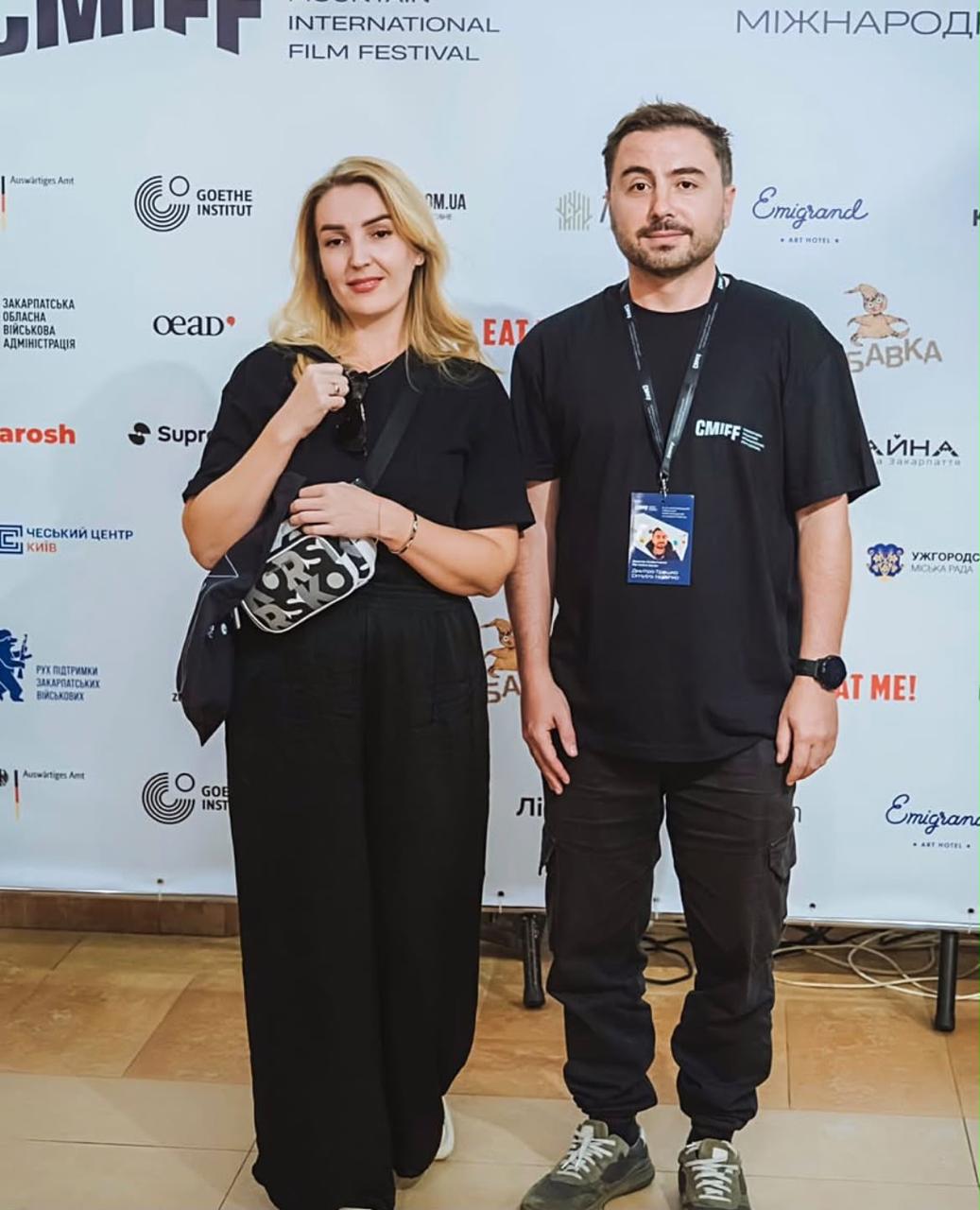
— Which students are involved in working on the films?
— We select the best students. For the most part these are fourth-year students. If there are very interesting and well-prepared third-year students, we involve them as well.
The placement is divided into translation of SMM texts and translation of specific films. It happens that for SMM texts we select third-year students, because the skills they already have are sufficient: they work with various informational texts.
This is an official placement. They submit materials and this work is counted as a full-fledged placement with the corresponding credits, since the Zakarpattia Film Commission is an official placement base for students of our department.
— How does this work generally take place?
— Preparation begins during the summer, because the festival itself takes place either in mid-September or at the beginning of October. Roughly from mid- or late July — August — Mr Dmytro sends us the films. We distribute the students. At present this is approximately 10–15 people, we divide them into groups, and they work on the films.
He may send two feature-length films in one day, then a short film, for example an animated film. It depends on how quickly the materials reach him.
— Approximately how many students work on one film?
— It depends on the film. For the most part this is documentary cinema, so there may not be as many lines as, for example, in a feature film.
— Is this completely independent work or do you then check the translation?
— It happens that the problem is not in the translation itself, but in the stylistics. For example, in the text a swear word, an obscene word is used very many times. And the question arises: what should we do with it, how should we translate it?
I say that in principle it can be translated with non-normative lexis, but if it is to be a screening in a cinema, I call Dmytro and ask whether we can do this. He may say: “Well, maybe it would still be better to use some euphemism? Perhaps something not so rude — for example, ‘бісів’ and so on.”
It also happens that the directors themselves generate subtitles with the help of artificial intelligence, and they do not entirely correspond to what is happening in the film, to what the characters say. Therefore the students do not simply read and work with the finished text. They must necessarily watch the film and check whether the subtitles correspond to what the characters actually say.
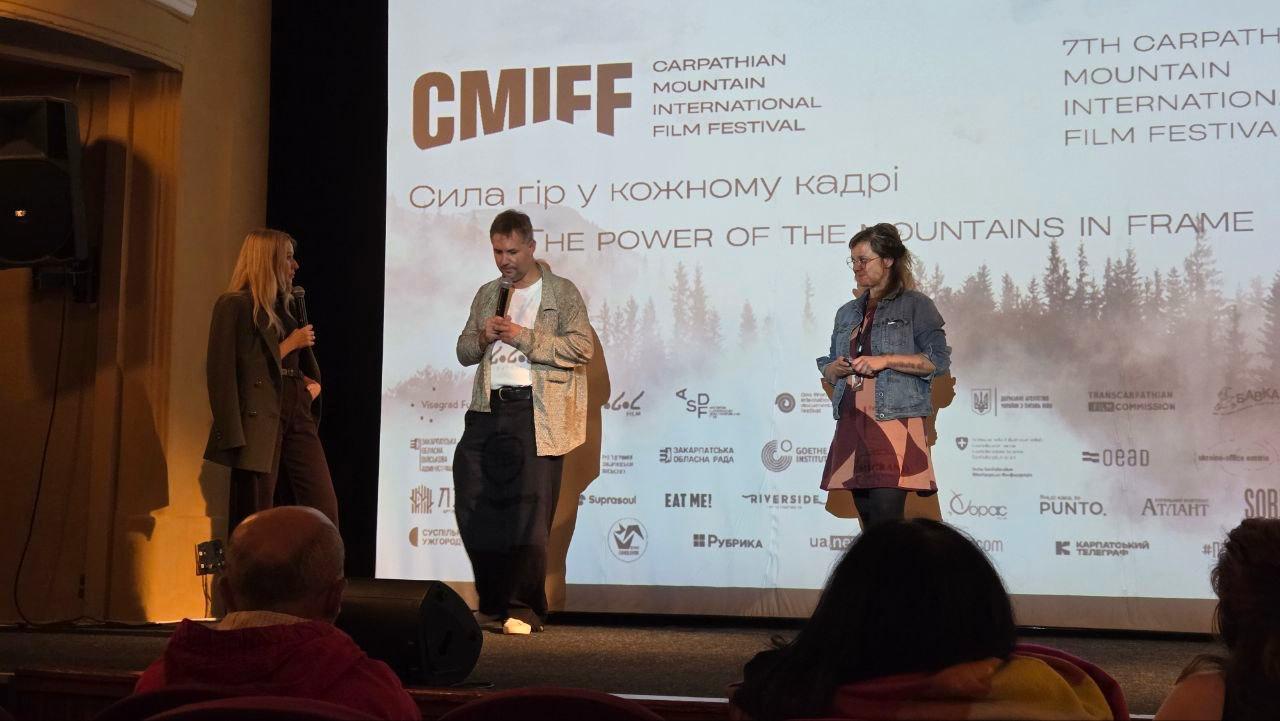
— And in general, what do the students say is the hardest for them to translate?
— In terms of lexis there is nothing extremely difficult here. This is a mountain film festival, so the films are often about nature, mountains, local culture. At the lexical-semantic level the students do not have particular problems.
Problems begin when it comes to stylistics. For example, if the film is in English, the question very often arises of how to render address: “ти” or “ви”. In English this is you, and we need to decide how they address one another.
For example, there is a line between a journalist who is conducting an interview and a person who has lived in a certain settlement for 80 years. And we have to think whether this person addresses the young journalist with “ти” or with “ви”. Sometimes we make the decision that one person may address the other with “ти” — in view of how they communicate — while the journalist addresses them with “ви”.
The translator must know when it is a set expression that cannot be translated literally, but for which an equivalent needs to be found.
For the most part we work with fourth-year students, who by the time of the placement have already taken a whole series of translation disciplines. They also have the course “Culturological Aspects of Translation”. By the way, this was the advice of Dmytro Hreshko, who, when writing feedback on our educational programme, said that it would be worth having such a course not as an elective but as a normative one — something related to culture.
Therefore there they analyse in detail various techniques for translating set expressions. They know that one can find an equivalent by form, by meaning. It happens that there is nothing similar in our language, or it concerns something that is entirely absent from our culture.
It has happened that, for example, a film was in French. We simply could not understand how to translate the title of this film. I even consulted with our colleagues from French philology, and they also did not know what it means.
It was a kind of French authorial neologism — a combination of two words. And the film explained that this word means the sound that a deer makes. And then we nevertheless decided not to describe this title, but to leave it simply transcoded, to preserve the French sound, so that it would be clear that this is a title or an element of culture.
— How has your cooperation with the festival changed over these four years? Has the number of films the students work on increased?
— The festival itself is gaining momentum, becoming bigger, more participants appear. If at first these were mostly films of the Visegrad Four countries, now there were even films that participated in the Cannes and Venice Film Festivals.
We translated a film by Dmytro Hreshko himself. We also translated “King Lear”, which was brought from the National Theatre of Maria Polska.
— What does this cooperation give the students as future translators?
— For us this is simply a wonderful experience. It is one thing to translate a text within the framework of studies. It is another to translate a text and then come to the cinema and see it on the screen.
I always say: translation is not about words. We do not translate words, we translate meaning. Accordingly, they learn a lot of new things about local culture, about the culture of the Visegrad Four countries, of Central Europe.
This is living practice. These are not dead texts from textbooks, but living ones, with which they work, which they create. They discuss, hold serious discussions about translation.
Next — the technical skills that they are not always taught at university. Because a university course is 44 hours. In that time we cannot teach them everything. We give some general knowledge, and after that they themselves look for where they can learn this.
One needs to master specific software and know how to generate this. Technical skills — creating time codes, if they generate subtitles, because subtitles have a limited number of characters and must correspond to the time on screen.
Next — editing skills. We always say that first we translate, then we proofread the text several times so that the final translation sounds natural in Ukrainian. We must ensure that when the viewer watches the film and reads the subtitles, they do not have a feeling of foreignness. It should seem to them that this film was shot in Ukrainian from the start.
And also — teamwork.
Accordingly, they acquire skills that will definitely be useful to them in real life and professional work. For example, outside the film festival Dmytro already contacts, on a commercial basis, the students who worked with him, and they continue to cooperate with him. That is, it is not the case that the placement ended — and that is all. They can continue working as translators while still studying at university.
Students share their feedback about the placement.
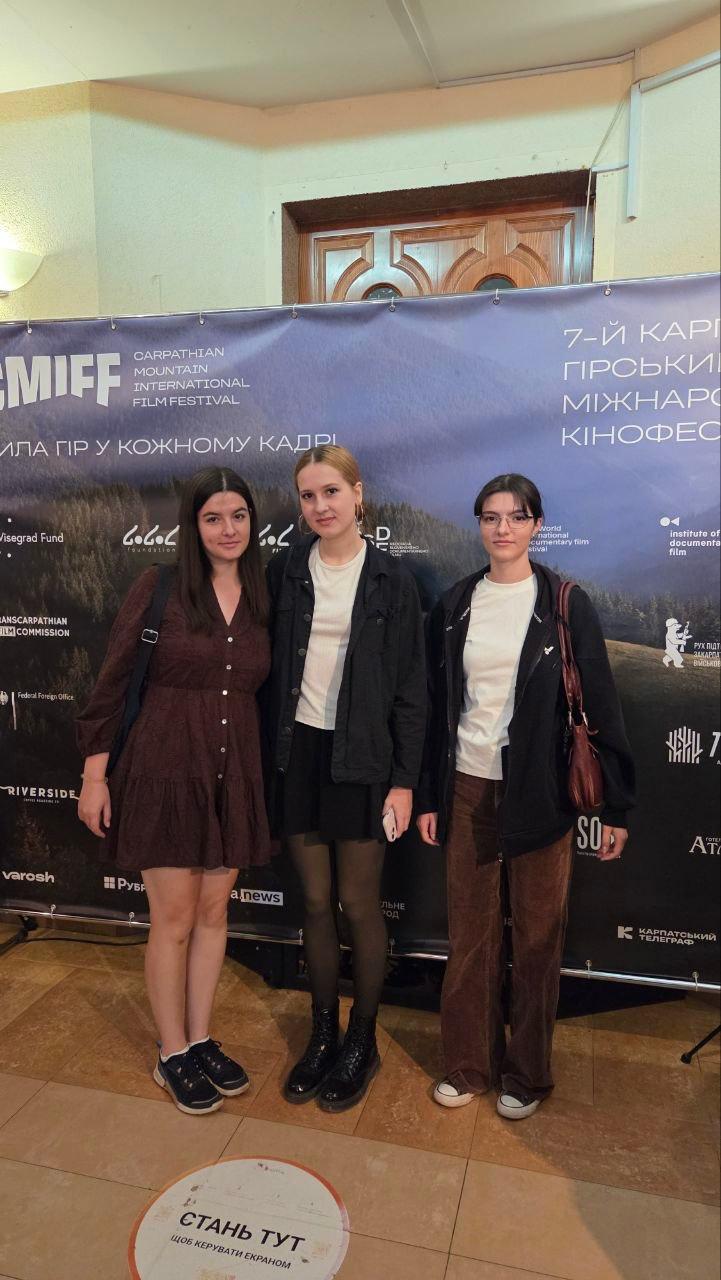
Yevheniia Danko, 4th-year student:
“This placement became a very valuable experience for me. Its special feature was that we had the opportunity to immerse ourselves more deeply in the specifics of audiovisual translation. We worked with diverse lexis, made translation decisions and developed editing skills. Film translation has its own specifics: subtitles must fit within a defined screening time, so we often had to shorten lines without losing the meaning, as well as find equivalents for cultural realities that do not exist in Ukrainian. Soft skills were no less important. Time management, teamwork and communication were especially useful. Since we worked in mini-groups and had to submit work by a defined deadline, we had to learn to allocate time effectively and cooperate for a quality result. Communicating with the festival organiser, we developed business communication, which will undoubtedly be useful in future work. Overall, the placement was very useful for my development as a translator. I am very glad that students of our department have such an interesting opportunity.”
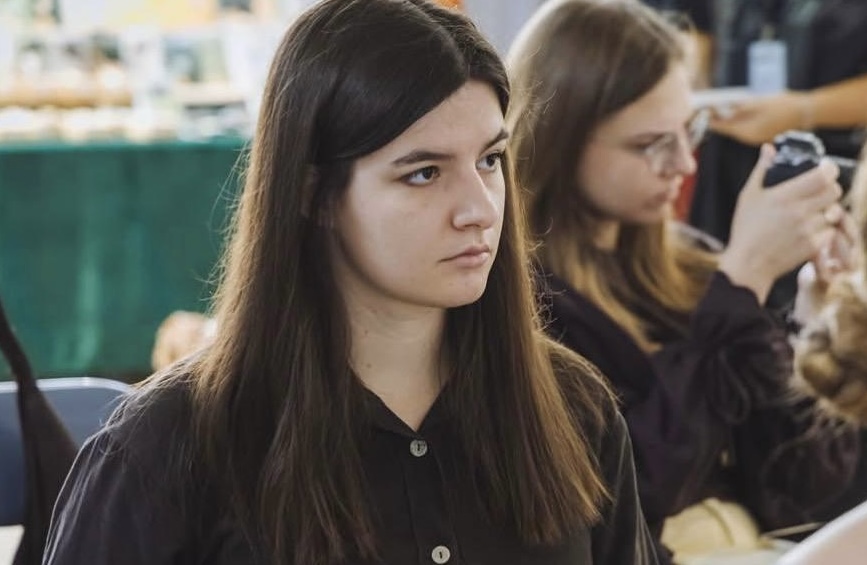
Dariia Petruk, 4th-year student:
“This summer with the placement at CMIFF 2026 was maximally useful for me, because I devoted it to the fascinating translation of short films. During the placement I discovered for myself the names of many wonderful directors and their unique vision of the themes of ecology, tourism and relationships. However, the brightest memory remains our team discussions, when we argued in earnest, searching for that very ideal word that would most aptly convey the needed context.”
Aksinia Kolinichenko, 4th-year student:
“Working on subtitles for CMIFF 2026 became for us not just a placement, but a genuine immersion in audiovisual translation. Translating cinema is a special challenge: it is important not only to translate the lines, but also to fit into the timings, preserve the tempo-rhythm of the film and convey the unique atmosphere of each film — from short documentary films about the mountains to feature films from all over the world. Through working with the text we literally lived through each story frame by frame together with the directors. It is incredibly inspiring to understand that our translation helps viewers feel these stories without language barriers. We sincerely thank the film festival team and our placement supervisor Haidanka Diana Volodymyrivna for such an interesting and meaningful experience!”.
Hanna Feltsan,
Information and Publishing Centre


