
Launch of the DRANICA.24 project: goals and plans

On 28 March, the official presentation of the DRANICA.24 project - ‘Promotion of wooden products as elements of the intangible cultural heritage of the Carpathian Euroregion.A technical guide to traditional woodworking’ was launched.
At the event, the participants highlighted the purpose, current plans and expected results of the initiative.
First of all, it should be noted that the project is coordinated by the Maramures County Chamber of Commerce and Industry, and is being implemented in partnership with the Maramures Museum (Romania), Uzhhorod National University (Ukraine), and the University of Miskolc (Hungary).
The overall objective of DRANICA.24 is to strengthen cross-border cooperation and improve the quality of life by preserving and promoting the intangible heritage of woodworking in the Carpathian Euroregion, in particular through the preparation of a manual on traditional woodworking, stimulating knowledge transfer through links between professional visitors and woodworkers, as well as bringing local communities closer together and reducing barriers between EU member states (Hungary, Romania) and Ukraine.
This initiative will not only help preserve and promote traditional woodworking techniques, but also create additional opportunities for sustainable tourism in the Carpathian region.
The team from Uzhhorod National University consists of the project leader, Vice-Rector Myroslava Lendiel, communications manager, head of the international department Oksana Svezhentseva, responsible for the legal and human resources component Ruslana Voloshyn, as well as fellow researchers who are employees of the Department of Archeology, Ethnology and Cultural Studies, including its head, Ph, D., Associate Professor Nadiia Keretsman, PhD, Associate Professor Volodymyr Hutsul, PhD, Associate Professor Pavlo Lenio, PhD, Associate Professor Yurii Slavik, and Senior Lecturer at the Department of Romance Languages and Foreign Literature Taras Datsio.
Among the guests of the event were members of the DRANICA.24 working group, representatives of the press, and an experienced master woodworker Kostiantyn Kovhan.
The opening ceremony was opened by Myroslava Lendiel, Vice-Rector for Academic Affairs: ‘Since the previous decade, Ukraine has been able to participate in cross-border cooperation programmes in the European Union. Currently, these are the so-called INTERREG VI-A NEXT programmes, which deal with transnational territorial cooperation. Our university has achieved great success in such activities and in this period we have won as many as six projects, DRANICA.24 being one of them.’ As Myroslava Oleksandrivna has already mentioned, the initiative is co-funded by the INTERREG VI-A NEXT HUNGARY-SLOVAKIA-ROMANIA-UKRAINE programme. The amount is 476,809.20 euros (out of a total budget of 529,788.00 euros), to which is added 10% from the participants. A grant of EUR 107,956.80 has been allocated to Ukraine.
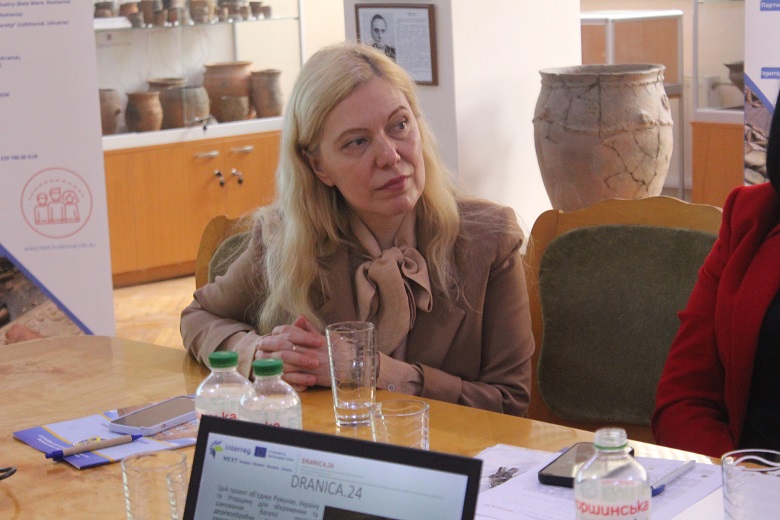
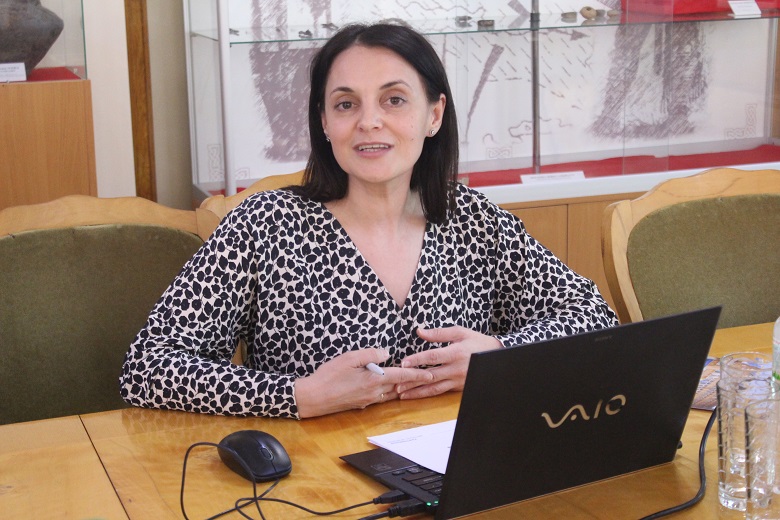
Oksana Svezhentseva then took the floor and spoke about the work, plans and goals of the initiative: ‘We plan to research and document traditional woodworking, create platforms for knowledge transfer through workshops and events, promote our artists and preserve our heritage. This will help to raise awareness of the region's culture, develop cultural tourism and establish links between woodworkers, tourists and local residents. In addition, it is extremely gratifying that such projects help to overcome communication barriers, expand opportunities and establish cooperation between countries.’
The crafts of each region carry the history of its people, traditions and worldview. In particular, woodworking has been almost the basis of our region's identity for generations. The works were distinguished by exquisite carvings or sophisticated carpentry and joinery techniques, forming a special part of the cultural heritage. However, it is increasingly observed that unique skills are beginning to lose their significance.
DRANICA.24 aims to preserve this living heritage by promoting cross-border cooperation and breathing new life into traditional woodworking techniques. In doing so, it provides opportunities for local artisans to realise their potential by facilitating their communication with professionals, tourists and tourism experts.
The first stage of DRANICA.24 was devoted to in-depth research (of the entire Zakarpattia region), which will form the basis for documenting traditional tools, techniques and skills. In addition, a significant part of the work will be a communication campaign that will help promote the project among local communities, stakeholders, and tourists.
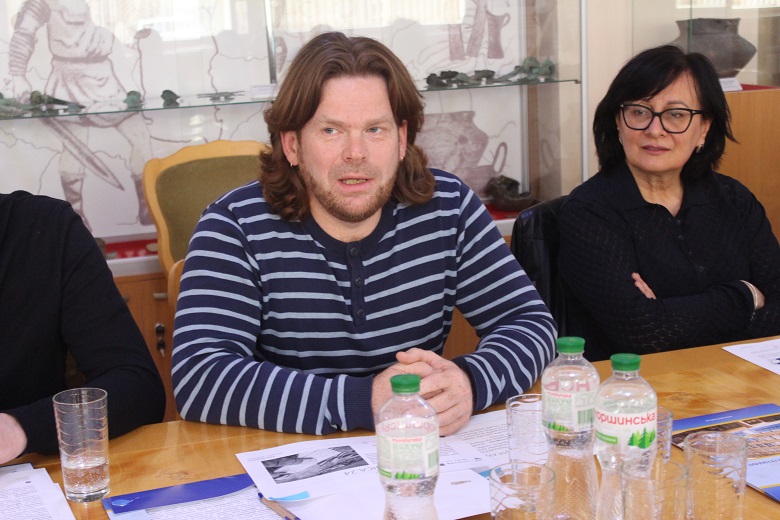
Associate Professor of the Department of Archaeology, Ethnology, and Cultural Studies Pavlo Lenio told us more about the research part: ‘This project, as already mentioned, brings together researchers, collectors of this wisdom from several neighbouring countries. We are used to the concept that states exist separately from each other, but together they form a single Carpathian basin/region, which has traditionally been rich in forests. Despite active deforestation over the past 100 years, they still remain the main, and perhaps even the greatest, wealth of the region. We want to find the old traditions, promote the ones that remain, and perhaps help those who have not worked in this field before to find their vocation.’
Overall, DRANICA.24 aims to create conditions for the realisation of local woodworkers and stakeholders. Thanks to this project, the region will be able to develop in a sustainable way, integrating tourism, culture and education into a single space, which will help preserve traditions, attract new opportunities and strengthen international cooperation.
Expected results by the end of the term (December 2026):
- Technical manual on woodworking - presentation and preservation of tools and techniques of woodworking crafts.
- 5 international workshops (master classes) organised in Hungary, Romania and Ukraine.
- 1 international festival in Romania with 7 workshops.
- 3 national workshops organised in Hungary, Romania and Ukraine.
- 11 participants - 3 local workshops (Hungary, Romania, Ukraine).
- Facebook page and website dedicated to woodworking.
- Online communication campaign.
- Promotional materials.


