From Diplomacy to Music: International Conference of Young Researchers Held in Uzhhorod

How does culture influence international relations, how does language affect mutual understanding between communities, and how does historical memory shape the resilience of a society? These and other questions united the participants of the V International Scientific Conference of Students and Young Researchers "Global Challenges and Cultural Interactions - the Interdisciplinary Dimension of Modernity", which took place on November 5–6, 2026.
The conference was organised by the Department of Multicultural Education and Translation of the Faculty of History and International Relations of Uzhhorod University, the Department of Philology of the Ferenc Rákóczi II Transcarpathian Hungarian University, and the Department of Music Theory of the M. V. Lysenko Lviv National Academy of Music.
The conference combined in-person and distance formats, and its working languages were Ukrainian and English. The programme covered six panels and presented research by authors from higher education institutions in Ukraine, Hungary, the Czech Republic, and Austria. In addition to topics in diplomacy and information security, the presentations covered literature, translation, music, education, marketing, and tourism. This broad range of themes enabled the examination of contemporary challenges from the perspectives of various academic disciplines.
Plenary Session: The Beginning of an Interdisciplinary Dialogue
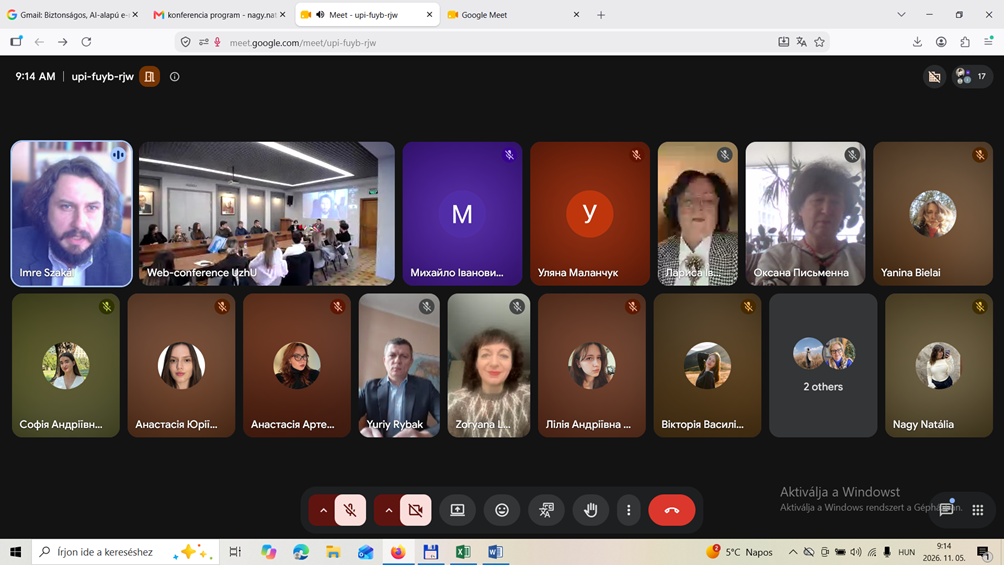
The conference opening and plenary session took place on November 5 in the small meeting hall of the Academic Council of Uzhhorod University, with the option to participate online.
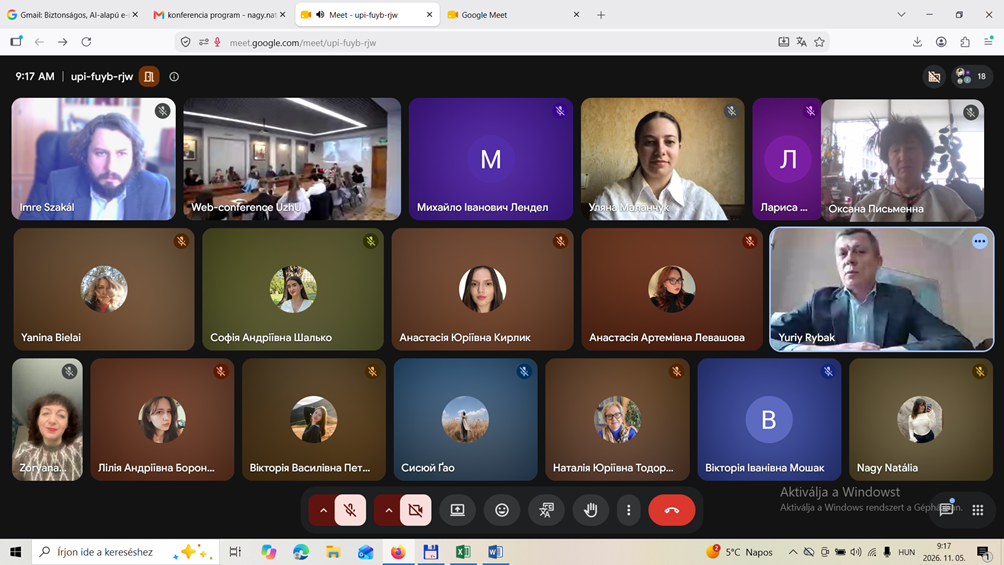
Welcoming speeches were delivered by Larysa Kapitan, Acting Vice-Rector for Academic and Pedagogical Affairs at Uzhhorod University; Imre Sakal, Vice-Rector for Research and Education Quality Issues of the Transcarpathian Hungarian Ferenc Rákóczi II University; Yuriy Rybak, Vice-Rector for Research of the M. V. Lysenko Lviv National Academy of Music; and Vitaliy Andreyko, Dean of the Faculty of History and International Relations at Uzhhorod University.
The plenary session was moderated by Nadiia Sobol and Yuriy Holovnych, students from the Faculty of History and International Relations. Student involvement in the conference extended beyond delivering presentations; junior researchers also moderated most panels, gaining experience in facilitating academic dialogue.
Panel 1. Geopolitical Transformations and Cultural Dimensions of International Relations
How does a state build trust in the global arena, and what role does culture play in this process? The reports in the first panel, moderated by Nadiya Sobol, concerned "soft power", humanitarian and cultural diplomacy, strategic communications, and Ukraine's international image.
Topics included the integration of youth, Ukrainian narratives within the European political space, and opportunities to strengthen Ukraine’s diplomacy in the Global South. Particular attention was given to the use of open data and OSINT (Open-Source Intelligence) in foreign policy decision-making. A literary perspective on cultural identity in Zadie Smith's novel "White Teeth" complemented the section's political issues.
Panel 2. Historical Memory and Cultural Heritage in the Modern World
The second panel, moderated by Tetyana Merkulova, brought together historical and literary studies around issues of memory, identity, and understanding the past.
The topics of the reports combined the dystopias of George Orwell and Ray Bradbury, historical memory in the novels of Kazuo Ishiguro, and the artistic interpretation of love in Stephen King's "The Tale". The historical dimension encompassed institutional transformations within the Lands of the Bohemian Crown in the 15th century, as well as a re-examination of narratives surrounding the outbreak of the Soviet-German War. The practical significance of engaging with the past was highlighted through discussions on the preservation of archaeological heritage and the role of historical memory in countering information threats.
Panel 3. Language as a Tool for Intercultural Dialogue and Social Integration in the Contemporary Space
Translation, language choice, and the representation of another culture emerged as the central themes of the third panel. It was moderated by Nataliia Nod, a student at the Ferenc Rákóczi II Transcarpathian Hungarian University.


The presentations covered topics such as translation as a means of intercultural communication, the image of Hungary in Ukrainian travelogues, Polish-English interpretive strategies, and the impact of hybrid education on cultural integration. Issues of language and identity were combined in the study of the German-language reproduction of Ukrainian toponyms, in particular the name of Chernivtsi, in the context of decolonisation. Other papers addressed new vocabulary and the application of speech act theory to contemporary literature for young people.
Panel 4. Musical Heritage, Performance and Modern Technologies
The two panels of the conference worked under the common theme of "Musical Art and Musicology in the Context of Cultural Interactions and Global Transformations."


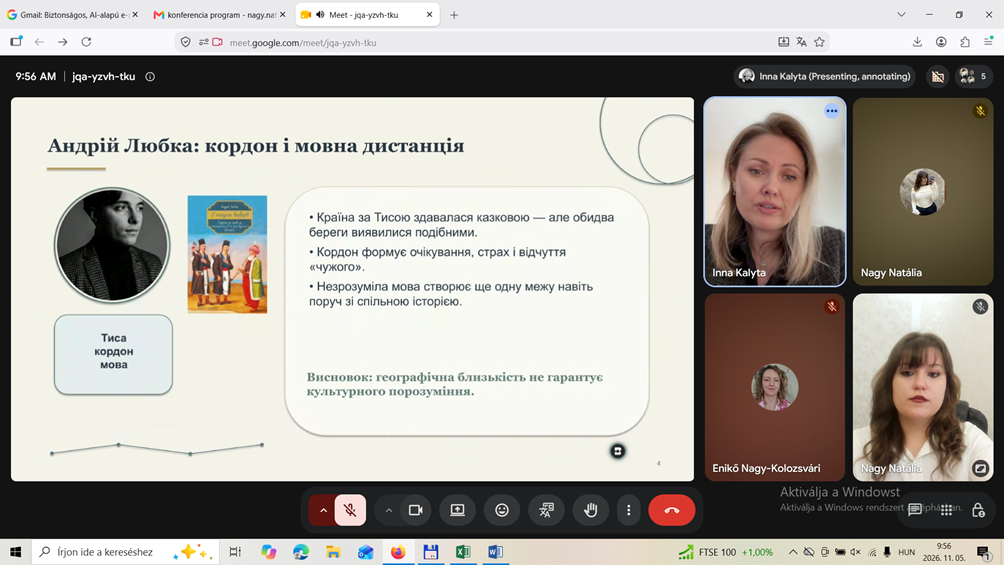
In the fourth section, moderated by Senior Lecturer Uliana Malanchuk, Ukrainian musical heritage was explored alongside contemporary creative practices. The research concerned the operas "The Cossack Beyond the Danube" and "On Rusalchyn's Easter", Franko's lyrics in the vocal work of Yakov Stepovy, and the music of Fedor Yakimenko, Bohdan-Yuri Yanivsky, Bohdan Sehin, and Pavlo Pechenyha-Uglytsky.
The scope of discussion was further broadened by presentations on digital technologies in conceptual music, the art-therapeutic potential of contemporary Ukrainian jazz, the Lviv vocal school, and the development of the trombone tradition in China.
Panel 5. Music at the Intersection of Cultures and Educational Practices
The fifth panel, moderated by Tetiana Diakun, focused on the interplay between musical traditions, compositional work, and music education.


Presentations highlighted the creative figure of Serhiy Bortkevych, the multicultural identity of Loris Chobanian, and works by composers Fedir Nadenenko, Bohdana Filts, Liubava Sydorenko, and Viktor Telychko. The position of Ukrainian music within the global cultural landscape was examined, notably through the example of Mykhailo Verykivskyi’s oratorio "The Ballad of the Captive Maiden Marusia Bohuslavka." The educational component of the section covered the digitalisation of music education, the modern requirements for training conductors and choirmasters, and pedagogical technologies for teaching music history disciplines.
Panel 6. Intercultural Communication in Professional Spheres
The sixth panel, moderated by Yurii Holovnych, demonstrated the practical significance of intercultural research for education, business, and regional development.
The topics of the reports covered the development of soft skills during international academic mobility, the potential of non-formal education, the influence of cultural values on consumer behaviour and on the marketing communications of enterprises. Separate studies addressed the promotion of wine tourism in Transcarpathia to international markets and the recovery of the Turkish tourism market amid global crises.
The interdisciplinary nature of the section was further enriched by presentations on public architecture in Subcarpathian Rus’ and Prague, the modelling of sociocultural processes, the ethical boundaries of energy security, and the training of specialists for the reconstruction of Ukraine.
By bringing together diverse research perspectives, the conference provided a platform for showcasing student research and fostering professional dialogue. For the Department of Multicultural Education and Translation, this gathering served as an opportunity to support junior researchers and demonstrate how language proficiency, awareness of cultural differences, and the ability to work at the intersection of disciplines help interpret the contemporary world.

