
Training Sessions on Regional Policy and Cross-Border Cooperation for Communities in Zakarpattia Region have been launched at UzhNU

From September 8 to 11, Uzhhorod National University is hosting training sessions titled “Regional Policy, Territorial Cooperation, and Institutional Capacity of Ukrainian Communities in the Context of European Integration.” The event brought together representatives of local governments, scholars, and experts from Ukraine and the Visegrad Four countries.
The training sessions are part of the project “Resilient Local and Regional Governments in Ukraine and the Visegrad Four Countries Through Cooperation,” funded by the International Visegrad Fund. The event was organized by the non-governmental organization “Carpathian Human Rights Agency ‘Vested’,” and partners included the National Academy of Legal Sciences of Ukraine, the Law Faculty of UzhNU, the Research Institute for Fundamental and Applied Studies of European Territorial Cooperation at UzhNU, as well as institutions in Hungary, Slovakia, the Czech Republic, and Poland—the Central European Service for Cross-Border Initiatives, the University of Prešov, the Technical University of Liberec, and the Higher School of Business in Dombrowa Górnicza.
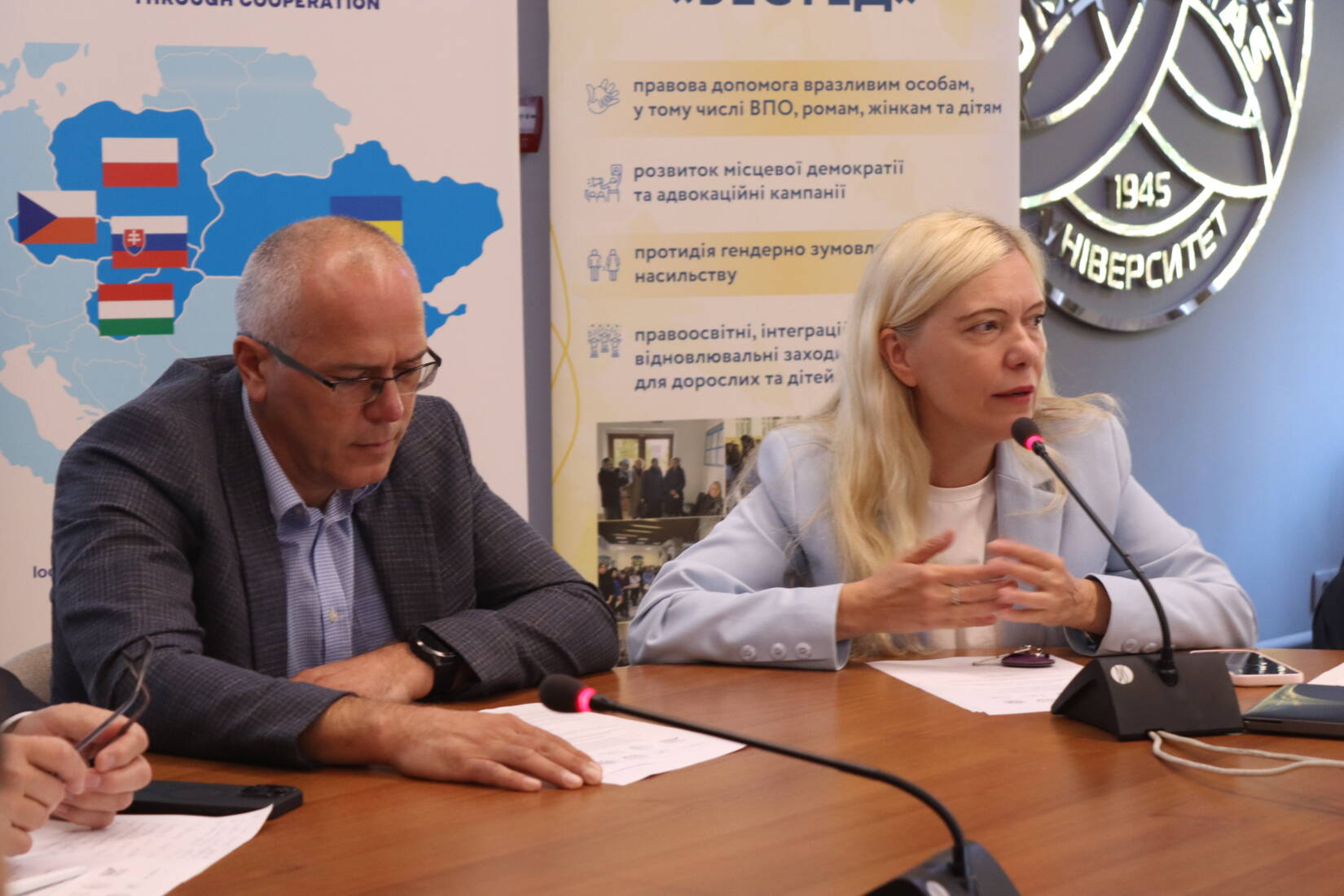
The goal of the training program is to strengthen the capacity of Ukrainian communities in the areas of international territorial cooperation, participation in EU programs, the formation of partnerships, and the preparation of high-quality project proposals as Ukraine moves closer to the European Union.
Opening the event, Yaroslav Lazur, head of the center at the National Academy of Legal Sciences of Ukraine and dean of the Faculty of Law at Uzhhorod National University, noted: “Our project continues to develop effectively and dynamically, and it is within this framework that we are conducting this training session together with our long-standing partners. It is dedicated to regional policy, territorial cooperation, and the institutional capacity of Ukrainian communities in the context of European integration.”
Myroslava Lendiel, Vice Rector for Research and Teaching at UzhNU, emphasized the practical value of the training sessions for a wide range of professionals: “Today we have a wonderful opportunity to deepen our knowledge on highly relevant topics for representatives of government agencies, local government officials, members of regional communities at various levels, researchers, and all those involved. I hope that everything you learn from our experts over the next few days will be useful to you in your future work.”

Vasyl Demianchuk, Deputy Chairman of the Zakarpattia Regional Council, emphasized the region’s active role in international cooperation: “As representatives of local and regional authorities, we are directly involved in the processes of regional policy and territorial cooperation. The Zakarpattia Regional Council is actively working in this direction and has many partners both in other regions of Ukraine and abroad. And the main goal of all this is to improve the well-being of our citizens.”
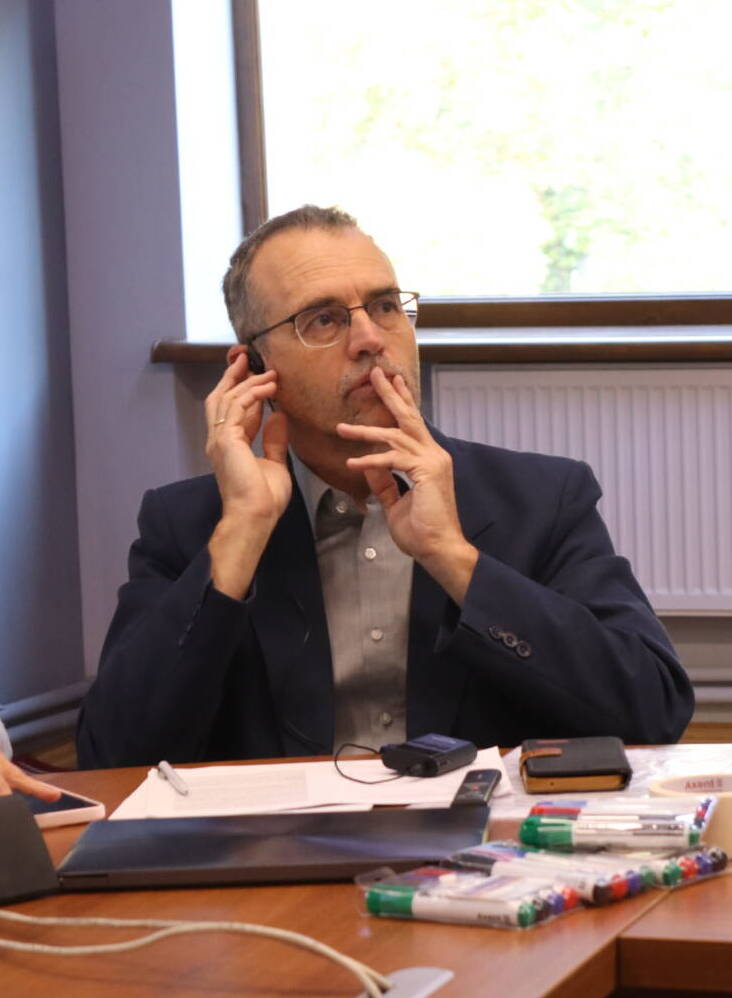
Dulo Ockai, Secretary General of the Central European Service for Cross-Border Initiatives, also joined in the welcoming remarks. He noted that the Zakarpattia region, and Uzhhorod in particular, is a region that is constantly developing, and the training session is designed to contribute to this development.
Olesia Trahniuk, head of the Zakarpattia Regional Office of the HUSKROUA cross-border cooperation project, noted: “Today marks the start of very important training sessions—both from a practical and an academic standpoint—because best practices must always be grounded in a solid academic foundation. We still have a lot of work ahead of us. Ukraine’s path to the European Union is quite rapid compared to other countries, but that does not mean we are already fully prepared to implement all the approaches developed in the EU. However, over the course of these three days, we have a wonderful opportunity to familiarize ourselves with best practices.”
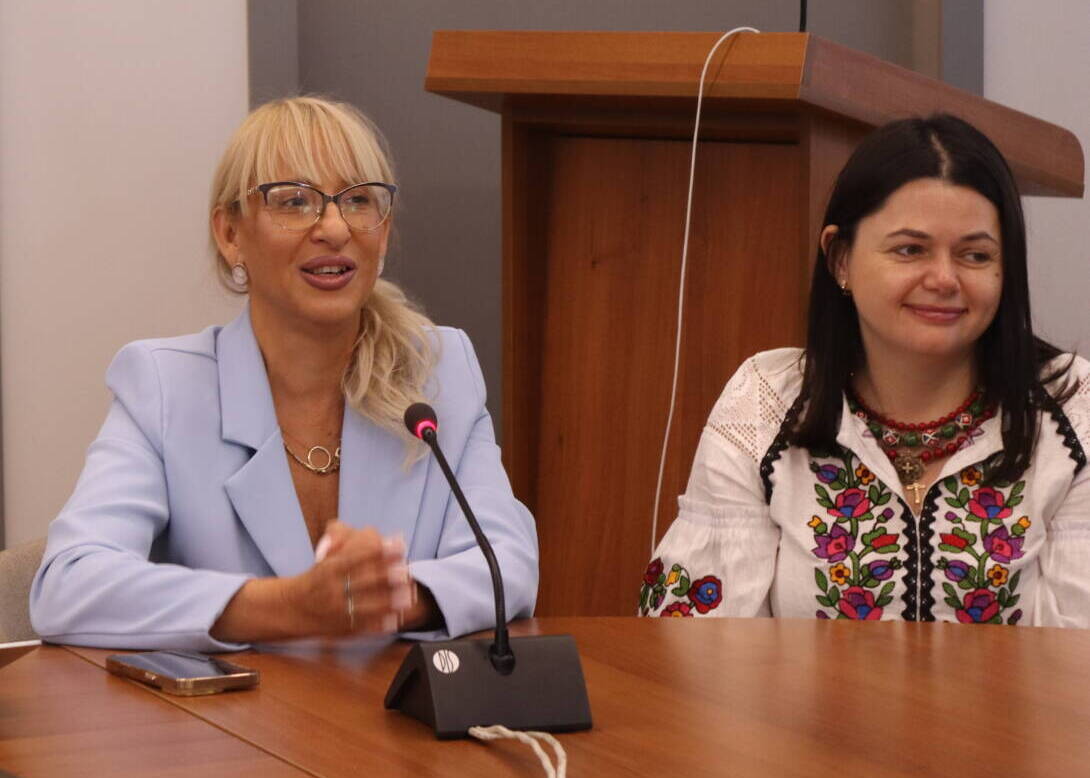
The training session will be moderated by Mariia Mendzhul, Chair of the Board of the NGO “Carpathian Human Rights Agency ‘Vested.’”
Eleven thematic sessions are scheduled over the course of three days. Participants will deepen their knowledge of EU regional and cohesion policies, territorial and cross-border cooperation—particularly the Interreg programs—as well as institutional forms of cooperation, project management, digital tools for community development, social inclusion, culture, tourism, and border heritage management.
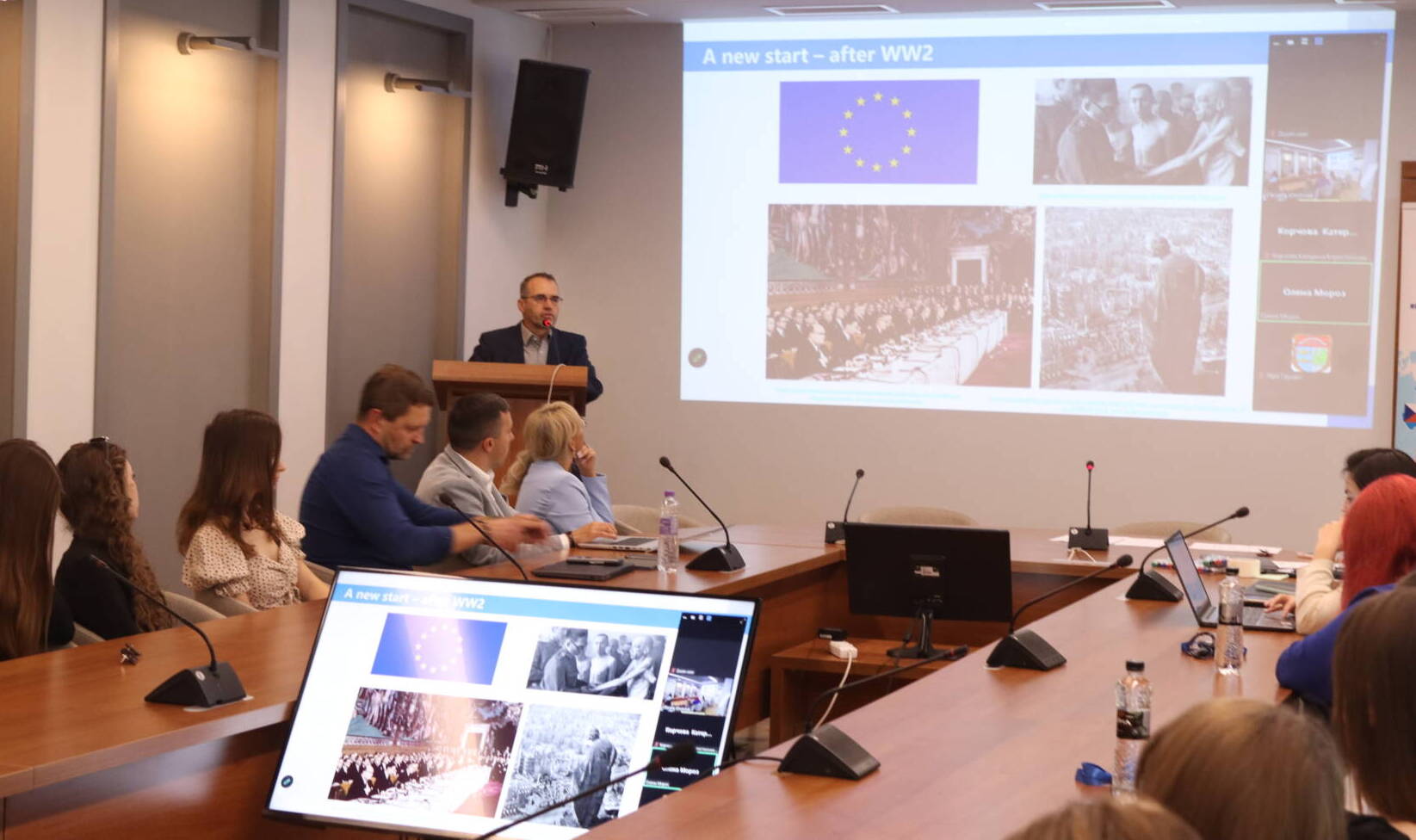
The first day of the program was devoted to regional policy, EU funding mechanisms, the project cycle, and cross-border planning. On the second day, participants will focus on issues of local self-government, digital transformation, and the protection of the rights of national minorities and human rights. The final, third day will cover topics such as territorial cooperation, culture, tourism, the social sustainability of communities, and border heritage. The training program will conclude on September 11 with a study visit to the Slovak city of Košice, where participants will visit Via Carpatia EGTC—a European Grouping of Territorial Cooperation.


