
Representatives of Uzhhorod University joined the international discussion on the digital transformation of higher education

On Monday, 12 October, an online workshop was held within the framework of the international project RE-DIRECTION, dedicated to recommendations on ensuring quality, inclusive and sustainable distance and blended learning in higher education institutions of Ukraine and Georgia. Among the project participants is Uzhhorod University. The specialists discussed the possibilities of practical implementation of these recommendations, strategies for their implementation and the challenges of digitalisation of higher education in wartime conditions, and also exchanged the experience of Ukraine and Georgia. The project involved 16 partners from Ukraine, Georgia, Greece and Germany, including 12 educational institutions.
According to the RE-DIRECTION project manager at Uzhhorod University, Dean of the Faculty of History and International Relations Vitalii Andreiko, modern challenges directly affect the development of higher education and shape new learning needs. Russian aggression against Ukraine has increased the need for digital education. Innovative educational programmes, notes Vitalii Andreiko, are developing thanks to international cooperation, the involvement of stakeholders and interdisciplinary approaches.
The participation of Uzhhorod University in the RE-DIRECTION project is important, as it enables the exchange of experience with international partners, participation in the development of recommendations for the digital transformation of higher education and the application of the solutions developed to improve the educational process.
The President of the International University Karlshochschule (Germany), Professor Robert Lepenies, during the workshop emphasised the importance of combining digitalisation, inclusiveness and sustainable development in higher education. According to him, the experience of Ukraine, which because of the war is forced to develop flexible learning formats, in particular distance and blended learning, may also be useful for other countries.

“This is not a temporary reaction to emergency circumstances, but a fundamental rethinking of what education should be,” noted Robert Lepenies.
He also noted that digital transformation should provide for equal access of students and teachers to devices, the internet and learning platforms. At the same time, technological changes must correspond to educational goals, rather than being implemented merely because new tools have become available.
The professor separately focused on the use of artificial intelligence in higher education. In his opinion, AI should complement human expertise, and educational institutions should define the principles of its use, the distribution of responsibility and risk management. At the same time, the main guidelines should remain the goals of learning, teaching and assessment.
The head of the expert group on digital transformation of education and science of the Directorate of Digital Transformation of the Ministry of Education and Science of Ukraine, Tetiana Dalievska, noted:
“Within the framework of the RE-DIRECTION project, we developed 29 recommendations that cover seven areas of digital transformation of higher education: from strategic management and the development of digital infrastructure to inclusiveness, ensuring the quality of education, the use of artificial intelligence and cybersecurity.
Our goal is to help higher education institutions move from individual digital initiatives to a systemic, coordinated and sustainable approach that will ensure the quality and accessibility of learning, in particular in wartime conditions”.
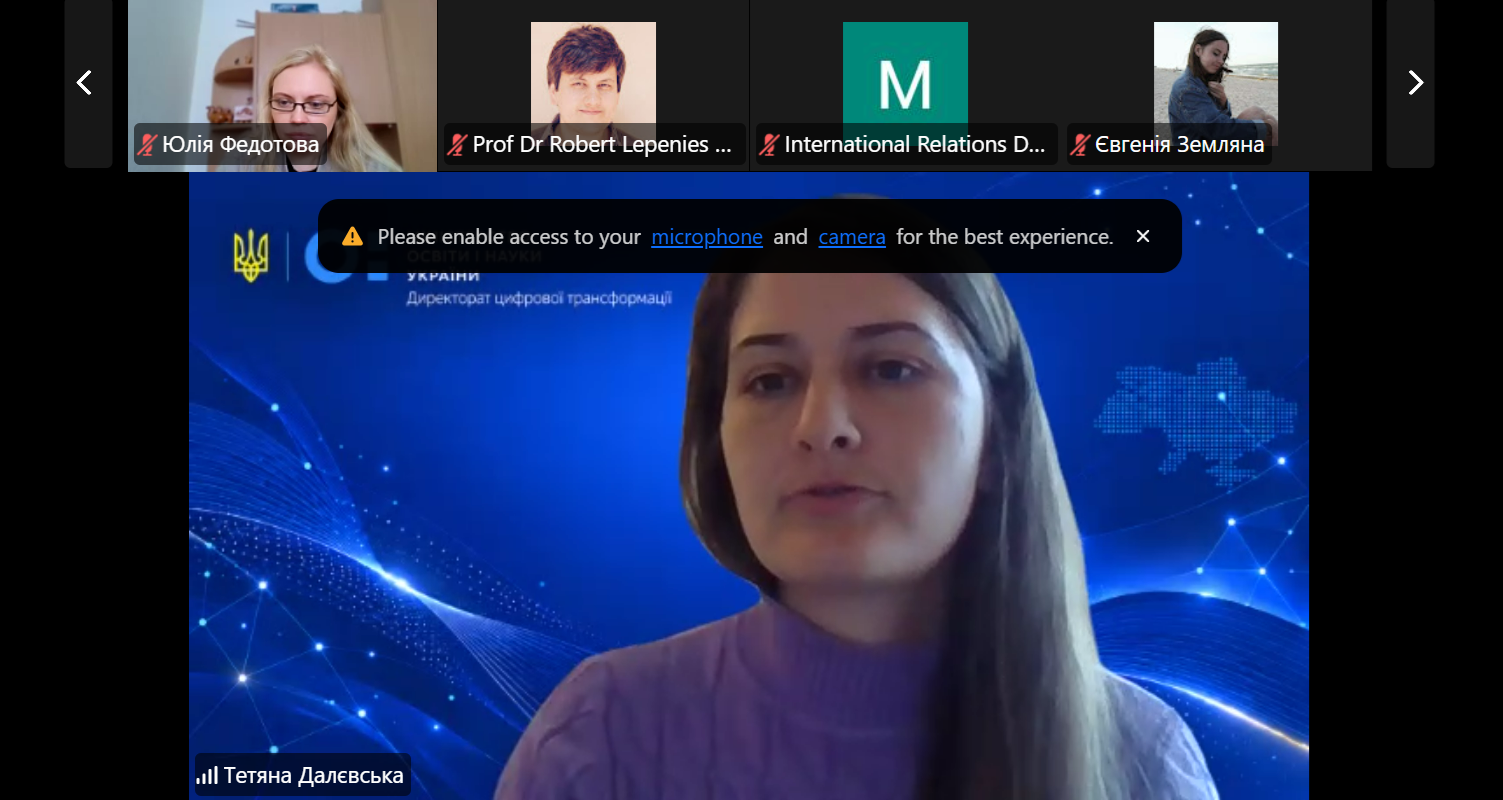
According to her, special attention was paid to the digital resilience of universities. It is important that educational institutions have plans for the continuity of learning in the event of no internet, damage to digital infrastructure or power outages. It is also necessary to ensure equal access of students and teachers to digital resources.
“We strive for these recommendations to become a practical tool for higher education institutions and to help them systematically plan digital transformation, identify needs and direct resources where they are most needed,” said Tetiana Dalievska.
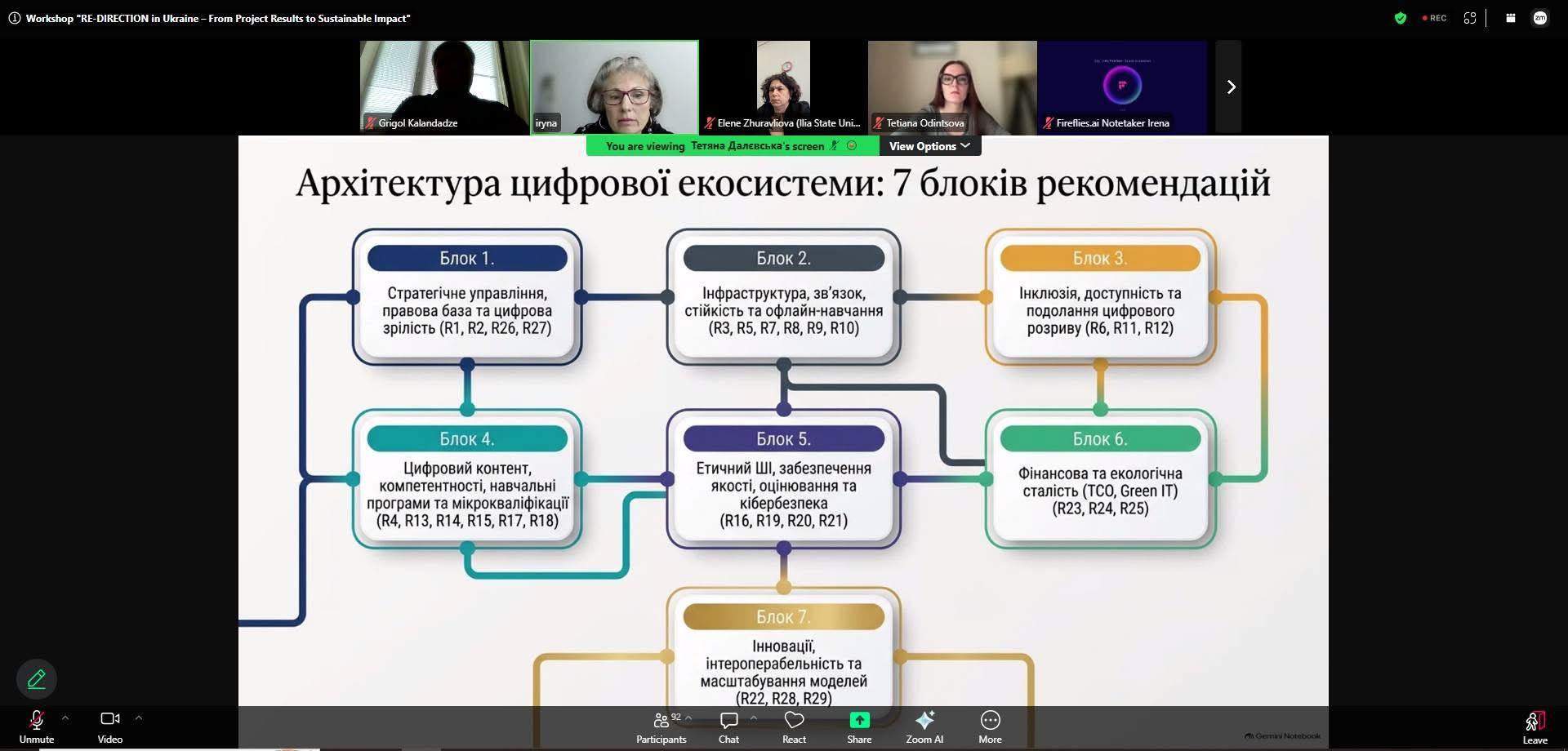
During the workshop, participants joined a panel discussion on the transformation of higher education in Ukraine, in particular digitalisation, the development of distance learning and the challenges faced by universities in wartime conditions. Particular attention was paid to the experience of digitalisation of higher education institutions in Georgia and the possibilities of applying the solutions developed in Ukraine.
In conclusion, the participants identified recommendations for state policy, in the implementation of which they themselves or their institutions can participate. This should contribute to the practical application of the project results and the further development of quality, accessible and sustainable digital learning in higher education institutions.
Hanna Feltsan,
Information and Publishing Centre


