
On September 7–10, 2026, the XVIII International Conference “Silicon for the Chemical and Solar Industry” was held in the city of Kristiansand (Norway), one of the world’s leading forums dedicated to silicon production and its application in the chemical industry and solar energy. This year, the conference was held jointly with the 16th CRU Silicon Market Forum, bringing together the academic community, technologists, and representatives of the global silicon industry at one venue.
The conference traditionally brings together researchers, engineers, and manufacturers working on technologies for producing metallurgical and solar silicon and ferroalloys, as well as on reducing the carbon footprint of these industries. One of the central areas of discussion this year was the replacement of fossil reductants, namely coal and coke, with reductants of biological origin.
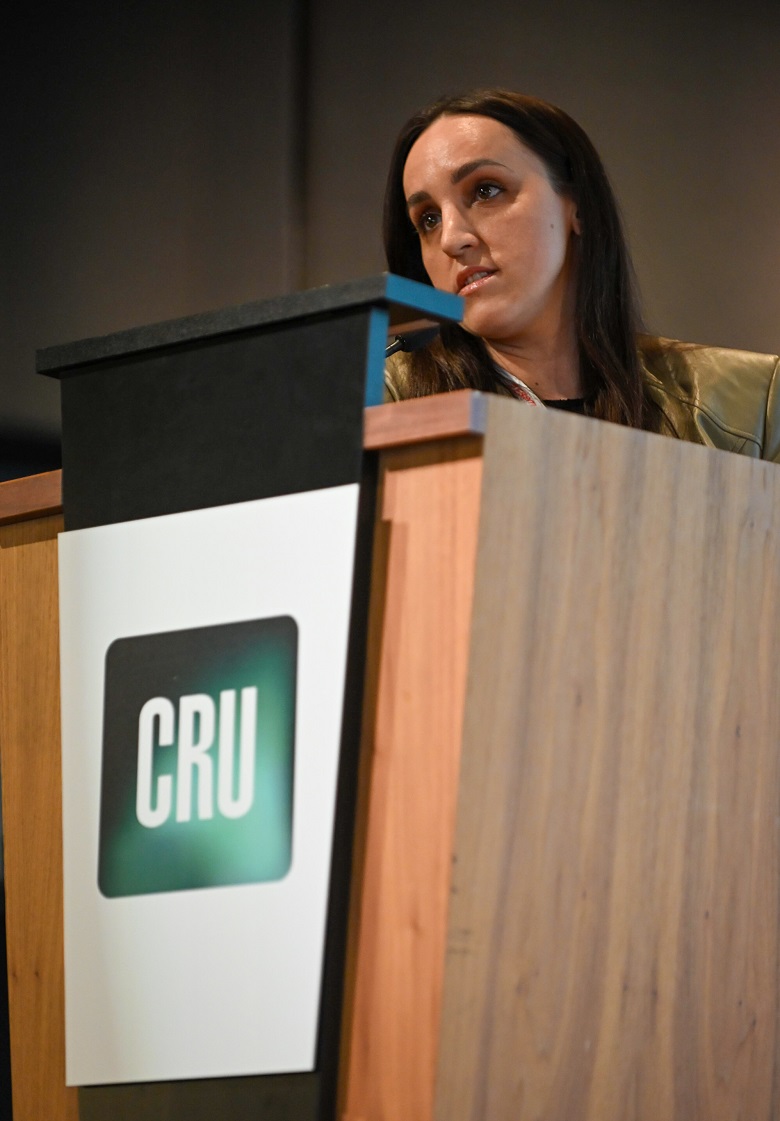
Uzhhorod University was represented at the conference by Nataliia KOROL, Candidate of Chemical Sciences, Associate Professor, Senior Researcher of the Research Unit of university.
In the presentation “Extruded Charcoal Briquettes with a Protective Organic Polymer Binder for Barbecue and Metallurgical Applications,” the results of a study dedicated to transforming charcoal fines into a full-fledged metallurgical material were presented. More than one tenth of charcoal is lost in the form of a fine fraction during charcoal production, sorting, transportation, and storage: such a fraction cannot be directly charged into a furnace and for a long time was considered a low-value by-product.
The proposed solution is cylindrical extruded briquettes with a diameter of 20 mm, made from crushed charcoal fines and a proprietary protective organic polymer binder, which is used in a significantly smaller amount than in traditional pressed formulations.
In addition to the original results, the presentation covered a broader context: whether the technology of using biocarbon in silicon production is indeed established, whether any biocarbon is suitable for a submerged arc furnace, as well as the three-year path of searching for competitive agglomerates, from large blocks to tablets and pellets.
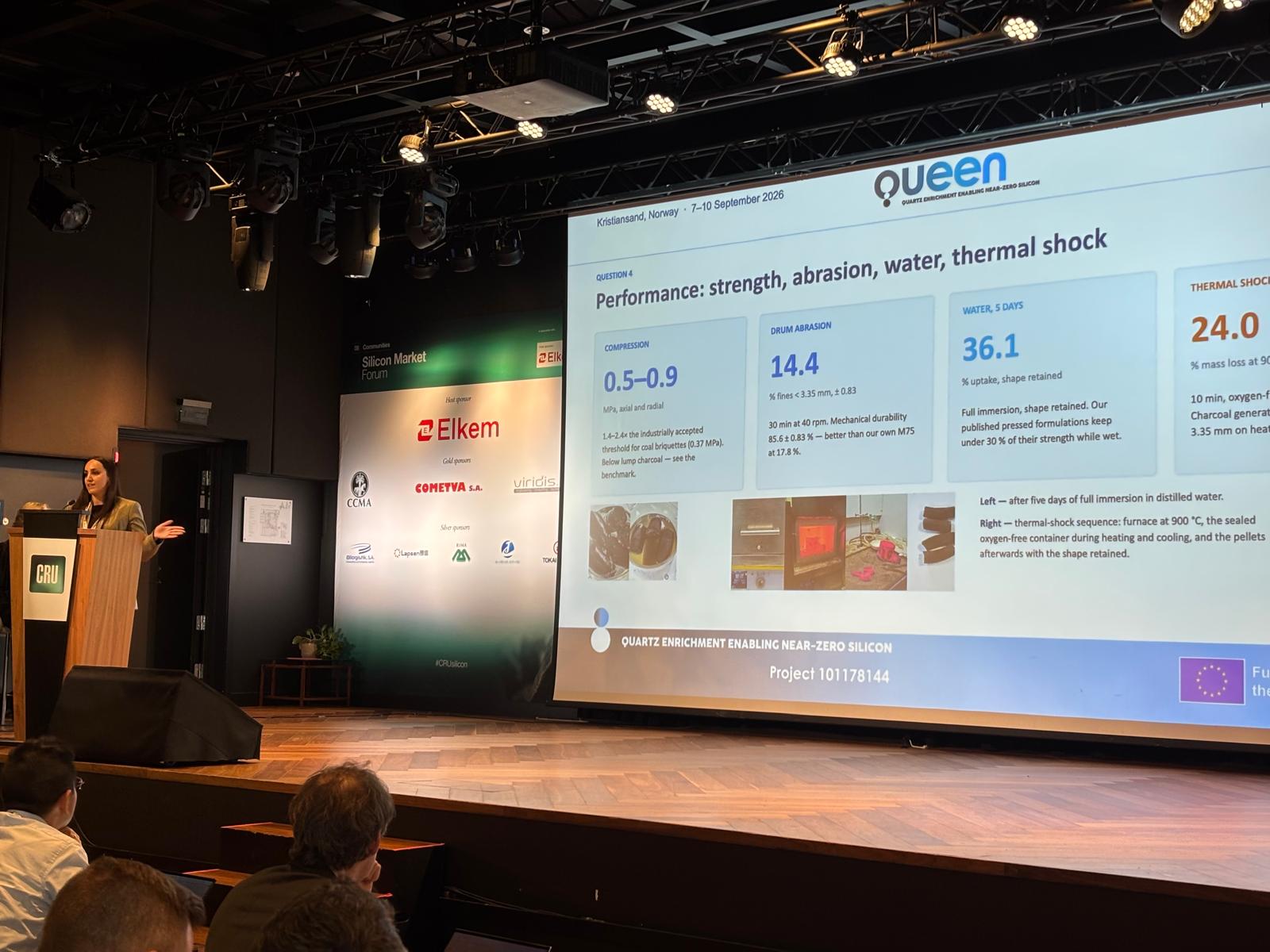
The presentation materials were published in the conference proceedings.
The research is carried out in the context of the European QUEEN project (Horizon Europe, project No. 101178144), aimed at quartz beneficiation for the production of silicon with a near-zero carbon footprint, while the developed agglomerates underwent industrial testing at a ferroalloy production facility, where they partially replaced fossil coal without loss of furnace productivity or metal quality.
Participation in a conference of this level demonstrates that the research of university scientists in the field of materials for “green” metallurgy is in line with the current global agenda and creates a basis for further international cooperation, joint projects, and publications.
According to the Research Unit

