«BRIDGE-Ukraine» in Norway: Lecturers of the Department of Journalism took part in the kick-off meeting of a new international project

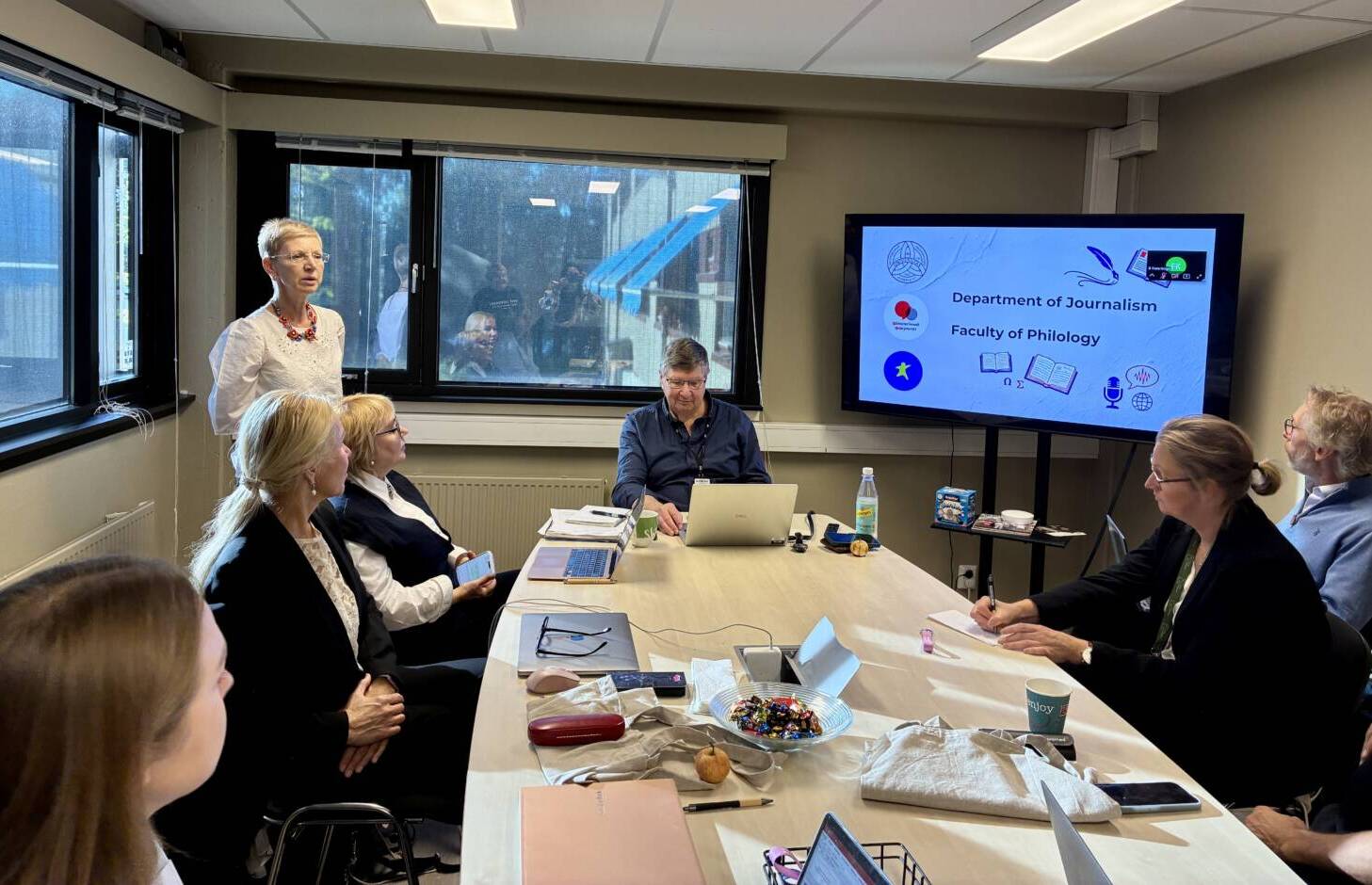
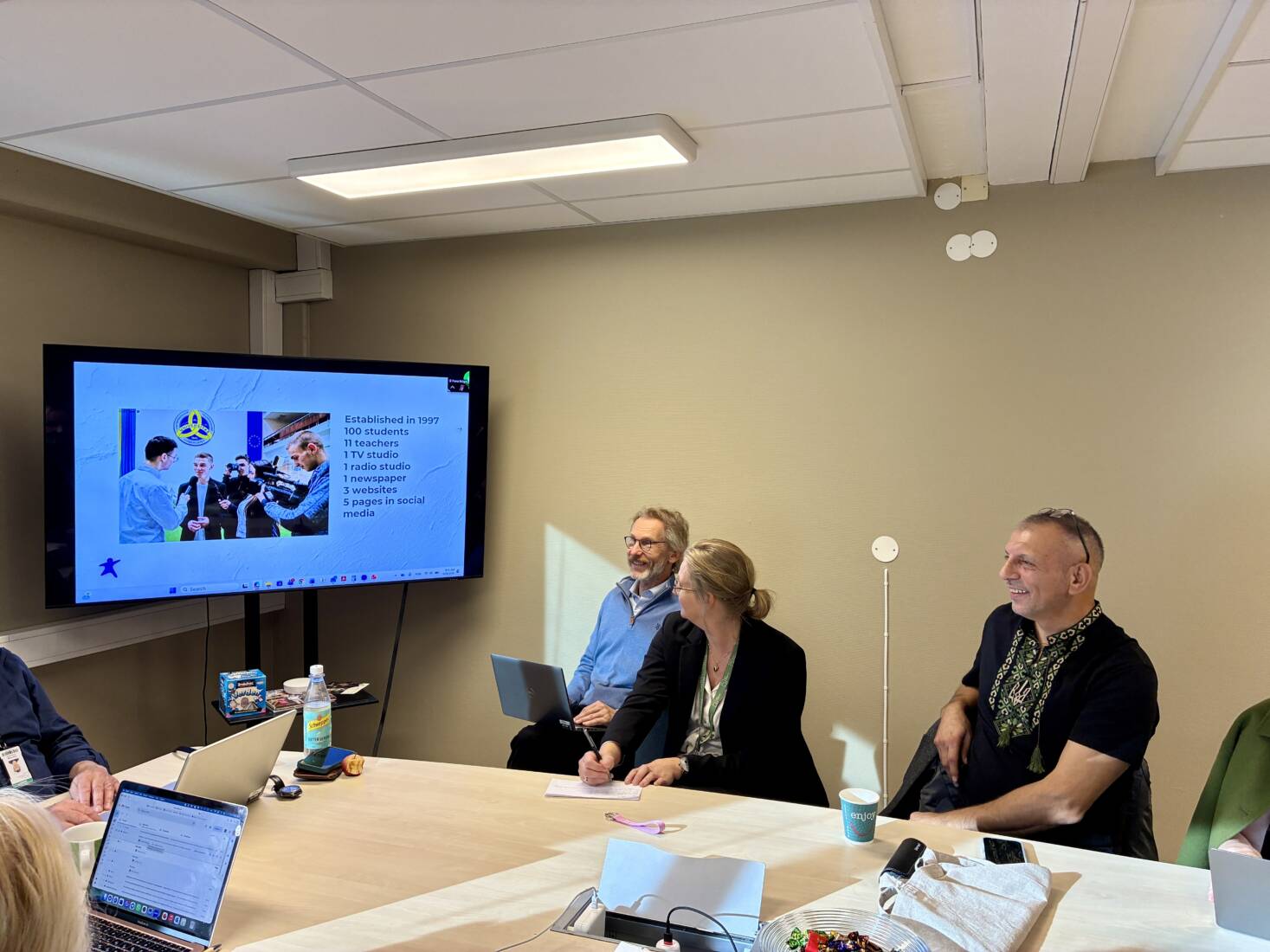
The first meeting of the participants of the project «Building Resilience, Integrity, and Digital Growth in Journalism Education (BRIDGE-Ukraine)» took place in the Norwegian city of Kristiansand. Uzhhorod University is represented in it by the Department of Journalism. From 21 to 25 September, the professor of the department, dean of the Faculty of Philology Yurii Bidzilia, as well as associate professors Halyna Shapovalova and Nataliia Tolochko presented in Norway the first results of the project and, together with other participants, determined further steps.
«BRIDGE-Ukraine» officially started in July and will last until 2029. The total amount of funding reaches 5 million Norwegian kroner. The project became one of 16 receiving support from the Ministry of Education in Norway within the programme «Nansen EDU – Norwegian–Ukrainian Cooperation in Higher Education». The activity is aimed at strengthening Ukraine's resilience to Russian aggression, as well as supporting long-term reconstruction.
Representatives of 5 leading Ukrainian higher education institutions are working on the implementation of the project: Taras Shevchenko National University of Kyiv (Institute of Journalism), Borys Grinchenko Kyiv Metropolitan University, Sumy State University, Mariupol State University and Uzhhorod National University. The international partner and leader of one of the work packages is the Swedish media institute «Fojo» (Linnaeus University). The project is also supported by the European Journalism Training Association (EJTA), the Commission on Journalism Ethics (CJE) and the National Union of Journalists of Ukraine (NUJU).
NLA University College: values of higher education and a mission to support Ukraine
The kick-off meeting of the participants took place at the base of the project's lead institution — NLA University College. It is a nationally accredited Christian university college with teaching in 5 cities – Oslo, Bergen, Kristiansand, Trondheim and Stavanger. According to the rector Sigbjørn Sødal, the educational institution is a special centre of the humanities in various corners of southern Norway:
– Our main distinction lies in the system of values based on a Christian foundation. We maintain high standards both in research and in education. And it is precisely these deep value orientations that help us achieve success in the implementation of important initiatives. We are extremely proud to have become part of this project, and we sincerely believe that our cooperation will bring mutual benefit.
The university has over 25 years of experience in building long-term international academic partnerships. With the support of British partners and the government of Norway, the institution took an active part in the development of journalism education. Among the most successful initiatives are research on media in a post-war society and the founding of a master's programme in Kosovo, the creation of master's and doctoral programmes in Ethiopia and Uganda, as well as the launch of a master's programme in media and communications at the University of Rwanda.
The leader of the project «BRIDGE-Ukraine» from NLA University College is the associate professor of the Department of Journalism, Media and Communication at NLA Franz Krüger. The team from the Norwegian institution also includes associate professor Mikael Snaprud, lecturer Hilde Kristin Dalstrøm, head of the media unit Bjørg M. Nyjordet.
Journalism at the Norwegian institution has deep traditions: specialised education has been taught here since 1981. Today 11 specialists work at the department. The educational institution offers a three-year bachelor's programme for Norwegian students (currently 50 people study there), as well as an English-language master's programme in the speciality «Global Journalism». This master's programme has been running for 10 consecutive years and is aimed primarily at foreign students, uniting future media professionals from different countries.
The head of the media unit Bjørg M. Nyjordet noted that the efforts of Ukrainian colleagues and their dedication to journalism deeply inspire Norwegians.
– The project with Ukraine is new for us, but over the past 25 years we have taken part in various initiatives. All of them gave us valuable professional experience, as well as brought great joy from meeting new people. The main goal of such partnerships is to learn from each other. We are absolutely certain that cooperation with Ukrainian colleagues will be exactly like that – inspiring and mutually beneficial.
On the first day of the working week, the participants were also greeted by the director of the European Journalism Training Association (EJTA) Nadia Vissers. She noted that the name of the project «BRIDGE-Ukraine» is very apt, because strong cooperation is truly being established between the two countries. In the media professional's opinion, improving the quality of journalism and the professionalism of teachers is extremely important. That is why EJTA gladly supports the project, which will last over the next three years.
From psychological support to the use of AI in journalism
Presentation of the work package
During the kick-off meeting in Norway, the participants agreed on the general concept and action plan, and determined the administrative and communication processes between the partners. Within the project, 6 work packages have been developed. They focus on the creation and teaching of new courses on the responsible use of artificial intelligence in journalism (UzhNU and Fojo) and a course on entrepreneurship for future media professionals (SumDU), on training journalism teachers in the latest digital pedagogical tools (Mariupol State University), on providing psychosocial support to staff and students (Taras Shevchenko National University of Kyiv), as well as on conducting research on journalism education in Ukraine (Borys Grinchenko Kyiv Metropolitan University).
On the first working day, representatives of Ukrainian higher education institutions spoke about their work during the war, presented their areas in the project and their immediate plans. During the week in Norway, detailed implementation plans were developed for the key areas.
As part of «BRIDGE-UKRAINE», Uzhhorod representatives are developing a training course on the use of artificial intelligence for journalism students together with the Swedish Fojo Media Institute. Swedish practising journalists and representatives of the Ukrainian professional media community are also involved in creating and improving the programme.
On the eve of the visit to Norway, the lecturers of the Department of Journalism conducted a survey on the use of AI among media students, teachers and practising journalists. Its results were taken into account by the associate professor of the department Vasyl Sharkan during the updating of the structure of the course for media students on the use of AI. The revised version received positive feedback from Norwegian colleagues.
Also Yurii Bidzilia, Halyna Shapovalova, Nataliia Tolochko together with the manager of international programmes at «Fojo» and director of programmes in Europe and the Caucasus Veronika Menzhun developed the structure of the course on the use of AI for practitioners. It provides for mastering the basic tools that a media professional needs, as well as discussing practical cases that invited journalists will share.
Artificial intelligence as a superpower and the challenges of the media profession
Presentation by Ch. Beckett
In addition to practical planning, the meeting programme included a number of professional discussions and lectures. In particular, an expert panel took place on the role of AI in the media with the participation of Harry Misiko from Nation Media Group and Charlie Beckett, a representative of the London School of Economics. They provided practical advice for using AI in the media and emphasised that artificial intelligence was not created to replace reporters, but to increase their efficiency. It copes excellently with basic tasks: transcription, translation and reformatting of already created authorial material for the formats of different platforms. Journalists, even without any programming skills, can independently create custom AI tools for solving specific tasks.
Charlie Beckett is convinced that artificial intelligence is a new superpower for those who strive to do their work better:
– Journalism students must realise that AI will definitely become an inseparable part of their profession in the future. It is needed in order to make good professionals even stronger and more effective. Regardless of the topic a reporter covers, artificial intelligence will be a direct part of each of them. To ignore this fact by refusing to hear about the latest technologies means, for a journalist, losing touch with reality and missing the most important changes in the modern world.
The training of Ukrainian media professionals in accordance with market needs was discussed during a panel discussion with the participation of the head of the Commission on Journalism Ethics Andrii Kulykov, the editor-in-chief of the publication «HlukhivCity» Mariia Kapustina, the production producer of the Zakarpattia branch of Public Broadcasting Yevhen Tychyna, and a specialist of the digital management group for the production of regional content «Suspilne Uzhhorod» Polina Moruha.
Also, during the third working day, professor Svitlana Bezchotnikova delivered a lecture «Journalism in Ukraine: Challenges and Realities (2021–2026)» for Norwegian students and teachers. And the representative of the Norwegian Union of Journalists Trond Idås covered the issue of working with psychological trauma in journalism.
Southern Kristiansand, historic Ny-Hellesund and genuine Norwegian hospitality
View of Kristiansand
Participants of the project
The main city of southern Norway – Kristiansand – is situated on the shore of the North Sea. The embankments here are strewn with boats and launches, which are very popular among local residents and allow them to enjoy sea landscapes regardless of the season. Although the city is quite large (it has about 100 thousand residents), space and harmony with nature come first here. In the historic centre, 18th-century houses are carefully preserved and restored, and people still live in them today. And a little further from the central locations, a nature park is spread out on a hill – with lakes, paths for sports, walks and maximum rest from the hustle and bustle. It is no coincidence that Kristiansand is associated with a garden, because thanks to the large number of green spaces, forests, lakes and streams, it truly resembles a garden city.
Undoubtedly impressive is the attitude of local residents to cleanliness, the use of alternative energy sources in everyday life and infrastructure, and also the amazing architectural solutions, such as the underwater tunnel connecting the city with the neighbouring island.
Thanks to the carefully organised programme, the project participants from Ukraine were able to become better acquainted with the local culture and fully experience the hospitality of the Norwegian partners. The Uzhhorod representatives express sincere gratitude to Franz Krüger and his wife Linn for the warm communication and the opportunity to learn more about the everyday life of Norwegians. They also thank Hilde Kristin Dalstrøm and Mikael Snaprud, who were by their side throughout the kick-off week and conducted an unforgettable sea excursion to the historic fishing settlement and port area of Ny-Hellesund.